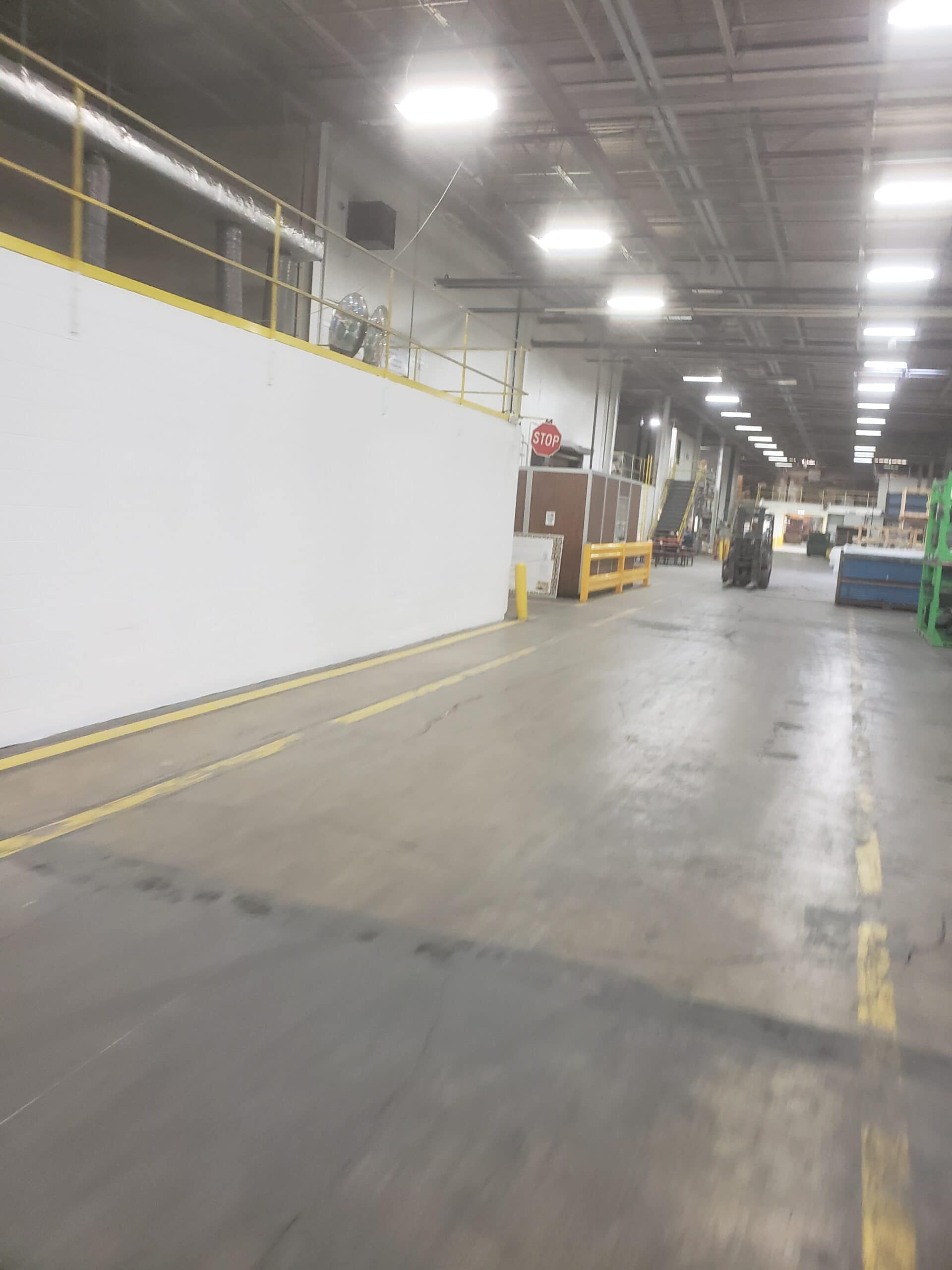
Quick answer: Four specialty commercial coating systems handle substrates and conditions that standard wall paint cannot. DTM (direct-to-metal) primes hollow metal frames, steel decking, and structural steel. Block filler fills CMU pore structure before topcoat. Antimicrobial wall paints are required in healthcare patient rooms and food prep areas. Intumescent coatings provide passive fire protection on structural steel. Specifying the wrong system on the wrong substrate is the most common reason commercial paint jobs fail at the 12-month mark.
In this guide
Updated June 2026. Built from real PaintWerks commercial coating specifications across Central Ohio including warehouse CMU, healthcare antimicrobial, hollow metal door frames, and structural steel intumescent. Schedule a free spec walkthrough or call 614-582-4227.
Why "Just Paint It" Does Not Work on Commercial Substrates
Standard latex wall paint is engineered for one substrate: properly finished drywall. The moment a commercial spec includes CMU block, structural steel, hollow metal door frames, healthcare patient rooms, or fire-rated structural members, that paint is no longer the right product. Specialty systems handle the chemistry, adhesion, and performance requirements of each substrate. Skip the specialty system and the paint fails at the next major thermal cycle, washdown, or fire-code inspection.
1. DTM (Direct-to-Metal) Primers and Coatings
Single-component coating that bonds directly to clean steel, aluminum, and galvanized metal without a separate primer. Combines rust inhibition, primer function, and topcoat in fewer steps. The right answer for hollow metal door frames, steel decking, structural steel in light-industrial conditions, railings, bollards, and miscellaneous metals. Cost: $1.85 to $3.40 per square foot installed including surface prep. Common products: Sherwin-Williams Pro Industrial Pro-Cryl Universal, Pro Industrial Multi-Surface Acrylic; Benjamin Moore Corotech DTM Acrylic Enamel.
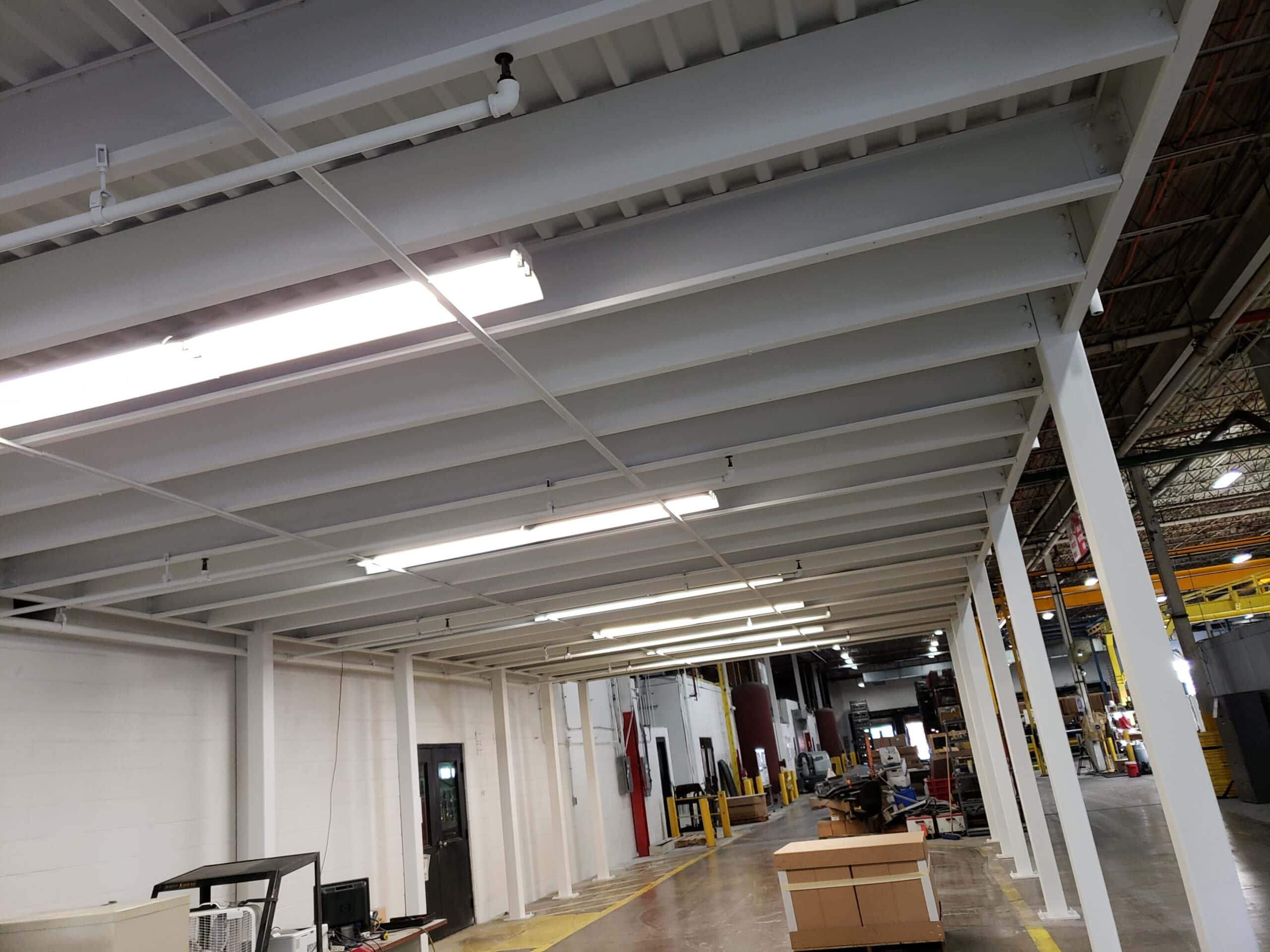
Where commercial paint jobs fail without DTM: hollow metal door frames painted with wall paint chip at the strike plate within 18 months. Steel decking with wall paint flakes from condensation cycling. Bollards in parking structures rust through within two seasons.
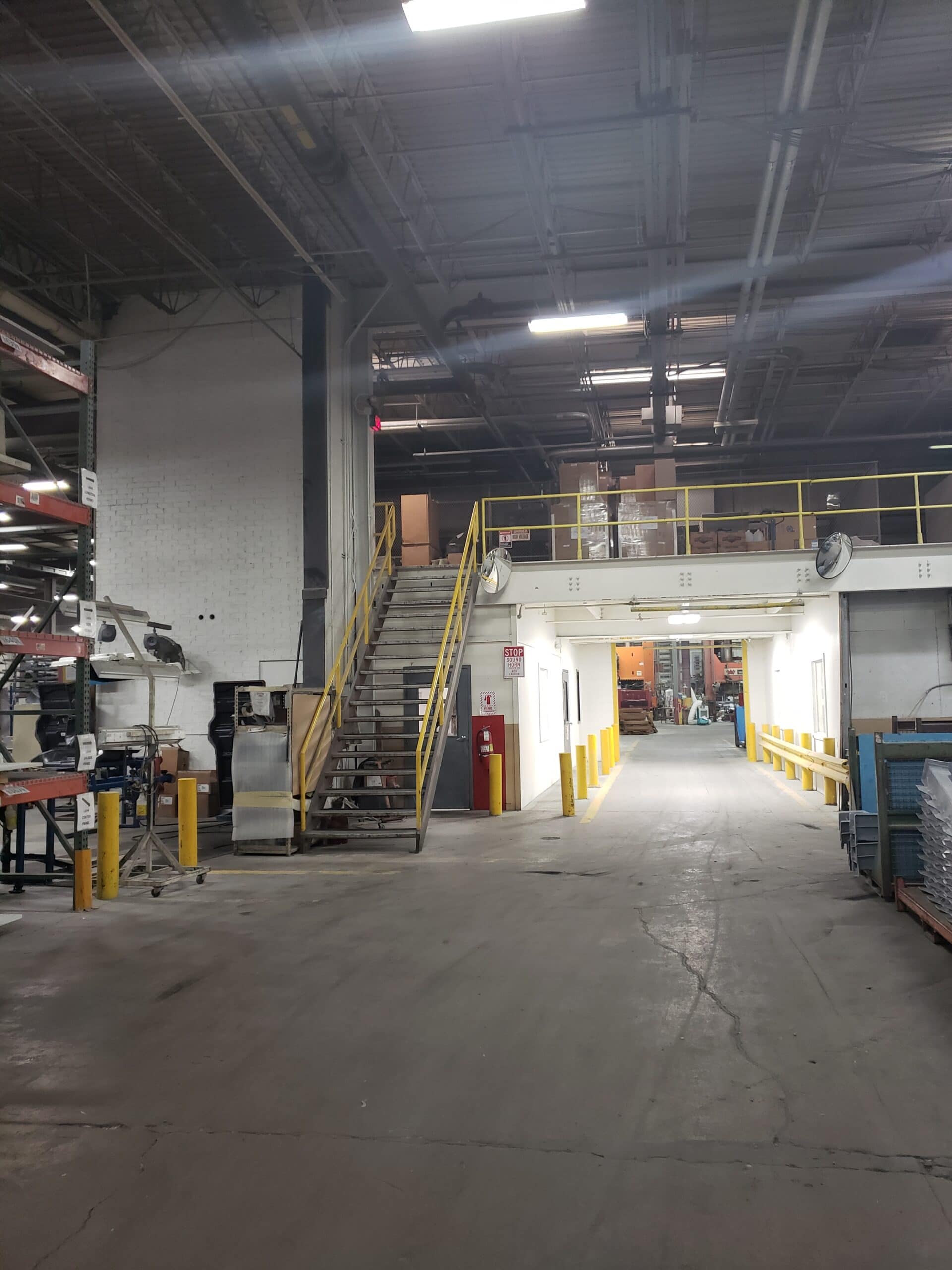
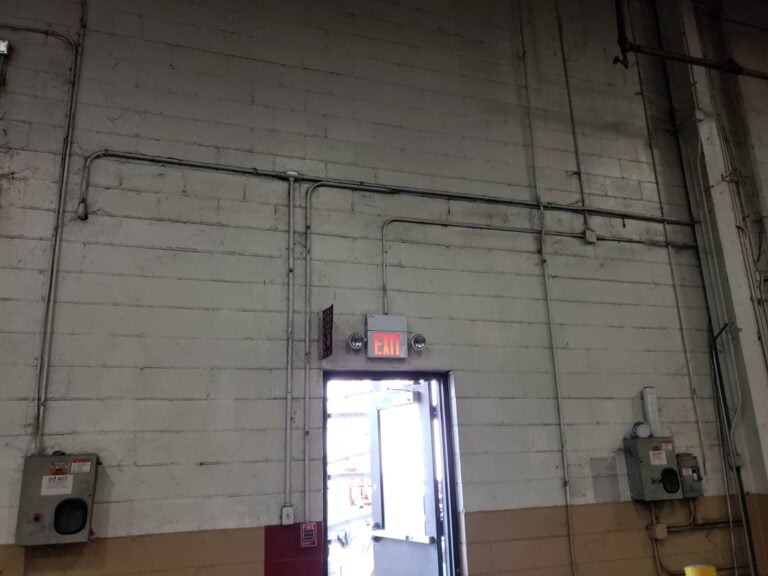
2. Block Filler for CMU Concrete Block
Heavy-bodied acrylic or epoxy filler designed to bridge the open pore structure of concrete masonry units (CMU). Standard wall paint applied directly to CMU rolls into the pores and leaves the surface looking blotchy and uneven, with poor coverage at high paint consumption. Block filler creates a smooth, sealed substrate that the topcoat can roll out evenly. The required first coat on every CMU wall in warehouses, gymnasiums, mechanical rooms, garages, and industrial back-of-house. Cost: $0.85 to $1.60 per square foot installed. Common products: Sherwin-Williams PrepRite ProBlock Latex Block Filler, Heavy-Bodied Acrylic Block Filler; Benjamin Moore Super Spec HP Acrylic Block Filler.
The economics: block filler costs $0.85 to $1.60 per sf and replaces an extra 2 to 3 coats of expensive topcoat that would otherwise be needed to achieve adequate coverage on raw CMU. Net cost actually goes down.
3. Antimicrobial Wall Coatings
Latex wall paints with built-in EPA-registered antimicrobial agents (often silver-ion based) that inhibit bacterial, fungal, and mildew growth on the cured film. Required spec in healthcare patient rooms, surgical centers, dialysis facilities, dental practices, food prep areas, daycare facilities, and senior living memory care wings. Also specified in fitness facility locker rooms, restaurant kitchens, and pet daycare boarding areas. Cost: $1.85 to $3.20 per square foot installed (30 to 80 percent premium over standard latex). Common products: Sherwin-Williams Paint Shield (EPA-registered as a microbicidal paint that kills MRSA, VRE, E. coli, MS-2 bacteriophage within 2 hours), Pro Industrial Pre-Catalyzed Water-Based Epoxy with antimicrobial agents; Benjamin Moore Eco Spec WB Sanitizing Interior Latex.
Compliance note: always verify the antimicrobial paint spec against the facility’s infection control plan and any applicable joint commission requirements. A paint that “claims” antimicrobial properties is not the same as an EPA-registered antimicrobial paint.
4. Intumescent Fireproofing Coatings
Specialty coating that swells (intumesces) when exposed to fire, forming an insulating char layer that protects the underlying steel from rapid temperature rise. Provides 1 to 3 hour fire ratings on structural steel without sacrificing the visible steel finish. Used when architects want exposed structural steel in lobbies, atriums, parking decks, and other public spaces while meeting fire code. Cost: $3.50 to $9.50 per square foot installed depending on rating required (1-hr, 90-min, 2-hr, 3-hr). Common products: Sherwin-Williams FIRETEX FX5120, FX9502; Carboline Pyrolite; Akzo Nobel Interchar.
Critical: intumescent coatings must be applied by certified applicators to specified dry-film thickness measured per UL/ASTM E119 listing. The fire rating is a tested system. Over- or under-applying voids the listing.
"Specifying 'use commercial paint' on a CMU wall is like specifying 'use a vehicle' for a fire truck. Both fail to capture what the substrate actually needs."
Substrate-to-System Matrix
The right system for the right substrate. Use this as a spec-review checklist:
| Substrate | Primer/First Coat | Topcoat |
|---|---|---|
| Properly finished drywall (L4 or L5) | PVA primer | Standard latex eggshell or semi-gloss |
| CMU concrete block (warehouse, gym) | Block filler (heavy-bodied acrylic) | Acrylic latex or industrial enamel |
| Hollow metal door frames | DTM rust-inhibiting primer | DTM acrylic or urethane enamel |
| Structural steel (light industrial) | DTM primer or zinc-rich | Industrial epoxy or acrylic urethane |
| Structural steel (fire-rated, exposed) | Primer per intumescent system spec | Intumescent + sealer per UL listing |
| Healthcare patient rooms | Stain-blocking primer | Antimicrobial latex (EPA-registered) |
| Food prep / commercial kitchens | DTM or stain blocker | Antimicrobial washable epoxy |
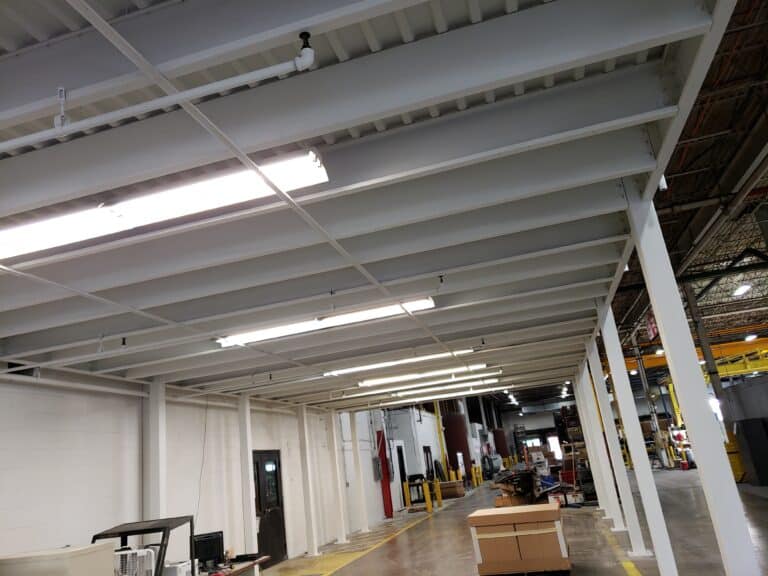
| Exposed metal deck (warehouse ceiling) | DTM primer | Industrial acrylic in flat white |
| CMU in food/chemical exposure | Epoxy block filler | Antimicrobial epoxy or polyamide |
5 Most Common Specialty Coating Mistakes
- Wall paint on hollow metal door frames. Chips at the strike plate inside 18 months. Fix: zinc-phosphate rust-inhibiting primer plus two coats of DTM urethane. We see this on every commercial repaint we are called to rescue.
- Standard latex over CMU without block filler. Three coats and the wall still looks blotchy because every pore drinks paint. Fix: one coat of block filler (gallon goes about half as far on CMU as on drywall) then standard latex.
- "Antimicrobial" paint that is not EPA-registered. Marketing claims do not satisfy healthcare infection control. Spec EPA-registered products (Sherwin-Williams Paint Shield, etc.) and require the registration number in the submittal.
- Intumescent applied to wrong dry-film thickness. The fire rating is a tested system. Under-applied: rating voided. Over-applied: aesthetic problem and potentially rating issues. Requires certified applicator and millage verification.
- Skipping the primer on a specialty system to save cost. Each system is engineered as a primer + topcoat pairing. Substituting a cheaper primer (or no primer) voids the manufacturer warranty and the system performance.
For commercial cost benchmarks by space type see our commercial painting cost guide. For drywall finish levels that pair with these coating systems see our commercial drywall spec guide. For phased work in occupied buildings see our commercial schedule planning guide.
Frequently Asked Questions
Direct-to-metal paint combines rust-inhibiting primer and topcoat function in one product engineered to bond directly to clean steel without a separate primer. You need it on hollow metal door frames, steel decking, structural steel in light-industrial use, railings, bollards, and miscellaneous metal substrates. Standard wall paint on these surfaces chips and rusts within 18 to 24 months.
Almost always. Raw CMU has an open pore structure that swallows standard wall paint, leaving blotchy coverage and forcing extra topcoat. Block filler ($0.85 to $1.60 per sf) fills the pores and reduces total topcoat consumption enough that the net cost goes down. We have only skipped block filler on previously-painted CMU where the existing coating was sound.
EPA registration as a microbicidal pesticide. Most paints labeled “antimicrobial” are actually labeled “mildew-resistant” (which protects the paint film, not the room). True antimicrobial paints like Sherwin-Williams Paint Shield have EPA registration numbers and tested efficacy against MRSA, VRE, E. coli, and other pathogens. Always require the EPA registration number in the submittal.
When architects expose structural steel that needs a fire rating (1-hr, 90-min, 2-hr, or 3-hr) in public spaces like lobbies, atriums, parking structures, and open-plan offices. The alternative is spray-applied fireproofing (SFRM, aka “monokote”) which is cheap but ugly. Intumescent costs more but preserves the visible steel.
Yes, many DTM products function as both primer and topcoat in one. Sherwin-Williams Pro Industrial Pro-Cryl Universal is the workhorse example. The trade-off is reduced color and sheen flexibility; you pick from the DTM color line, not the full topcoat palette.
Block filler: 0 net add (saves topcoat). DTM: 25 to 50 percent over standard latex per sf. Antimicrobial: 30 to 80 percent over standard latex. Intumescent: 3 to 5 times standard topcoat per sf because the application is specialized and the dry-film thickness requirement is strict.
Intumescent requires a certified applicator and millage verification per the UL listing. Antimicrobial does not require certification but does require careful surface prep and a healthcare-experienced crew. DTM and block filler can be applied by any qualified commercial painting crew.
Depends on the substrate and the wrong product. Wall paint on hollow metal: chipping at 12 to 18 months, full re-strip and recoat. Wall paint on raw CMU: bad coverage but eventually works after extra coats. Non-antimicrobial in healthcare: compliance violation and possible immediate re-spec. Wrong dry-film thickness on intumescent: voided fire rating and code violation. Specialty coatings are not a place to value-engineer.
Get Your Coatings Spec Reviewed
Reviewing a coatings spec for a warehouse, healthcare facility, hollow metal package, or fire-rated steel project? We will walk the spec with your architect or project manager, flag mismatches, and tell you where the spec is leaving money on the table or under-spec’ing the substrate. Forty-five minutes onsite. Educational walkthrough.
See our full commercial painting services or commercial services hub.