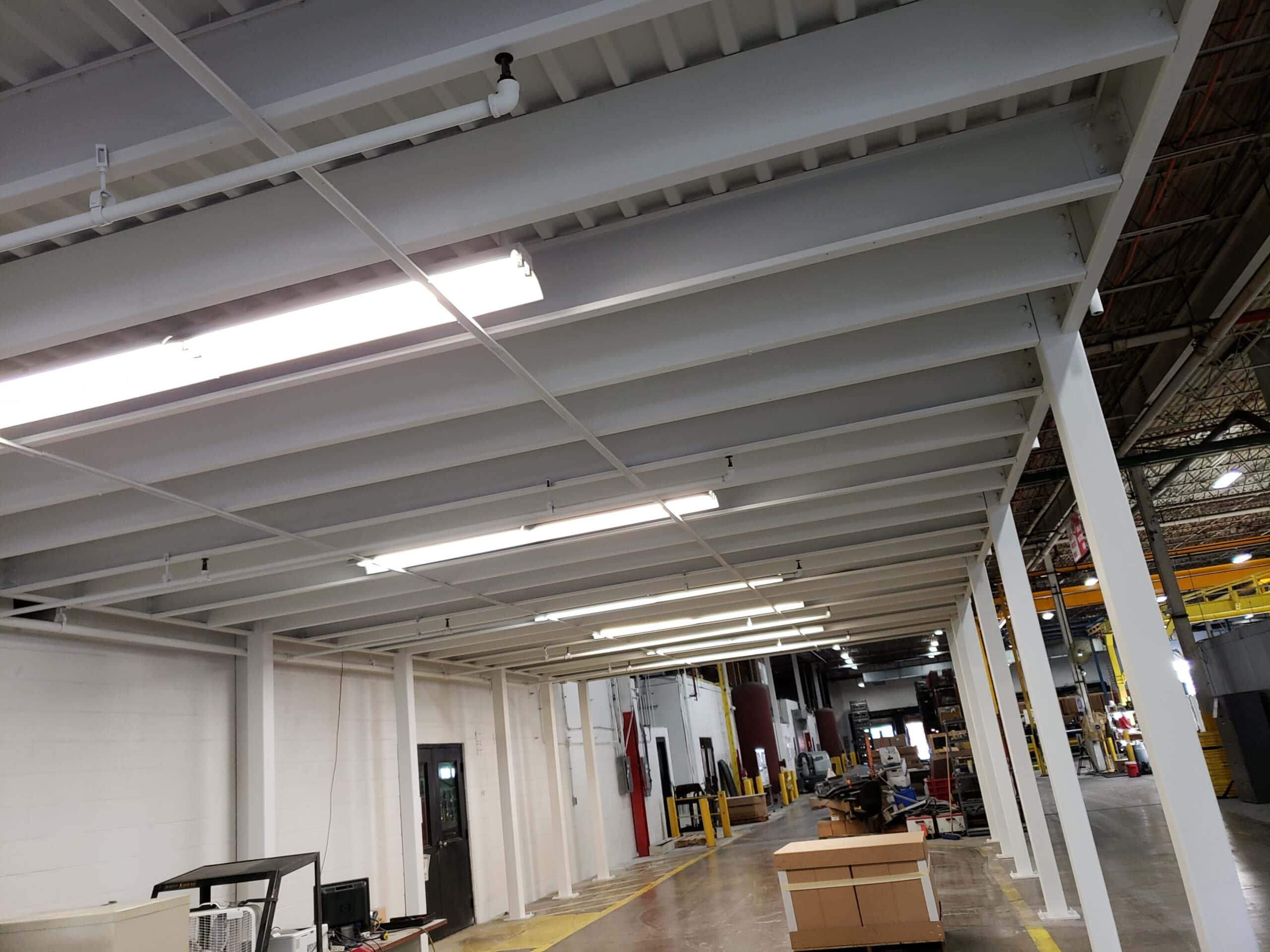
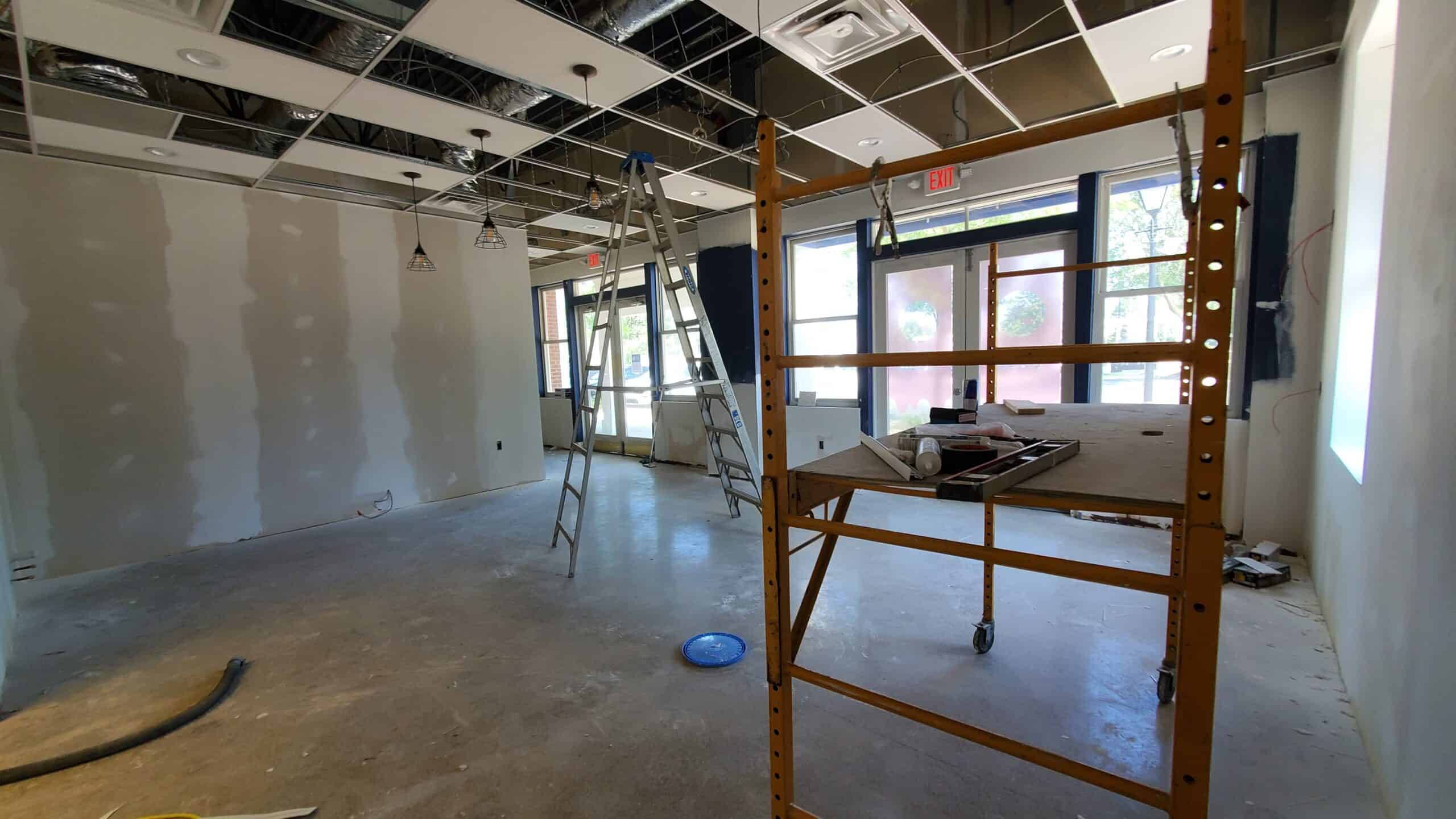
Quick answer: Paint sequences after framing, drywall finish, MEP rough, fire protection, and inspections — and before ACT ceiling grid drop-in, flooring, casework, and final trim. Two paint passes are standard on commercial buildouts: prime + first coat after drywall and before ceiling grid, then final coat + touch-up after all trades complete. Skipping the two-pass sequence forces a single-pass paint job in fully-built space and locks in scuffs, splatter, and damage from the trades following paint.
In this guide
Updated June 2026. Built from real PaintWerks commercial buildout projects across Central Ohio including Easton Town Center tenant work, Primrose Schools, healthcare buildouts, and multi-phase tenant improvements. As a licensed Ohio general contractor we coordinate paint with drywall, framing, ceiling, and flooring under one contract. Schedule a free walkthrough or call 614-582-4227.
The Master Sequence for a Commercial Tenant Buildout
15 steps from demo to move-in. Paint enters the sequence twice — once as primer plus first coat, once as final coat plus touch-up. The order matters:
- 1. Demo and selective demolition. Existing walls, ceilings, flooring removed per scope.
- 2. Framing (metal stud or wood). New wall layout per architectural drawings.
- 3. MEP rough-in. Electrical, plumbing, HVAC, low voltage roughed in the open walls and above-ceiling space.
- 4. Fire protection rough. Sprinkler heads roughed and main lines run.
- 5. Inspections — rough. Building, electrical, plumbing, fire inspections per Columbus or local AHJ.
- 6. Insulation. Sound attenuation in interior walls, thermal in exterior.
- 7. Drywall hang. Board hung on framing, ready for taping.
- 8. Drywall finish to spec level. L4 or L5 per spec. See our drywall finish levels spec guide.
- 9. PAINT PASS 1 — prime + first coat walls and ceilings. Faster and cleaner to paint before the ceiling grid drops, fixtures get installed, and floor goes down.
- 10. ACT ceiling grid install. Suspended ceiling grid hung and tiles dropped.
- 11. MEP trim-out. Light fixtures, outlets, switches, plumbing fixtures, HVAC diffusers all installed.
- 12. Flooring. VCT, LVT, carpet tile, or polished concrete installed.
- 13. Casework and trim. Cabinets, doors, hardware, and finish trim installed.
- 14. PAINT PASS 2 — final coat + touch-up. Touch up scuffs from the trades, recoat scuffed walls, paint any newly installed trim.
- 15. Final clean and inspections. Walkthrough with owner and tenant for punch list. Final municipal inspections. Move-in.
"The single-pass paint job after all trades finish always looks like a paint job done after all trades finished. Two-pass is the standard for a reason."
5 Coordination Failures That Cost Time and Money
- Paint scheduled after flooring. Roller and spray overspray on new VCT or carpet is a nightmare to clean and often gets billed back. Always paint walls and ceilings before flooring goes down.
- Single-pass paint after all trades. One coat after everything else is installed locks in every scuff, every smudge, every fingerprint from the previous trades. Two-pass paint catches damage at each stage.
- Ceiling grid installed before paint pass 1. Forces painters to roll walls around the grid and creates messy lines at every grid intersection. Always paint above grid line before grid drops.
- MEP trim happens before paint touch-up. Switch plates, outlet covers, diffusers all installed before paint touch-up. Paint then has to be cut in around every fixture. Add 10 to 20 percent labor for trim-out-first sequencing.
- Drywall finish substrate level missed. Painter shows up to L3 substrate when the spec calls for L4. Either painter eats the extra prep cost or the drywall contractor returns for additional finish passes. Always confirm finish level before paint starts.
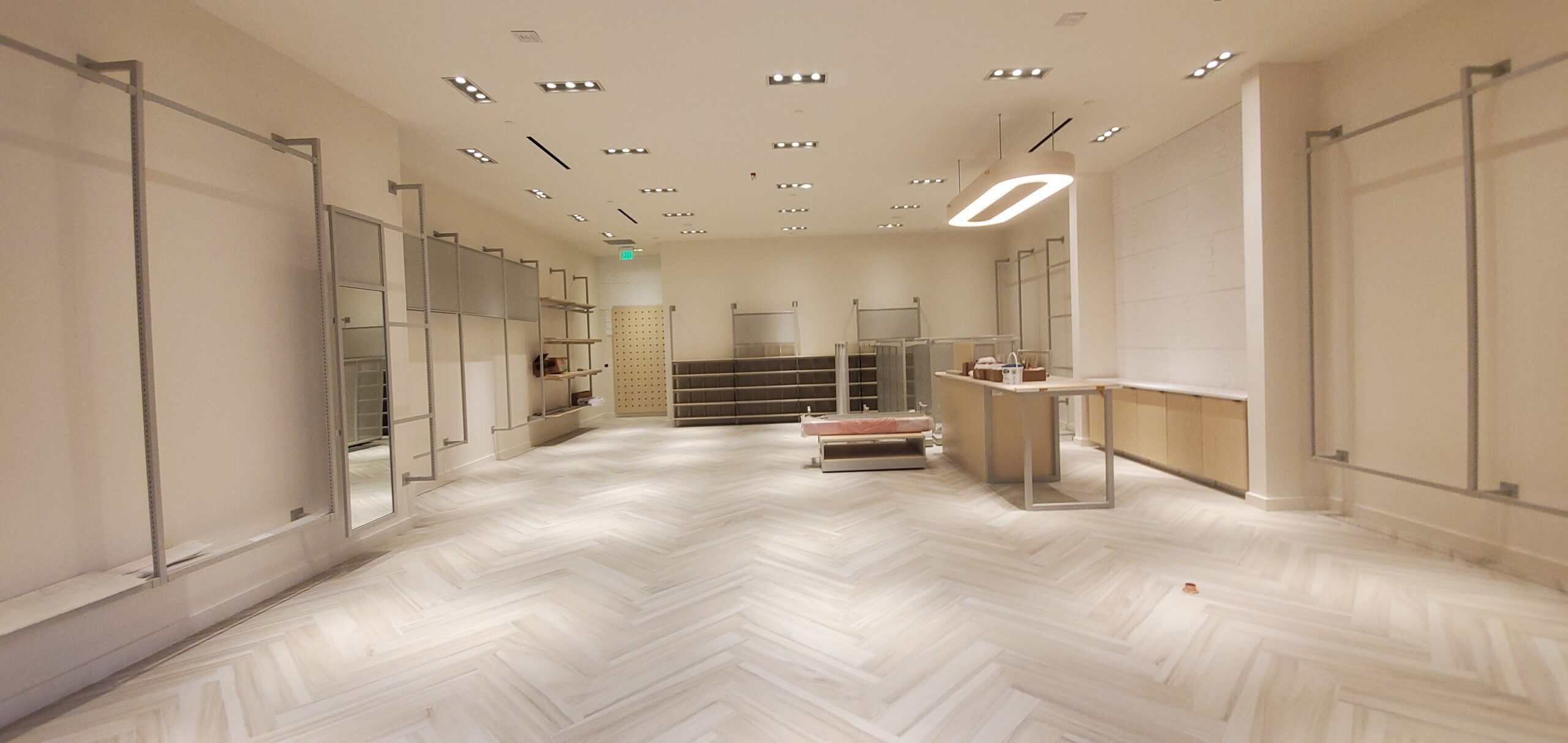
For phased work in occupied buildings see our commercial schedule planning guide. For substrate coordination see our substrate guide. For specialty coatings see our commercial coatings systems guide.
Frequently Asked Questions
Two times. Pass 1: prime + first coat walls and ceilings after drywall finish, before ACT ceiling grid drops. Pass 2: final coat + touch-up after all trades complete (after MEP trim, flooring, casework, and trim). Two-pass paint is the standard for a reason — it catches damage at each stage and finishes the room clean.
Single-pass paint after fixtures, flooring, and trim are in locks in every scuff and smudge from the trades that came before. It also forces painters to cut in around every fixture, switch plate, and trim piece, adding 10 to 20 percent labor. Two-pass paint is faster overall and cleaner.
Paint pass 1 should happen BEFORE the ACT grid drops. Walls and ceiling can be sprayed quickly with no grid obstruction. Once the grid is installed, painters have to roll around every grid intersection and the work slows dramatically. After-grid touch-up in paint pass 2 is fine.
Before paint mobilizes. The painter walks the rooms with the drywall foreman, raking-light tests the walls, and signs off on substrate condition. Any L3 work that should be L4 gets caught and remedied before paint hits the wall. This is the most common preventable problem in commercial buildouts.
A 5,000 sq ft tenant buildout: paint pass 1 runs 4 to 6 working days. Paint pass 2 runs 2 to 3 days for touch-up. Total paint days: 6 to 9 across the project schedule with weeks of other trade work in between. Multi-tenant or multi-phase work extends proportionally.
On a one-contract GC project, the GC project manager owns coordination across all trades including paint. On multi-prime or owner-managed jobs, the construction manager or owner rep coordinates. As a licensed Ohio GC, PaintWerks can handle drywall, framing, and paint under one contract — eliminating the hand-off and finger-pointing.
Sometimes. Paint can work on one side of the buildout while flooring goes down on the other, or while MEP trim happens in a different zone. Pure overlap (paint on the same wall as another trade) is generally a bad idea because of cross-contamination and scheduling friction.
Paint scheduled after flooring. Roller overspray and spray overspray on new VCT, LVT, or carpet often gets billed back to the painter or the GC, plus the cleanup time itself stretches the calendar. Always paint walls and ceilings before flooring installation.
Get a Buildout Sequence Reviewed
Planning a commercial tenant buildout or multi-phase property repaint? We will sit down with your construction manager or GC, walk the project schedule, and tell you where paint should land in the sequence to prevent rework and hit the move-in date. As a licensed Ohio general contractor we can also take the work under one contract and own the coordination ourselves. Forty-five minutes onsite. Educational walkthrough.
See our full commercial general contractor services or commercial services hub.