Quick answer: Yes, vinyl siding can be painted. The paint has to be 100 percent acrylic latex. The color has to be the same Light Reflectance Value (LRV) or higher than the original siding (vinyl-safe). The siding has to be washed, dried, and lightly scuffed before paint. Properly prepped and primed, vinyl paint holds 8 to 10 years. Skipping any of those rules causes warping, peeling, or bubbling within 2 to 3 summers.
In this guide
Updated June 2026. Built from real PaintWerks vinyl repaint projects across Columbus and Central Ohio. Considering paint vs replacement on your siding? Request a free walkthrough or call 614-582-4227.
Why Painting Vinyl Is Not Like Painting Wood
Vinyl siding moves. A 12-foot panel expands and contracts roughly half an inch between a winter night at 10 degrees and a summer afternoon at 95. Any paint film that goes on it has to stretch with that movement. Rigid coatings crack. Brittle paint peels. Most exterior wood paint is formulated for a substrate that moves a tenth of what vinyl does. Use it on vinyl and the failure is fast.
The second issue is heat. Dark paint on light siding absorbs solar heat that the original vinyl was engineered to reflect. The panel heats past its rated temperature and warps. A bowed siding panel is permanent, no fix short of replacement. That single failure mode is why color rules exist.
The Color Rule (Light Reflectance Value)
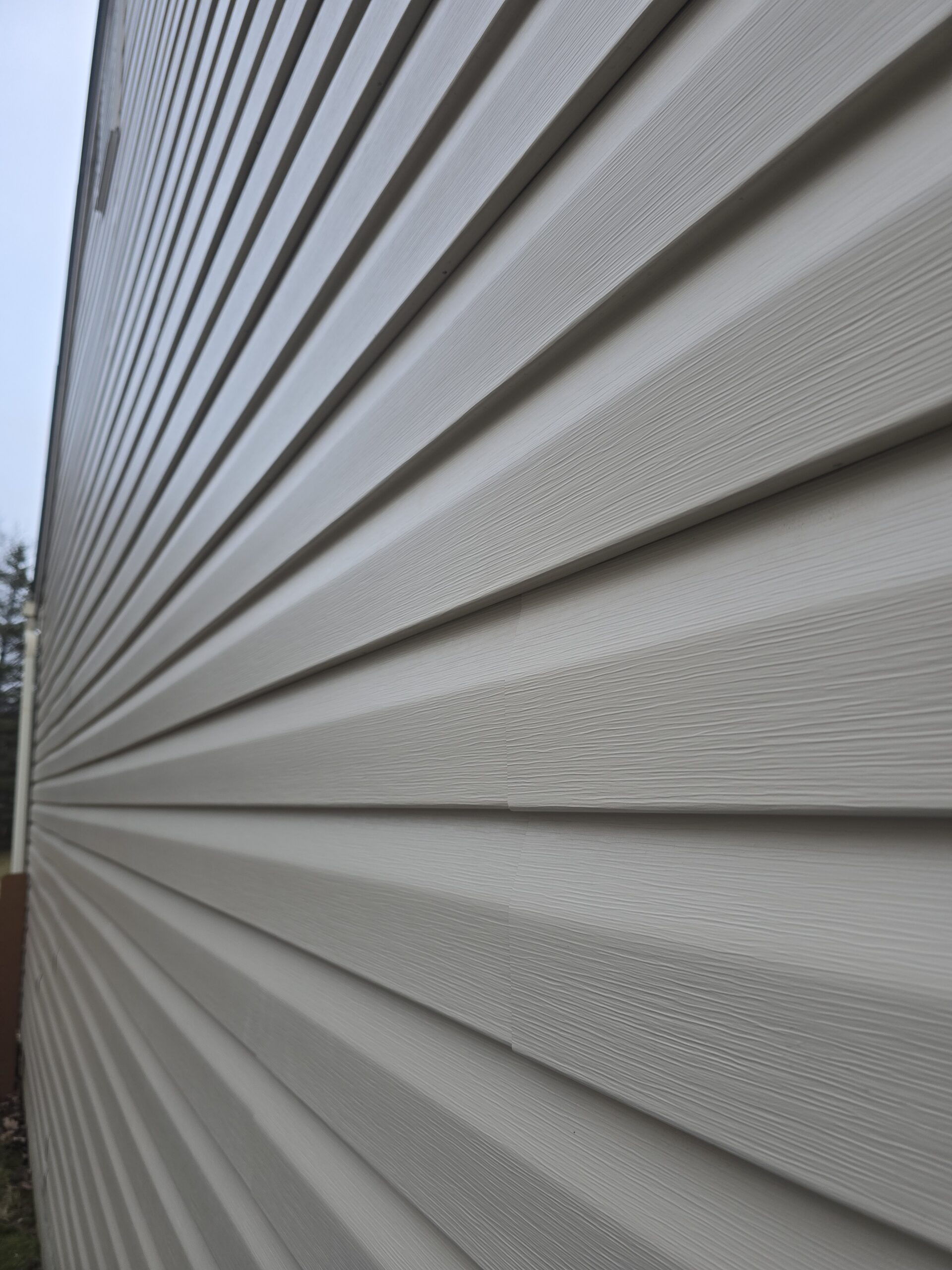
Every paint color has a Light Reflectance Value (LRV) from 0 to 100. White is near 100, jet black is near 0. Vinyl siding manufacturers spec a minimum LRV that paint applied to their product cannot fall below. For most residential vinyl, the rule is the new color must have an LRV equal to or higher than the original. In practice that means you can paint vinyl the same shade, lighter, or a similar tone, but you cannot go darker.
| Original Vinyl Color | Acceptable New Colors | Avoid |
|---|---|---|
| White or off-white | White, beige, light gray, soft pastels | Anything dark or saturated |
| Beige or tan | Same tone, lighter beige, white, soft cream | Brown, dark gray, navy |
| Light gray | Lighter gray, white, very pale blue | Charcoal, navy, black |
| Light blue or sage | Same tone, lighter shade | Saturated or dark versions |
| Already dark vinyl | Same LRV or lighter | Going darker (rare problem) |
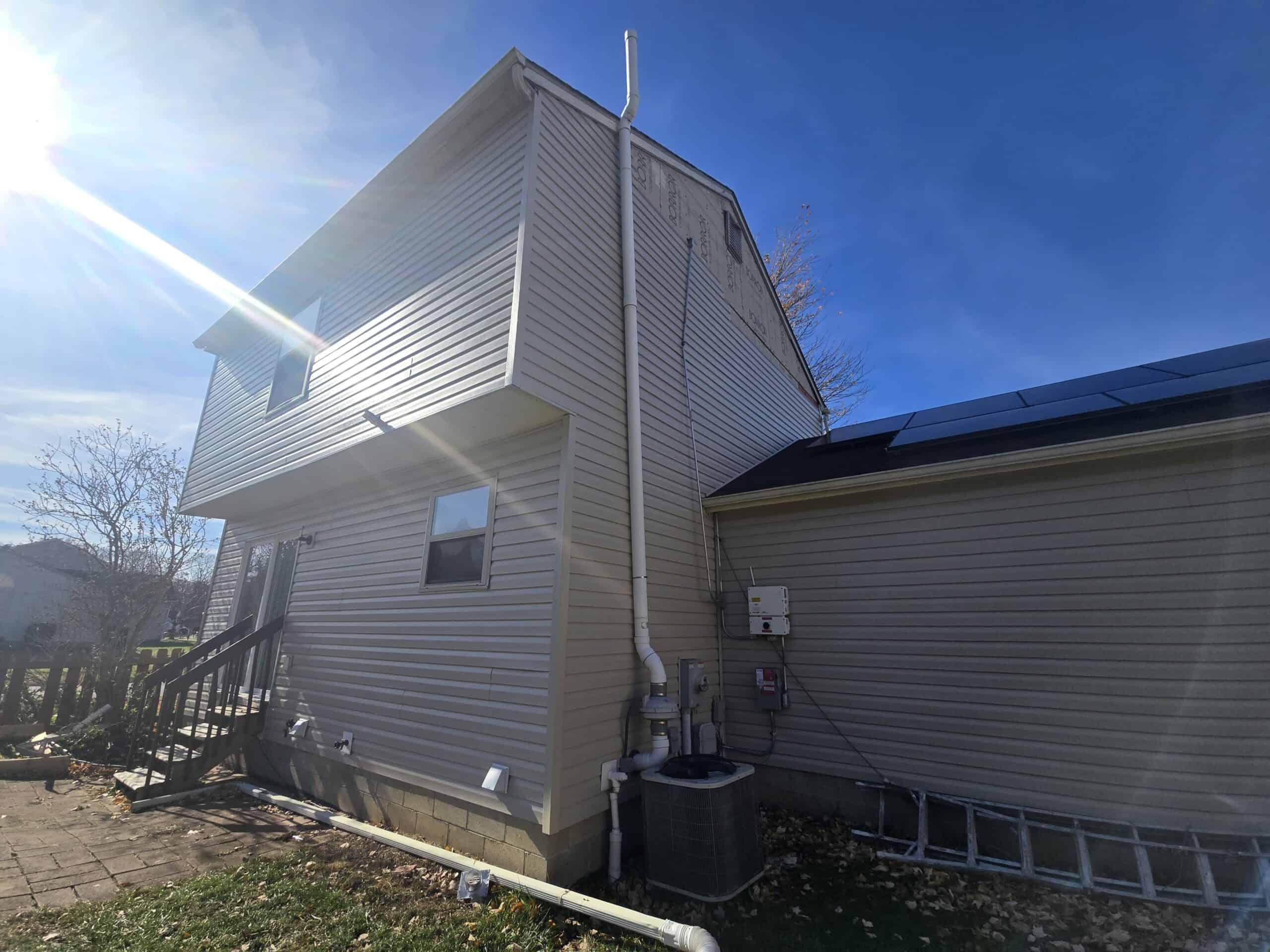
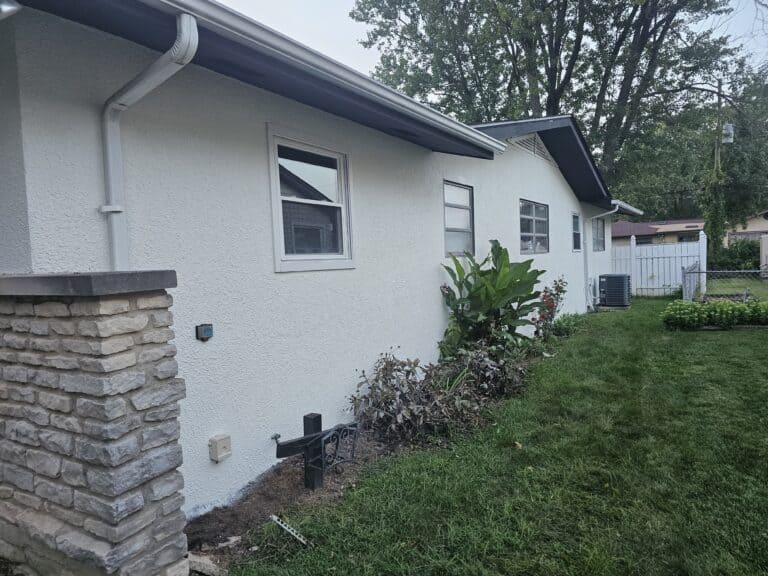
Tired vinyl
Faded, oxidized, ready for repaint or replacement
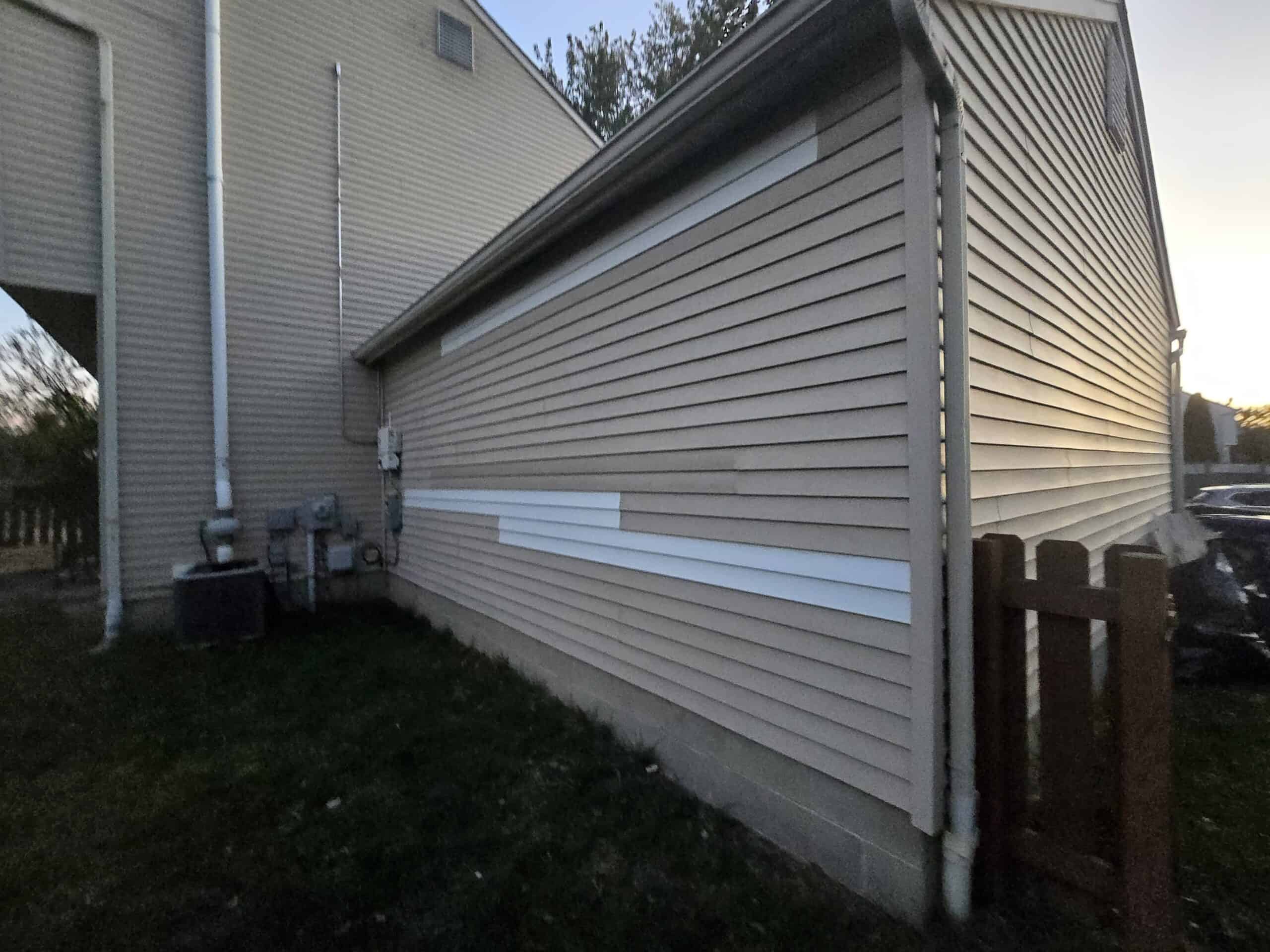
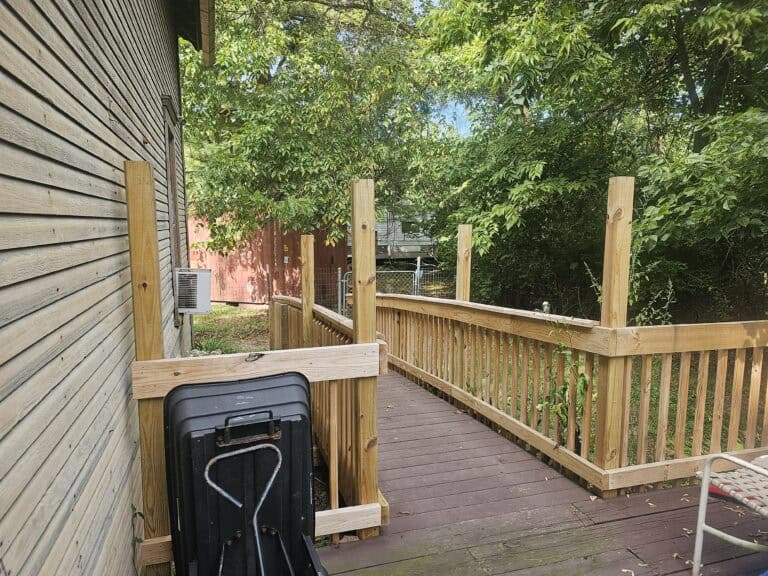
Updated exterior
Vinyl-safe color rules followed, two-coat acrylic
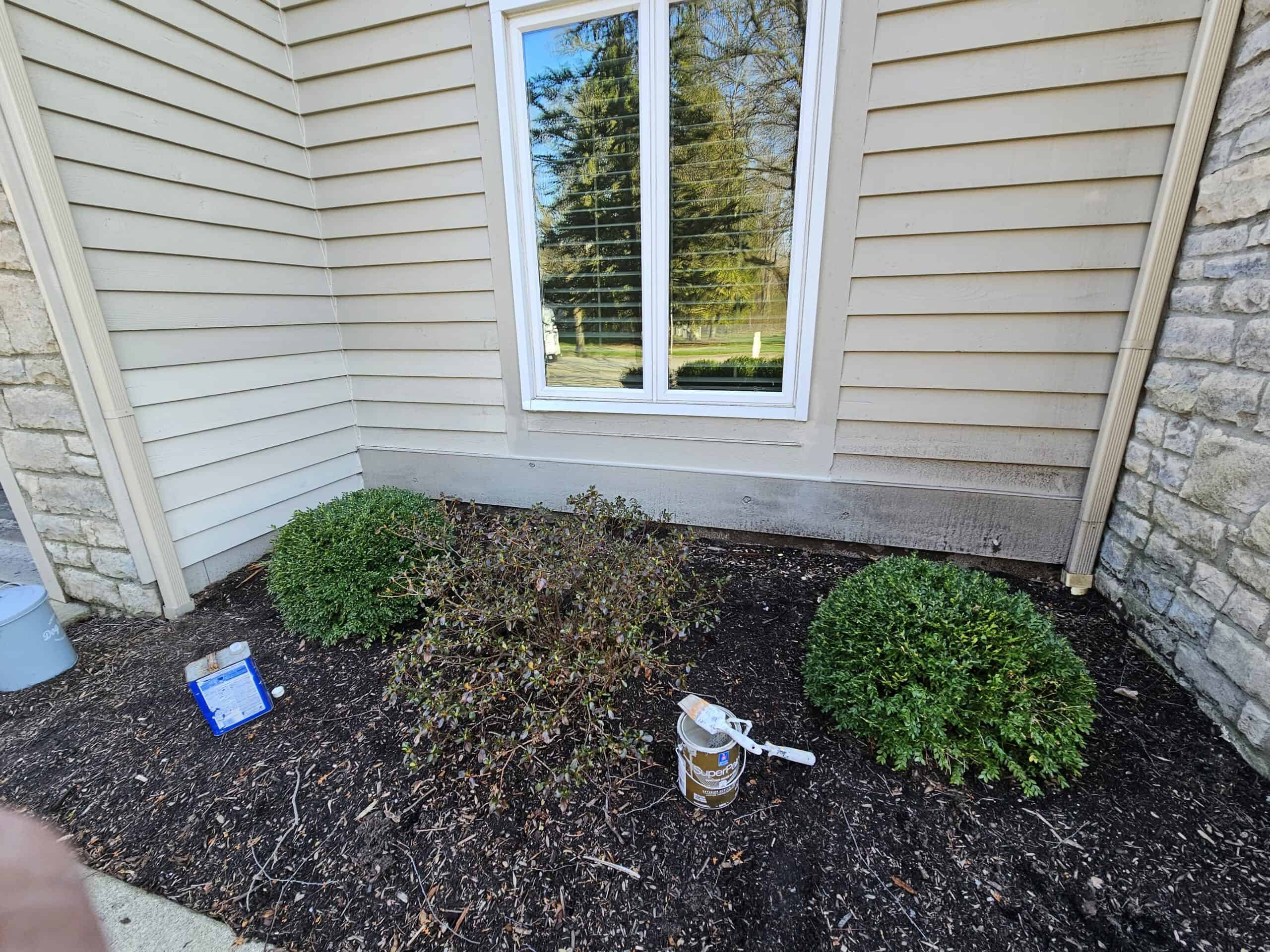
The Right Paint Product
The paint has to be 100 percent acrylic latex. Not vinyl-safe acrylic only on the label, the actual polymer chemistry. Acrylic stretches with the panel movement. Cheap latex with vinyl-acetate copolymers cracks. Oil-based paint is wrong on vinyl regardless of brand or marketing.
Premium vinyl-safe options that perform well in Columbus weather:
- Sherwin-Williams Resilience Exterior — VinylSafe color palette
- Sherwin-Williams Emerald Exterior — longest-lasting on harsh south and west exposures
- Sherwin-Williams Duration Exterior — VinylSafe formulation
- Benjamin Moore Regal Select High Build — vinyl-safe self-priming option
- Benjamin Moore Aura Exterior — carries vinyl-safe color palette
- Behr Marquee Exterior — lighter LRV ranges only
The premium-tier comparison covered in Sherwin-Williams Duration vs Emerald exterior applies directly to vinyl siding choices.
Prep That Actually Holds the Paint
Vinyl siding accumulates pollen, mildew, road grime, and oxidation over time. Paint over that and the film bonds to the grime, not the vinyl. The prep sequence is what determines whether a paint job holds 8 years or peels in 18 months.
1. Wash
Pressure wash the entire surface at 1,200 to 1,500 PSI with a vinyl-safe cleaner like Mold Armor House Wash or Krud Kutter. Use a soft brush on heavily mildewed spots. Rinse thoroughly. Let dry 48 hours minimum before any coating goes on.
2. Dry Time
Vinyl traps water behind it during washing. Painting too soon traps that moisture under the new film. Wait the full 48 to 72 hours after wash, longer in humid Columbus summer conditions. Test by feeling under a lap edge. If it feels damp, wait longer.
3. Scuff Sanding
On heavily oxidized vinyl (chalky surface when you rub it) or on glossy original finish, light scuff with 220 grit gives the new paint something to bite. Skip this on newer matte vinyl with intact surface texture.
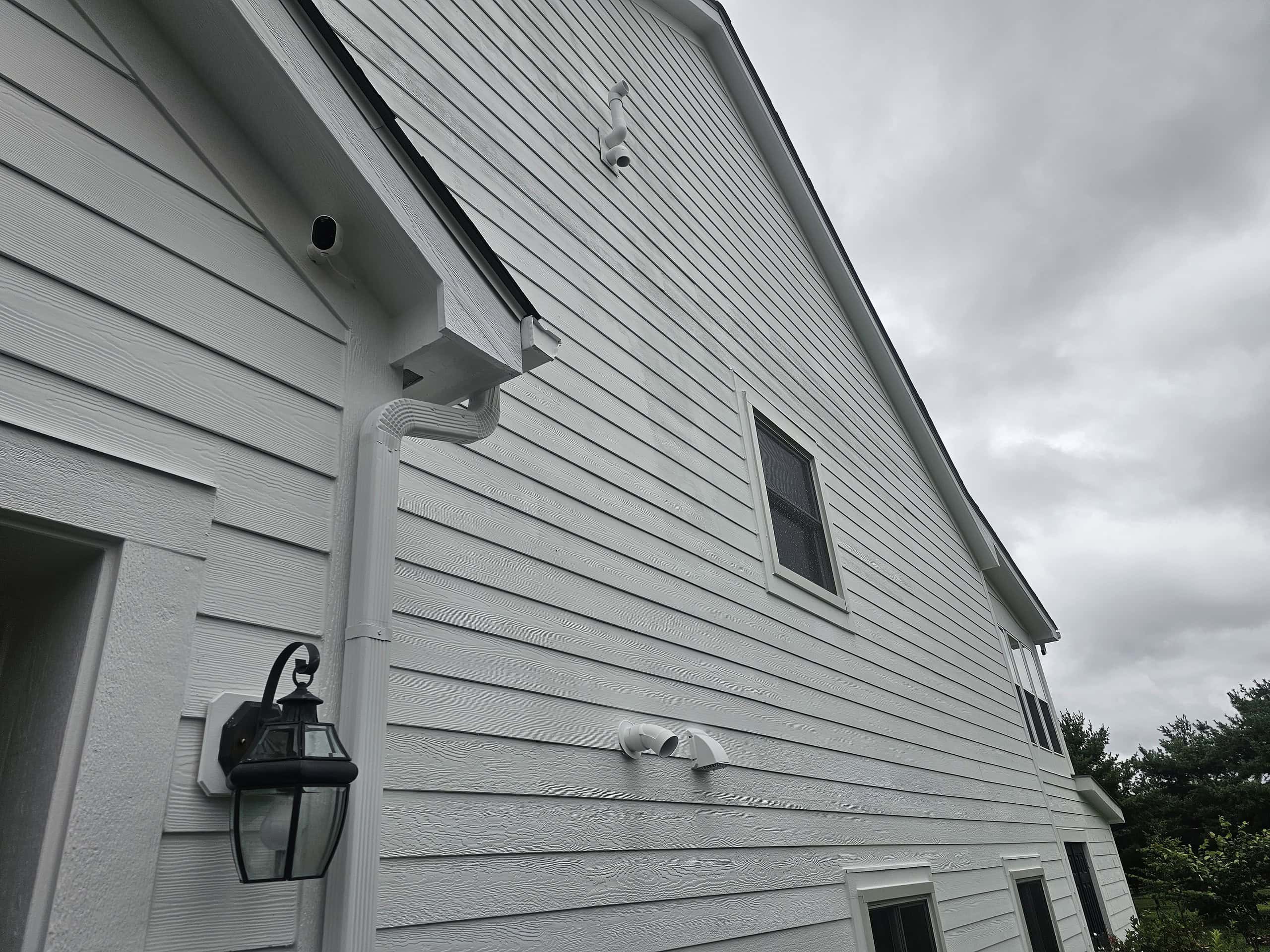
4. Repair
Cracked, holed, or warped panels need replaced before paint goes on. Paint will not bridge a crack or hide a warp. Loose nails get tapped back in. Caulk failures at corners and J-channels get redone with vinyl-safe siliconized acrylic caulk before any paint touches the substrate.
Paint vs Replacement: The Money Decision
A Columbus 2,000 sqft home vinyl repaint runs roughly $4,500 to $9,000 depending on stories, prep needs, and product tier. Vinyl siding replacement on the same home runs $15,000 to $30,000 depending on product grade. Paint that holds 8 to 10 years buys you a decade of new look for roughly a third of the replacement cost.
The catch is paint can only do so much. If the siding is cracked, warped, faded beyond restoration, or installed badly, paint will not save it. If you have functional vinyl that just looks tired or dated, paint is usually the right move. For walking the property and getting an honest paint-vs-replace recommendation, see what is covered on the siding painting service page.
"Painting vinyl works. Painting vinyl with the wrong color, wrong product, or wrong prep does not. Stay inside the rules and the job lasts a decade."
Common Mistakes That Kill Vinyl Paint
- Going too dark — south wall warps and paint peels off the bowed panels. No fix short of replacement.
- Wrong paint chemistry — oil-based or acrylic-vinyl copolymer cracks at every lap joint within 6 months.
- Painting over mildew — mildew bleeds through paint within months. Hot wash with mildewcide first.
- One coat to save money — thins out by month 18, especially on south-facing walls.
- Painting in direct hot sun — flash-dries before leveling, locking in brush marks and lap lines.
- Skipping the wash — paint bonds to oxidation or grime, releases from vinyl within a year or two.
Frequently Asked Questions
No. The new color must have a Light Reflectance Value equal to or higher than the original (vinyl-safe). Going darker absorbs heat that the panel was not designed to handle and causes warping. Sherwin-Williams VinylSafe and Benjamin Moore Aura Exterior carry vinyl-safe palettes.
8 to 10 years with proper prep, vinyl-safe color, premium 100 percent acrylic paint, and two coats. Cheap product or shortcut prep cuts that to 2 to 4 years. South and west walls in full Columbus sun age faster than north walls regardless of product.
Often no, with the right premium acrylic product on properly prepped clean vinyl. Yes when switching between gloss levels, on heavily oxidized siding, or when including aluminum trim or J-channels in the same scope. Bonding primers like INSL-X Stix or Sherwin-Williams Extreme Bond handle the harder cases.
Most vinyl siding warranties exclude warranty coverage on painted siding. Check your warranty documentation. Most homes more than 5 to 10 years old are already outside the active warranty period.
Sprayed and back-brushed is the professional method. Spray lays down the fast uniform film, back-brush works it into lap edges. Brush and roll alone works but is slower and risks lap marks at the joints.
Paint runs roughly one third the cost of replacement. Replacement is the right call when the siding is cracked, warped, or otherwise structurally tired. Paint is the right call when the siding is functionally sound but looks dated.
Get a Real Recommendation Before You Decide
Most vinyl that homeowners want to paint will paint fine. The bad outcomes come from color choice, product choice, or prep shortcuts. For a real read on whether your siding is a candidate, what color rules apply, and what the project actually costs, we walk it with you.