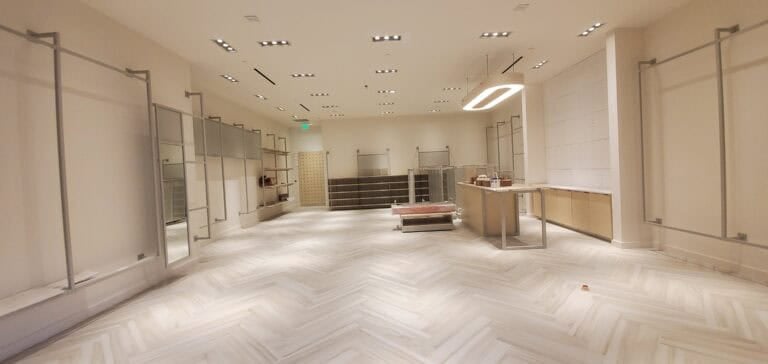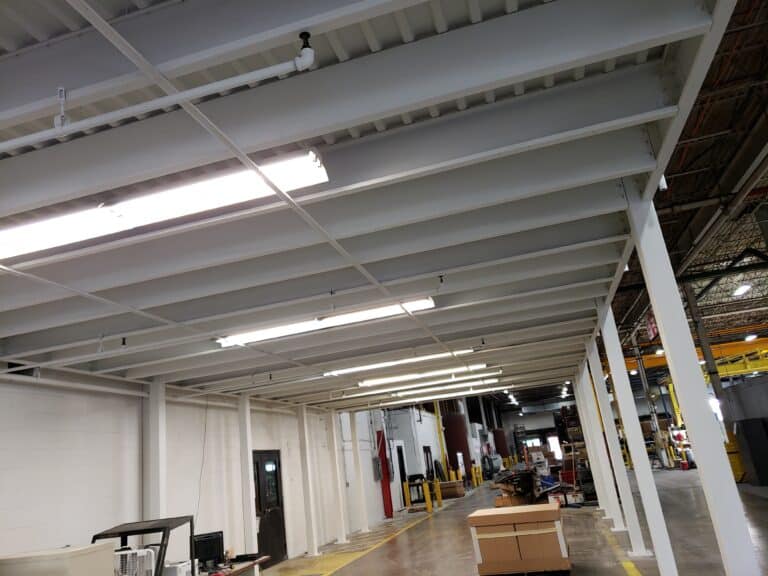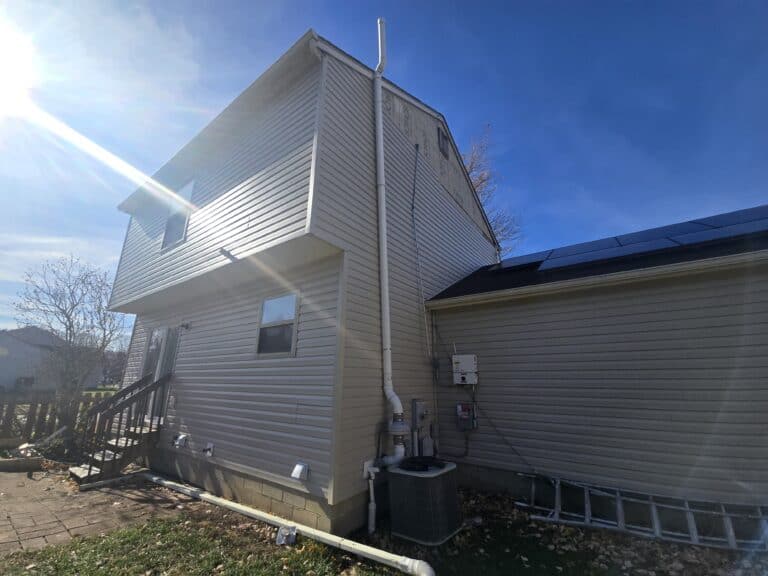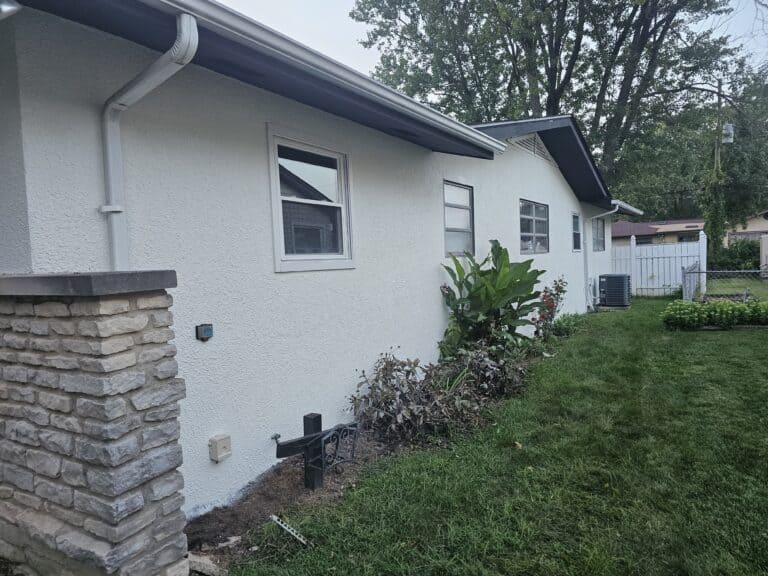
Quick Answer: Intel pushed its two New Albany semiconductor fabs from a 2026 completion out to 2030 and 2031, blaming financial discipline. Construction has not stopped. Bechtel is still onsite, crews have logged 6.4 million hours, more than 200,000 cubic yards of concrete are already poured, and the contractor is actively hiring welders and electricians. For Columbus commercial building owners, the takeaway is not doom. It is that the New Albany build cycle stays hot through the rest of the decade, ancillary supplier and staffing construction stays busy, and commercial coating labor stays tight in the northeast metro.
Table of Contents
- The Delay in Real Numbers
- What Is Actually Happening on Site
- The Ripple Through Central Ohio Commercial Real Estate
- What This Means for Commercial Paint Buyers
- The Building Owner Playbook
- FAQ
The Delay in Real Numbers
Intel announced in early 2026 that its Mod 1 and Mod 2 fabrication buildings at the New Albany campus, originally slated to be operational by end of 2026, are now targeting 2030 and 2031 (Manufacturing Dive). This is the second major schedule shift on the project. Intel’s stated reason is finishing the project in a “financially responsible manner.”
The delay is real, but the money is real too. Intel has already invested more than $28 billion in the site, and the CHIPS Act awarded up to $7.86 billion in direct federal funding for the project (Intel newsroom). Ohio has committed significant state incentives on top. Walking away is not on the table.
What Is Actually Happening on Site
Bechtel is the general contractor on Ohio One. As of the most recent Intel update from January 2025, crews had logged more than 6.4 million work hours on site (source). That included underground pipe installation, more than 200,000 cubic yards of concrete poured, sub-utility trenches completed, and office building construction underway.
Tom’s Hardware reported that Bechtel is actively hiring managers, welders, and electricians on the Ohio site as recently as early 2026, which suggests the schedule shift is a slowdown, not a stop (source). The shell and building enclosure work continues. The delay is on the fab tool install, cleanroom fit-out, and equipment commissioning, which are the last phases of any semiconductor build.
The Ripple Through Central Ohio Commercial Real Estate
The Intel delay hit the news cycle hard, but the ripple effect on Central Ohio commercial real estate is more complicated than the headline suggests. Three things are still true:
- Supplier facility construction is still moving. Intel’s supplier ecosystem, from chemical vendors to gas suppliers to specialty equipment manufacturers, has already broken ground on multiple support facilities in Licking and Franklin counties. Those buildings need paint, drywall, and coatings on their own schedule, not Intel’s.
- Staffing, office, and light industrial demand is stable. Bechtel’s crew count on site is still measured in the thousands. That workforce needs office trailers, staging warehouses, and equipment yards, all of which support commercial coating work.
- The data center market is picking up any slack. Meta’s Prometheus, Google’s expansion, and QTS’s growth in the same New Albany submarket mean the commercial coating labor pool stays tight regardless of Intel’s timeline. The Central Ohio Building Trades 2026 forecast is up on data centers alone (source).
What This Means for Commercial Paint Buyers
Owners of commercial property in Licking, Franklin, and northeast Columbus need to plan around three specific effects of the Intel delay:
1. Ancillary Building Repaints Stay in Demand
Every supplier office, staffing agency, contractor field office, and equipment yard in the ring around Ohio One is going to see another 4 to 5 years of hard use before Intel’s fab tools go in. That means more frequent repaint cycles, more wear-and-tear on floor coatings, and more accent metal touch-ups than the buildings were originally spec’d for.
2. Multifamily Turnover Programs Get Pushed
The Intel worker housing thesis, where multifamily developers spec’d new units in the New Albany and Johnstown corridor for anticipated Intel workers, has to reset. Some of that unit inventory is already delivered. The turnover cycle on those units is going to be longer than the original underwriting assumed, which means owners should push their paint spec toward more durable acrylics that can survive longer between full repaints.
3. Office and Retail in the New Albany Ring Faces Occupancy Pressure
Office and retail that leased on the Intel thesis is facing longer stabilization. Owners should expect more TI turnover as tenants come and go, which means paint budget should be reset to include more frequent repaints rather than one big five-year cycle.
The Building Owner Playbook
Four practical actions for anyone owning commercial property in Central Ohio right now:
- Do not chase Intel’s timeline. If you underwrote a property in 2022 or 2023 based on Intel’s original schedule, refresh the underwriting. Base your capex plan on the data center demand, not on the fab.
- Front-load your repaint cycles. Ancillary building demand is going to be sustained for 4 to 5 more years. Get durable, high-mil coatings on now while lead times are still workable.
- Standardize color across ancillary facilities. If you own multiple supplier or staffing buildings in the same submarket, the same paint spec across every building cuts labor rate and simplifies touch-ups.
- Watch for opportunities. Owners exiting the New Albany submarket because of the delay create pricing openings for owners who understand the real construction pipeline is still strong.
Frequently Asked Questions
Is Intel really going to finish Ohio One?
Yes. Intel has already invested more than $28 billion and taken CHIPS Act funding of up to $7.86 billion (Intel). Bechtel is still onsite, still hiring, and construction is continuing. The delay is on tool install and cleanroom fit-out, which is the last phase of any semiconductor project. The buildings themselves are on track.
How does the Intel delay affect the New Albany real estate market?
Short-term, some multifamily and office assets that were underwritten on Intel’s 2026 timeline are re-stabilizing. Longer term, the corridor still has Meta’s Prometheus data center opening in 2026, Google’s $1.7 billion three-campus expansion, QTS growth, and continued Bechtel workforce demand. The real estate thesis for New Albany did not disappear. It just shifted from semiconductor-led to data-center-led.
What paint work is happening on the Intel site right now?
Intel does not release subcontractor lists publicly, but semiconductor fab construction at this stage typically includes intumescent fireproofing on structural steel, epoxy floor coatings in mechanical rooms and utility corridors, high-solids CMU block coatings on interior walls, and industrial urethane on exterior steel. Those scopes are actively bidding out through Bechtel’s trade partner network.
Should I still invest in commercial property near New Albany?
That depends on your underwriting. Owners who bought on Intel’s 2026 fab-worker thesis need to reset. Owners looking at data center-driven demand, contractor and supplier facility demand, and general Columbus MSA growth still have a strong thesis. The northeast metro submarket has multiple independent drivers, not just Intel.
How long do commercial paint jobs on light industrial buildings last?
Exterior on a properly spec’d light industrial or supplier facility runs 8 to 12 years with a two-coat urethane system over a zinc-rich primer. Interior CMU with a proper block filler and two-coat epoxy runs 10 to 15 years. Cutting corners on primer or thinning down to a single topcoat drops that lifespan to 3 to 5 years, which is where most repaint calls come from.
Commercial Coatings for Central Ohio’s Northeast Corridor
PaintWerks has been running commercial coating and drywall projects across the New Albany, Johnstown, Gahanna, and Reynoldsburg corridor for years. If you own supplier, office, retail, or multifamily property in the ring around Ohio One and you need to reset your capex repaint cycle, we can walk the building and put a real number on the scope. See our commercial painting scope or request a walkthrough.