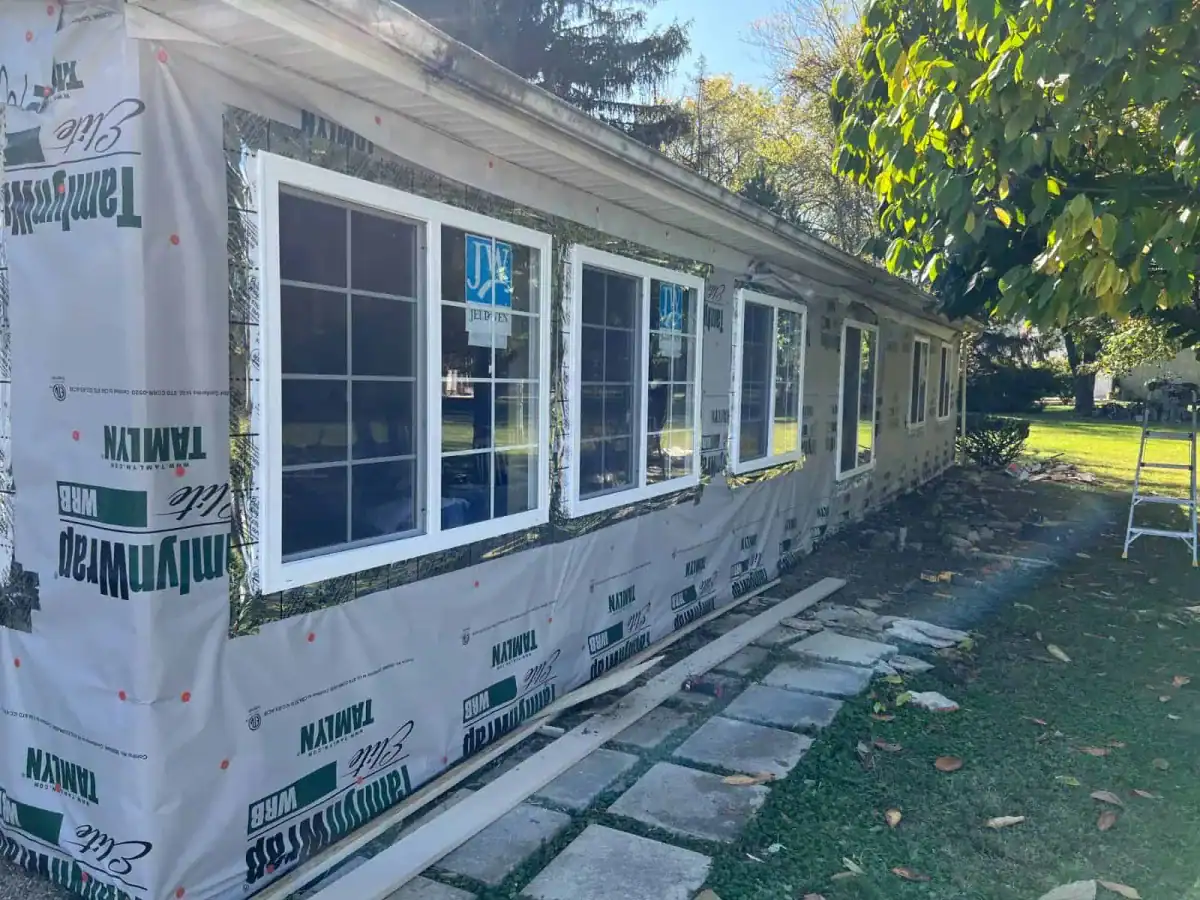
Sherwin-Williams Duration vs Emerald Exterior: Which to Use When
A Columbus contractor’s honest take on Sherwin-Williams Duration vs Emerald for exterior work. Pricing, coverage, cure behavior, and the jobs each one actually belongs on.
Two top-shelf Sherwin-Williams exterior paints. Both will outlast cheap paint. Here’s the actual difference on a Dublin Tudor. We’ve sprayed and brushed thousands of gallons of each on Columbus homes since 2016, and the right call changes house to house. This is the real contractor breakdown: pricing, cure behavior, and where each one earns its keep.
Product spec on an exterior repaint is non-negotiable for warranty. The label has to match the substrate, the sheen, and the system the manufacturer actually backs.
Pricing
Retail and contractor pricing move with promotions and your Sherwin account tier. Here are the numbers I see most often in central Ohio in 2026. Duration runs about $70–$80 retail and $50–$55 contractor per gallon. Emerald runs $80–$95 retail and $60–$65 contractor per gallon. That’s roughly a $10 per gallon contractor delta. On a 2,400 sqft two-story repaint pulling 18 gallons for body and trim, you’re looking at about $180 to $270 in product cost difference. Not catastrophic. The conversation isn’t really about the paint dollars. It’s about whether the upgrade buys you anything you’ll notice on this specific house.
Coverage
On smooth Hardie both products spread at roughly 350 sq ft per gallon at the recommended mil thickness. Rough-sawn cedar, heavily textured stucco, and weathered T1-11 will eat more, sometimes pushing real-world coverage closer to 250–275 sq ft per gallon. Two coats is the standard exterior system for both, and that’s what the limited lifetime warranty assumes.
| Attribute | Duration | Emerald | Notes |
|---|---|---|---|
| Retail price per gallon | $70–$80 | $80–$95 | Varies by sheen and region |
| Contractor price per gallon | $50–$55 | $60–$65 | Roughly $10/gal delta on a typical account |
| Spread rate (smooth Hardie) | ~350 sq ft | ~350 sq ft | Identical on smooth substrates |
| Recoat window (77F, 50% RH) | 4 hrs, forgiving | 4 hrs, tight | Emerald cross-links faster, less margin in heat |
| Sheen options | Flat, satin, gloss | Flat, satin, gloss | Bump trim sheen for sharper read against body |
| Color retention on darks | Good | Best in class | Charcoal/navy/hunter favor Emerald |
| Recommended substrate | Hardie, vinyl, aluminum, primed wood | Same + cedar, redwood, tannin-bleed wood | Emerald handles tannin substrates better |
| Warranty | Limited lifetime | Limited lifetime | Both lifetime; warranty hinges on prep + system |
Cure Behavior
This is the part you won’t read on a tech data sheet. Both spray fine. The difference shows up in the brush corners, on cut lines, and on a 90-degree afternoon when the wall is fighting you.
Duration has a soft-leveling profile. It flows out, forgives a lap mark, and stays workable longer in Columbus humidity. On a 90-degree July day with sun on the wall, it gives you breathing room. The cured finish lands slightly chalkier than Emerald (Sherwin will say that politely in their own way). On lighter colors it doesn’t read. On deep blues and charcoals it can show up as a faint powder a few years in.
Emerald has a tighter open time. The cross-linking that makes it bulletproof also shortens your window to fix a lap mark. On a calm 70-degree overcast day it’s a dream to spray. On a hot sunny wall, you chase it. The cured film is harder, less chalky, holds sheen longer, and cuts cleaner on trim lines.
Jobs Where Each Wins
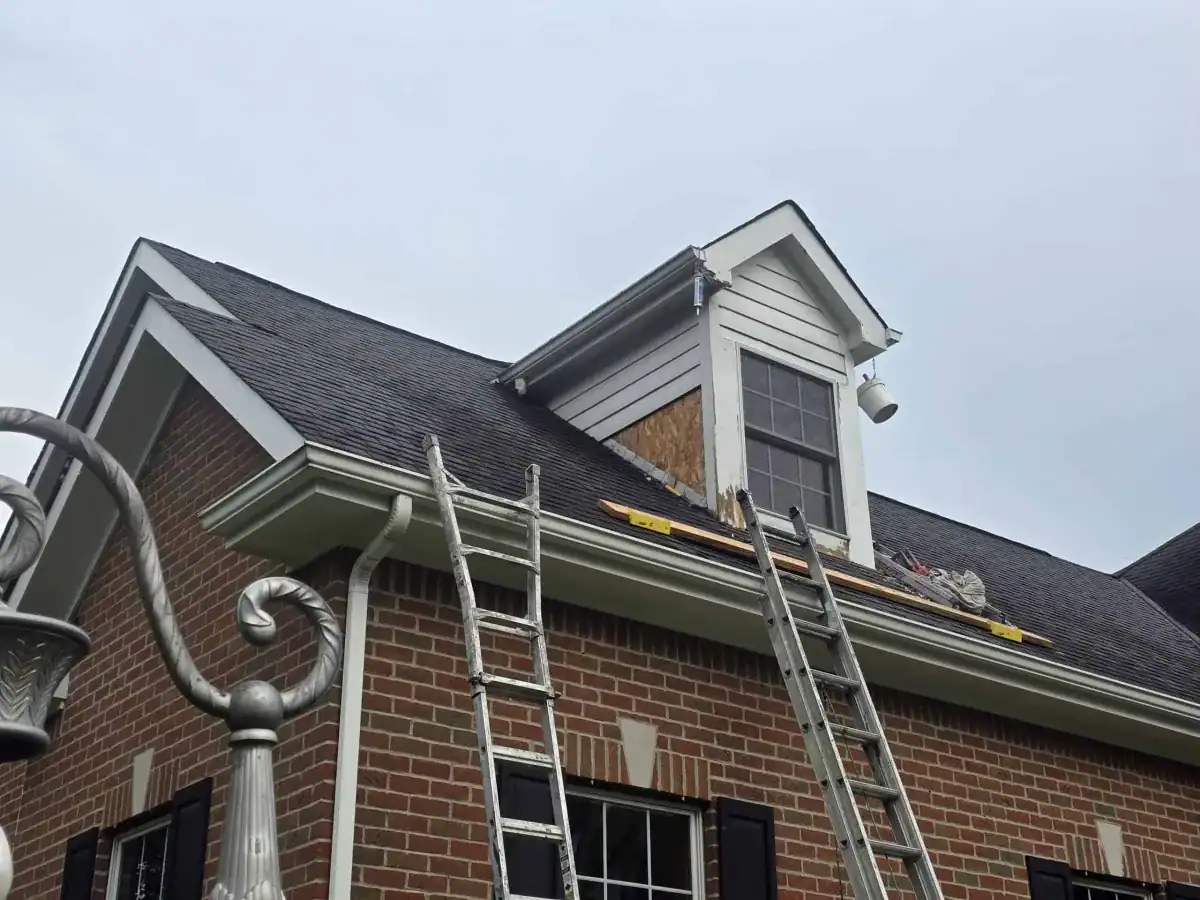
Last year we worked a Tudor on the east side of Dublin. Charcoal body, cream stucco accents, bone white trim. Cedar shake upper, Hardie panel lower. South elevation bakes from 10 AM to sunset; the north side sits under maples. Going all-Emerald was a $640 upcharge. Going all-Duration was the budget play. We split it.
Body color (deep charcoal) got Emerald flat because that shade in Duration would chalk visibly in 4 or 5 years on the sunny side. Trim and shutters got Emerald gloss for sheen hold. The cream accents and the soffits got Duration satin. Lighter color, less UV stress, and soffit cut work is awkward enough that I want the forgiving paint up there. Final mix landed at 60% Emerald on the visible surfaces, 40% Duration on the supporting cast. Homeowner saved roughly $300 without compromising the parts of the house that needed the upgrade.
Dark colors deserve Emerald. Light to medium colors are happy with Duration.
Duration is the right call when:
- Standard repaint on Hardie, vinyl, aluminum, or properly primed wood
- Light or mid-tone body color (beige, gray, sage, soft blue)
- Larger elevations where gallon count drives budget
- Tight weather windows that need recoat flexibility
- Owners who want the lifetime warranty without paying for the top shelf
Emerald is worth the upgrade when:
- Deep, saturated body colors at risk for UV fade
- South or west walls in full sun with no shade trees
- Trim and fascia where sheen retention reads against the body
- Tannin-bleed substrates (cedar, redwood, fresh shake)
- High-end spec where the owner has researched and asked for it
Paying the Emerald premium on the sun-baked elevations and the dark body color is the cheaper move long-term. Repainting a chalked-out south wall five years in costs more than the upgrade ever did.
Our Default Pick
I’ve seen Emerald fail in 3 years on a house where the previous painter sprayed it over chalking flat latex without a bonding primer. Same product, properly applied to a sound substrate, still tight 8 years later down the street. Whatever paint you pick, the prep matters more. Scrape, sand, prime bare wood, caulk every gap, and let everything dry. On a typical siding painting job we spend 60% of labor on prep and 40% on coats. Read more on weather timing in our exterior weather guide and on detail work in our trim and fascia post. For the manufacturer specs straight from the source: the Sherwin-Williams Duration page and the Emerald Exterior page both list current TDS downloads. When we walk a residential painting estimate, we look at substrate, orientation, color, your timeline in the house, and budget. Sometimes the answer is all Duration. Sometimes all Emerald. More often it’s a thoughtful mix across exterior painting, trim and fascia, paint prep, and brick and masonry work. Both paints are legitimate top-tier products. There’s no wrong choice, only a more efficient one for your specific house.
Industrial and commercial coatings: when neither Duration nor Emerald is the answer.
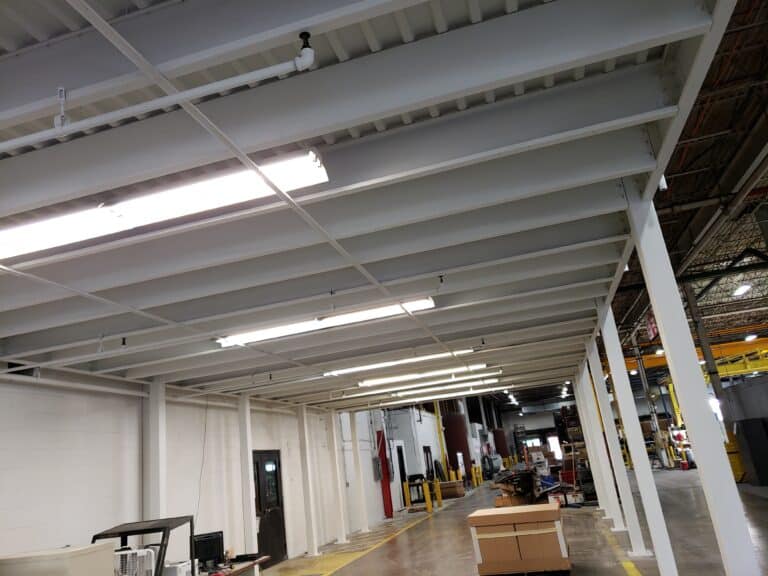
For industrial facilities, commercial storefronts with high UV exposure, and any building above three stories, the conversation shifts from Duration vs Emerald to architectural vs industrial. Architectural paints (including Emerald) are spec’d for residential homes and one-to-two-story light commercial. Industrial coatings — Sherwin-Williams Pro Industrial Pre-Catalyzed Waterbased Epoxy, Pro Industrial Acrolon 218 polyurethane, and the Sher-Cryl HPA series — are spec’d for the kind of UV cycling and chemical exposure a 300,000-sqft manufacturing facility sees daily.
We coated the exterior of Core Molding Technologies’ Columbus campus with a Pro Industrial system. Five-year mark, no fade, no chalking, no callbacks. The price was 1.8x Emerald, but the warranty is 3x and the actual service life looks like 4x. For your commercial property, the right question is not Duration vs Emerald — it’s architectural vs industrial.
Got an Exterior to Spec Out?
Residential or commercial. We answer real product questions, give honest quotes, and walk every job ourselves. Home, retail, multifamily, or industrial — we will spec what actually fits.
{“@context”:”https://schema.org”,”@type”:”Article”,”headline”:”Sherwin-Williams Duration vs Emerald Exterior: Which to Use When”,”description”:”A Columbus contractor’s honest take on Sherwin-Williams Duration vs Emerald for exterior work. Pricing, coverage, cure behavior, and the jobs each one actually belongs on.”,”author”:{“@type”:”Person”,”name”:”Justin Lee”},”publisher”:{“@type”:”Organization”,”name”:”PaintWerks”,”url”:”https://www.paintwerks.co”},”datePublished”:”2026-05-11″,”dateModified”:”2026-05-11″,”image”:”https://www.paintwerks.co/wp-content/uploads/2025/12/paintwerks-worthington-exterior-rebuild-04.webp”,”mainEntityOfPage”:{“@type”:”WebPage”,”@id”:”https://www.paintwerks.co/?p=20636″}}