Quick answer: Latex paint dries to the touch in 1 hour, recoats in 4 hours, and reaches full cure in 14 to 30 days. Oil-based paint dries to the touch in 6 to 8 hours, recoats at 24 hours, and cures in about 30 days. Columbus humidity above 70 percent or temps under 50 degrees push every one of those numbers longer.
In this guide
Updated June 2026. Built from real PaintWerks interior and exterior repaints across Columbus and Central Ohio. If you have a project that has to be back in service by a deadline, request a free walkthrough or call 614-582-4227.
Dry Time vs Cure Time: The Two Numbers That Matter
Most paint failure traces back to confusing dry with cured. Dry means the solvent (water or mineral spirits) has flashed off the surface. Cured means the resin has fully cross-linked and the film has reached its rated hardness, scrub resistance, and moisture resistance. Dry happens in hours. Cure takes weeks. Touching, washing, or putting furniture against a dry-but-not-cured wall is the fastest way to burnish, mar, or pull the finish.
For a Columbus interior repaint, the practical timeline runs about like this: dry to touch in 1 hour, safe to recoat in 4 hours, safe to move furniture against walls at 72 hours, washable at 14 days, fully cured at 30 days. For exterior work the cure clock starts when overnight lows hit 50 plus and stays there.
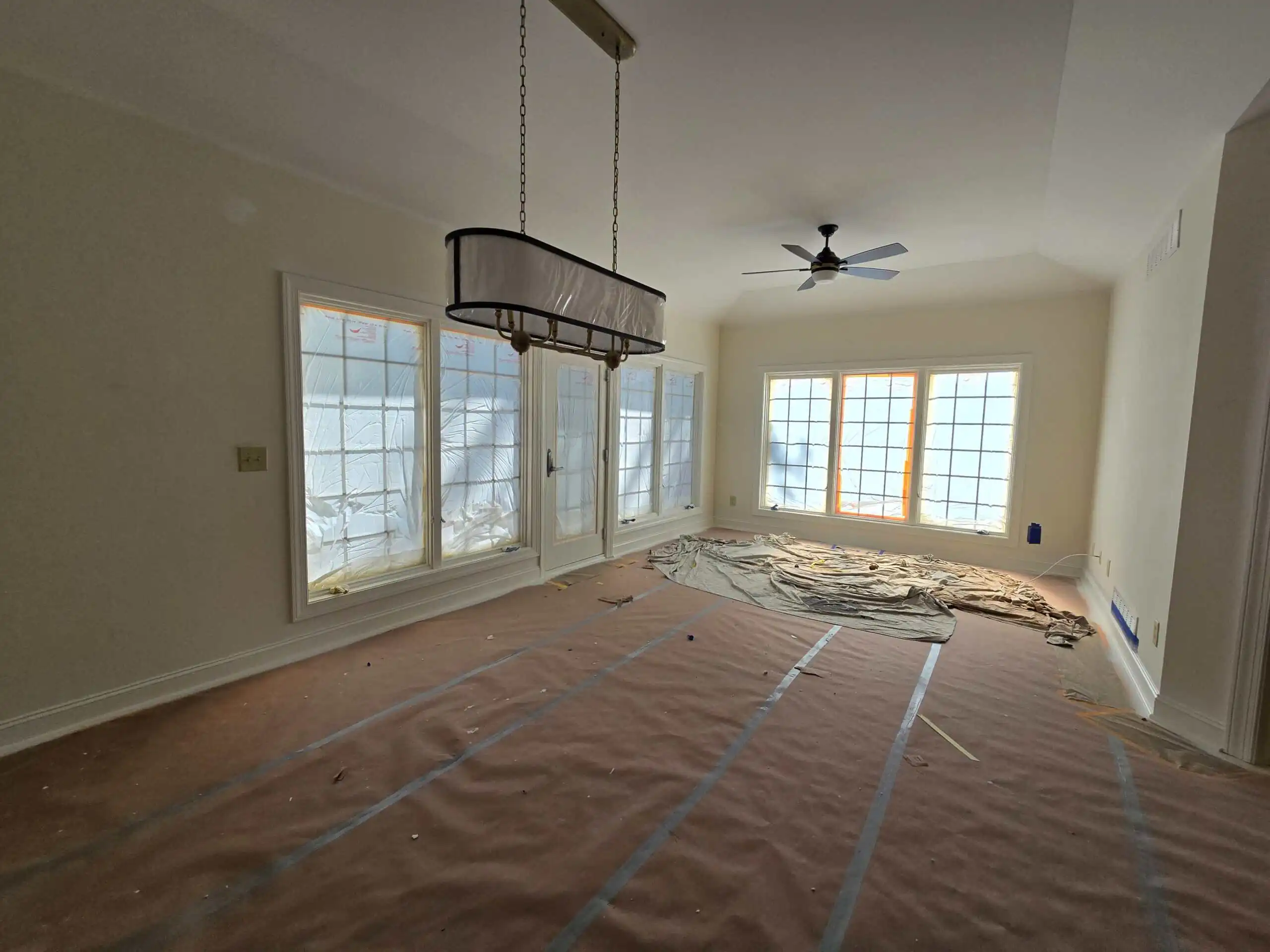
Paint Dry Times by Product Type
| Product Type | Dry to Touch | Recoat | Full Cure |
|---|---|---|---|
| Standard latex wall paint | 1 hour | 4 hours | 14 to 30 days |
| Premium acrylic (Duration, Aura, Emerald) | 1 to 2 hours | 4 to 6 hours | 21 to 30 days |
| Waterborne trim enamel | 1 hour | 4 to 6 hours | 21 to 30 days |
| Oil or alkyd trim enamel | 6 to 8 hours | 24 hours | 7 to 30 days |
| Latex primer (PVA, bonding) | 30 to 60 min | 1 to 4 hours | 7 days |
| Oil-based stain blocker | 2 to 4 hours | 8 hours | 7 days |
| Exterior acrylic | 1 to 2 hours | 4 to 6 hours | 30 days at 50F+ |
| Deck stain (oil) | 8 to 12 hours | 24 to 48 hours | 30 to 72 hours foot traffic |
| Epoxy floor coating | 6 to 12 hours | 24 hours | 7 days full chemical |
| DTM (direct-to-metal) | 1 to 4 hours | 4 to 8 hours | 7 to 14 days |
These are manufacturer numbers at 77F and 50 percent relative humidity. Real Columbus conditions almost never match that. Check the can label for the exact spec on the product you are using.
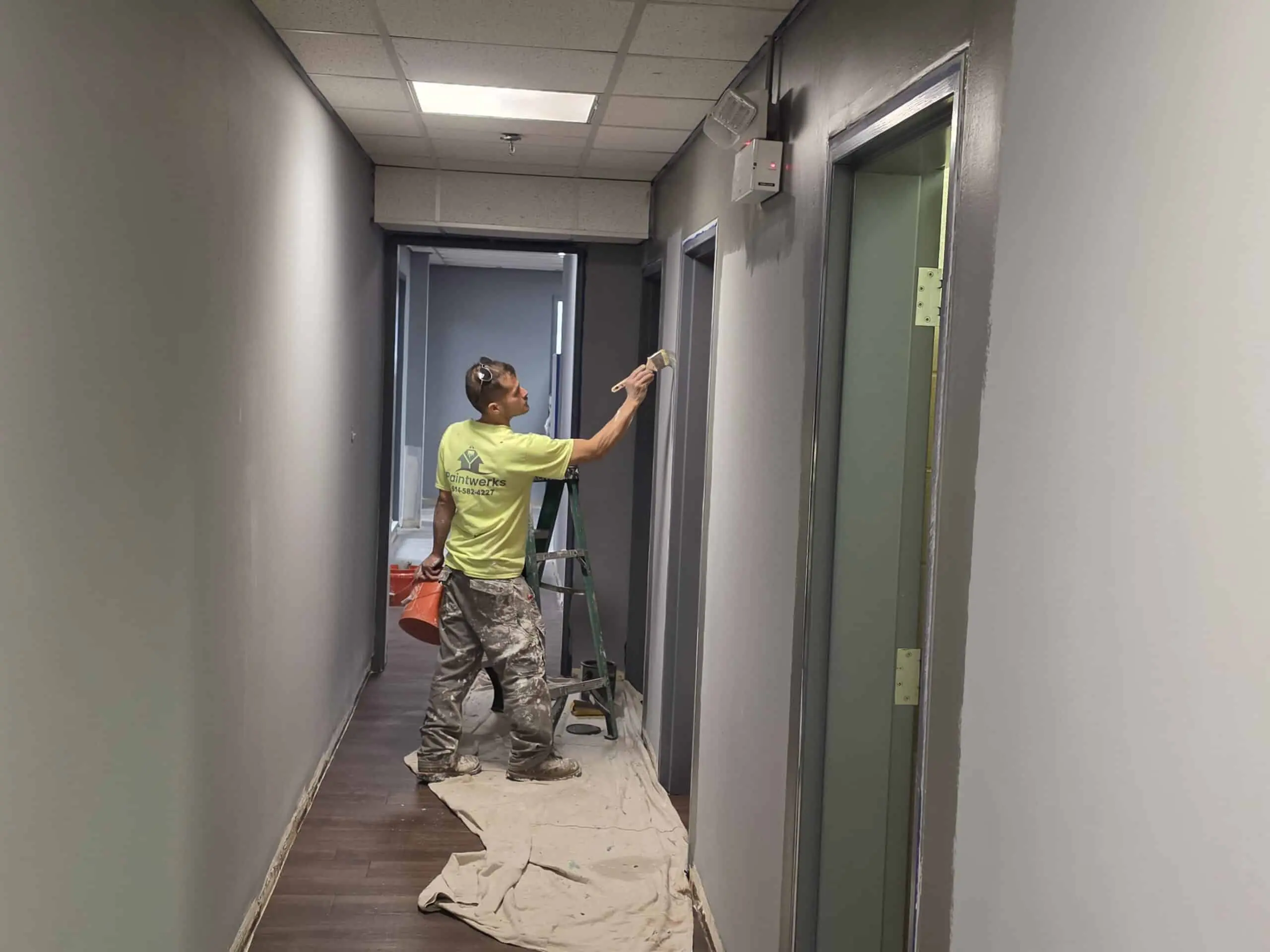
Interior latex
1 hour touch · 4 hour recoat · 30 day cure
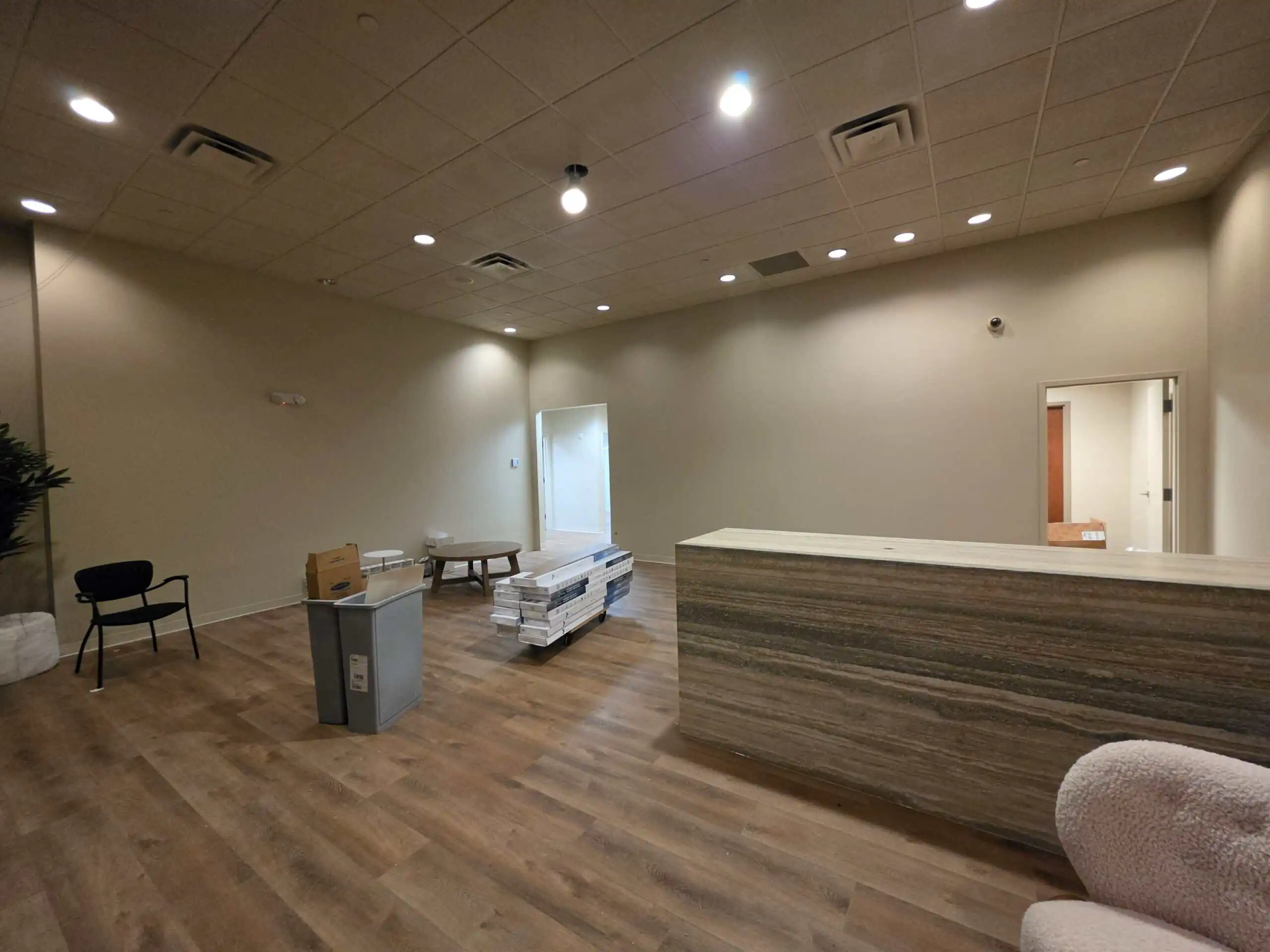
Commercial low-VOC
2 hour recoat · same-day occupancy
What Slows Paint Down in Columbus
If you want to predict where your project lands on the dry-time chart, these are the four variables that actually move the number.
1. Humidity
Columbus summer humidity regularly runs 65 to 85 percent. Latex paint dries by water evaporation. Water does not evaporate fast into already-humid air. At 70 percent humidity, expect to add 50 to 100 percent to the recoat time. At 85 percent and above, the surface can stay tacky for hours and the second coat will pull the first one off when rolled. We refuse to apply finish coats in those conditions on exterior work and dehumidify aggressively on interior jobs.
2. Temperature
Most modern acrylics are rated to apply at 35F surface temp. That is the application minimum, not the optimum. Cure speed drops sharply below 50F. An exterior job sprayed in the morning at 48F that drops to 42F overnight will not cure properly even though it was technically within spec. Spring and fall paint jobs around Columbus often need to wait for sustained overnight lows in the 50s.
3. Ventilation
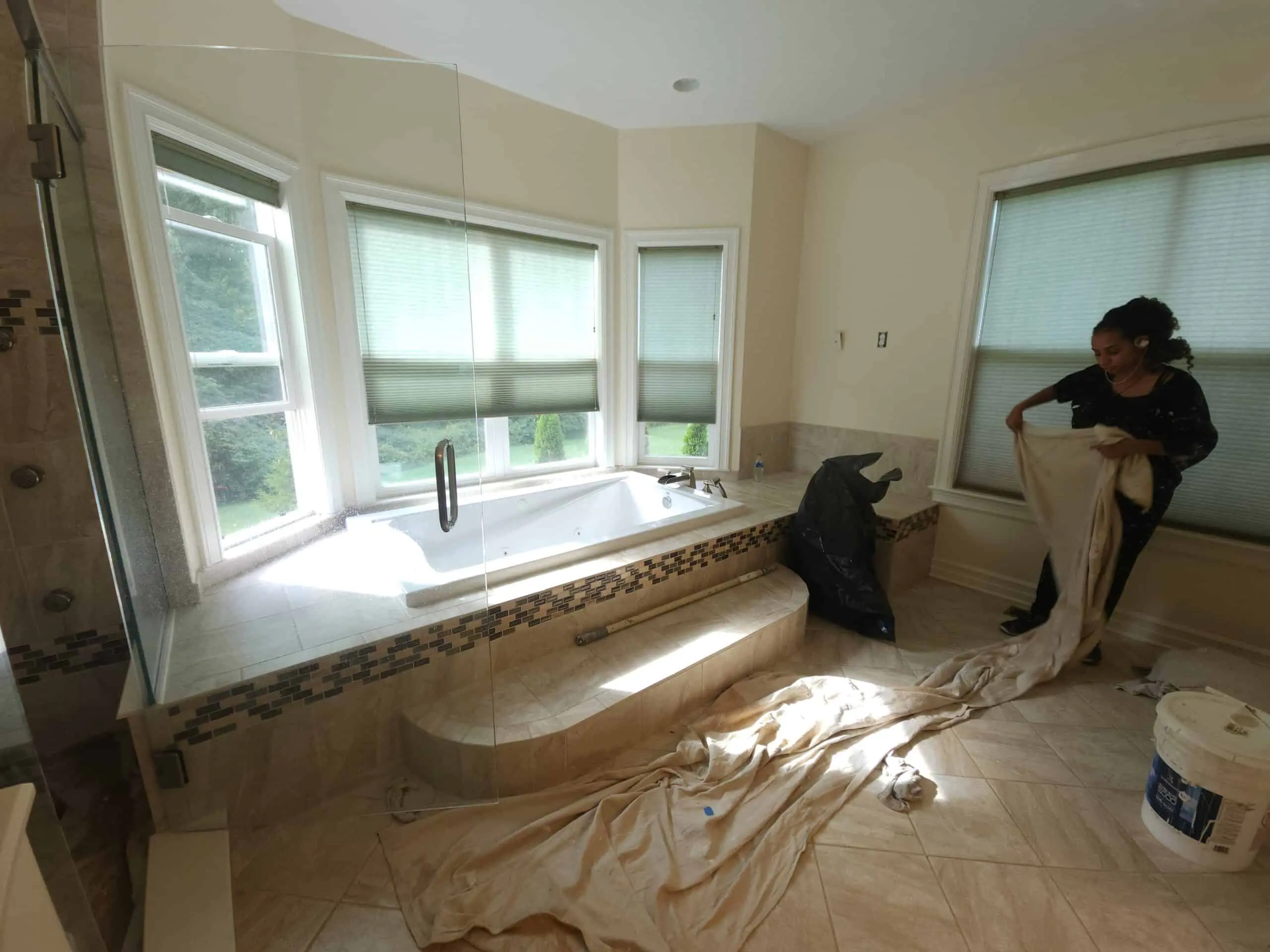
Closed rooms with no air movement trap solvent vapor at the wall surface and slow the entire dry. A box fan blowing air across the wall (not directly at it) cuts dry time by 25 to 40 percent. For commercial spaces with HVAC running, dry times match the can. On interior repaints with windows closed and HVAC off, double the can numbers.
4. Film Thickness
Heavy coats dry slower. A thick coat rolled out at 6 mils wet thickness will skin over the top and trap solvent underneath. That trapped solvent shows up later as soft paint, blistering, or finger marks. Two normal coats almost always beat one heavy coat. Our crews mil-gauge spray work on commercial projects to keep film thickness honest.
When You Can Actually Use the Room
Customers ask this every quote. Real answer for an interior house painting project:
- Walk back into the room — 2 hours after the final coat (with ventilation)
- Sleep in the room — same night, water-based only, with windows open for 2 hours
- Hang pictures — 72 hours
- Push furniture back against walls — 72 hours minimum, 7 days preferred
- Wipe down with a wet cloth — 14 days
- Scrub with a sponge — 30 days
For exterior work or exterior house painting, light rain at 4 hours after recoat usually does not damage acrylic that has dried in the sun. Heavy rain inside 4 hours can wash uncured paint off siding and trim. We watch the radar before we spray exterior finish coats.
Commercial Dry Times Are a Schedule Problem
For occupied commercial painting projects in Columbus the dry-and-cure clock is the entire scheduling problem. A retail tenant cannot reopen until walls do not transfer paint to customer clothing. A medical office cannot resume patient flow until vapor levels are safe. A warehouse cannot run forklifts past freshly painted CMU until the block filler has hardened.
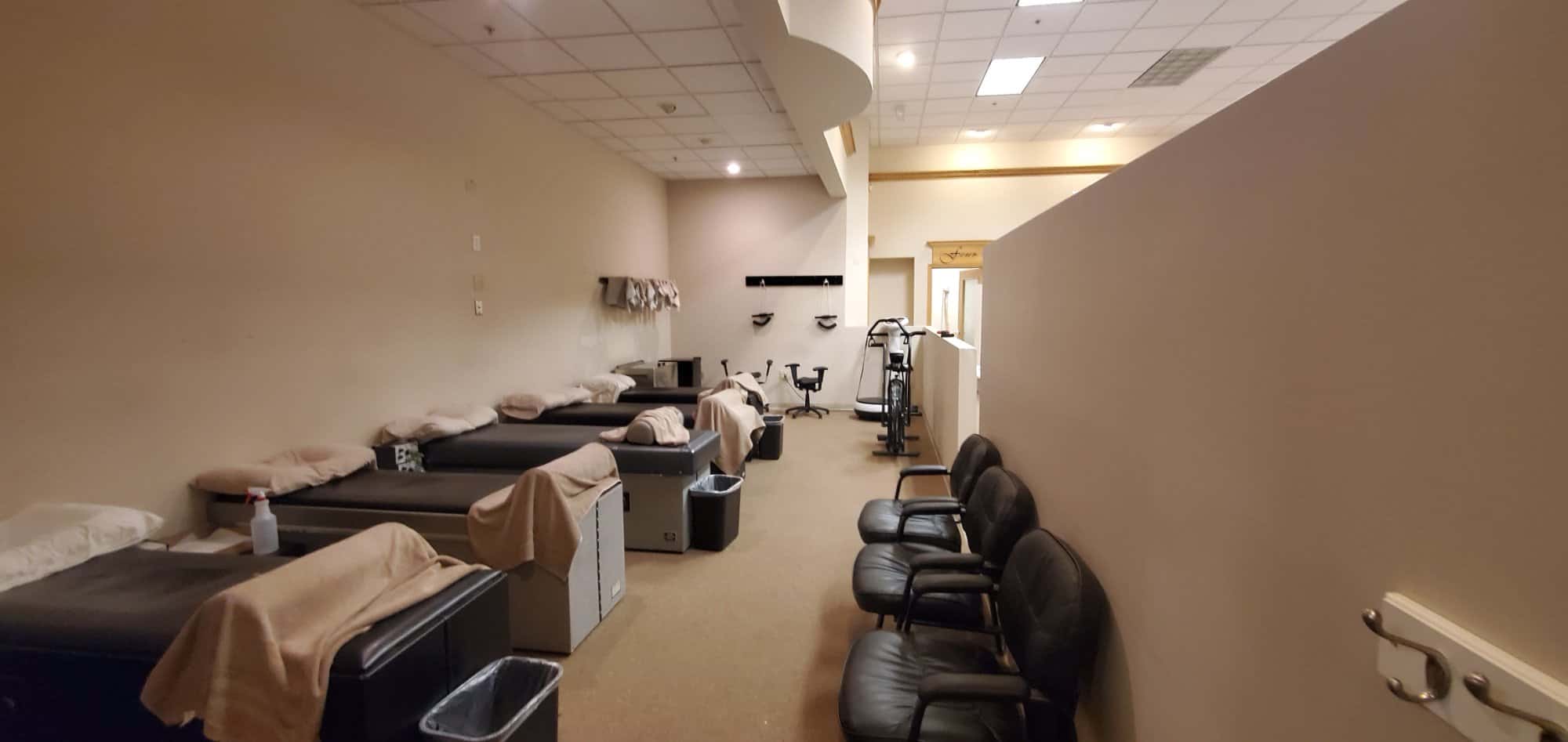
Almost every after-hours and overnight commercial painting job is built around dry times. We use low-VOC and fast-recoat products to compress the window. On a medical facility painting project, a 4-hour recoat that drops to a 2-hour recoat is the difference between two nights and one. On a retail and storefront painting job, the dry window decides whether the store can open at 10 AM or has to push to noon.
"A wall that looks dry at 4 hours is not the same as a wall that is cured. The first one paints. The second one performs."
The Mistakes That Cost Time
The four common errors that double a paint schedule.
- Recoating too soon — second coat reactivates the first and pulls it off the wall in roller-shaped streaks.
- Trapping wet paint under tape — pull tape within 30 to 60 minutes of the final coat, 45 degree angle away from fresh paint.
- Putting furniture back at 24 hours — couch arms leave indents and color transfer. Wait 72 hours minimum.
- Closing the room up too fast — HVAC off and door closed kills airflow and doubles dry time.
- Heat lamps or hair dryers to speed dry — cause skin-over, trap solvent, blow dust into wet paint.
- Painting in 85%+ humidity — surface stays tacky for hours and second coat fails to bond properly.
Frequently Asked Questions
With a water-based latex and adequate ventilation, the same night. Open a window for 2 hours after the final coat to let off-gassing clear. With oil-based trim paint, give it 24 to 48 hours before sleeping with the door closed.
Three likely causes. Humidity above 70 percent during application. The coat went on too thick and trapped solvent. The product was contaminated or past its shelf life. Run a fan, give it another 24 hours, then check.
Interior, yes, as long as humidity inside stays under 70 percent. Exterior, no. Wait until the substrate has dried for 24 hours and there is no rain forecast for at least 4 hours after the final coat.
Most PVA and latex primers are recoatable in 1 to 4 hours. Oil-based stain blockers need 8 hours minimum, 24 hours preferred, before topcoating.
Light dusting with a dry cloth at 7 days. Damp wiping at 14 days. Scrubbing with a sponge or mild cleaner at 30 days.
Ohio has a narrow exterior painting window. Reliable cure requires 50F or warmer overnight lows for the full cure period. That means most exterior work runs from mid-April through mid-October in Columbus.
Get a Real Timeline for Your Project
Dry times are a rough budget for any painting project. The actual schedule depends on product, conditions, surface, and what has to be back in service when. For residential painting on a deadline or commercial painting around occupied operations, we plan the dry-and-cure clock as part of the scope.