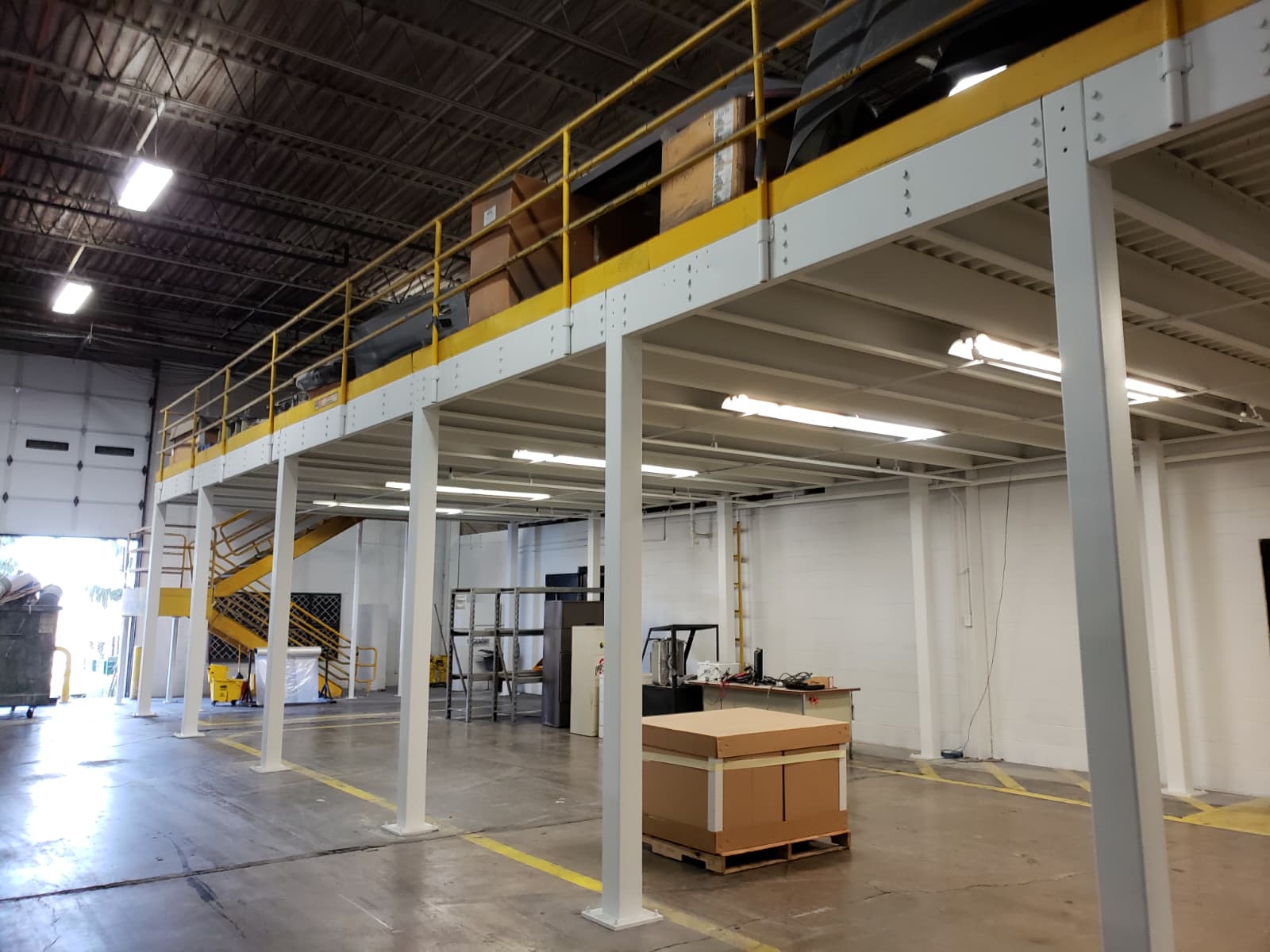
Quick answer: Three commercial substrates dominate Columbus buildings: CMU concrete block (warehouses, gym walls), gypsum drywall (offices, retail, healthcare), and metal roof/floor deck (exposed warehouse ceilings, mezzanines, structural members). Each requires a different primer system. CMU gets block filler. Drywall gets PVA. Metal gets DTM. Mismatch the primer to the substrate and the topcoat fails inside 24 months regardless of brand.
In this guide
Updated June 2026. Built from real PaintWerks commercial substrate scopes across Central Ohio. Vetting a substrate spec for a warehouse, office, or industrial project? Schedule a free walkthrough or call 614-582-4227.
Why Substrate Drives the Whole Coatings Decision
The substrate dictates the primer. The primer dictates topcoat compatibility. The topcoat dictates the warranty. If a bidder offers “one product for everything” on a commercial spec that includes CMU, drywall, and steel decking, that bidder is mis-spec’ing at least two of the three. The failure shows up at the 18 to 24 month mark when the wrong primer-substrate pairing finally lets go.
1. CMU (Concrete Masonry Unit / Block)
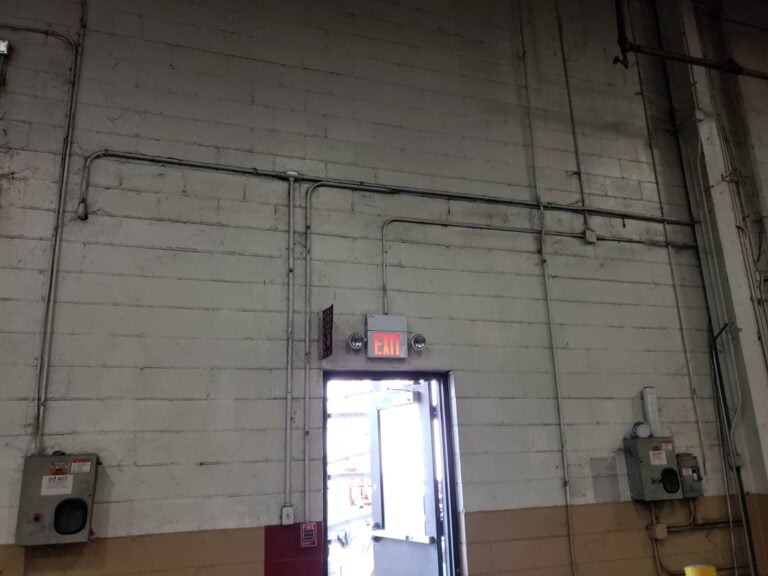
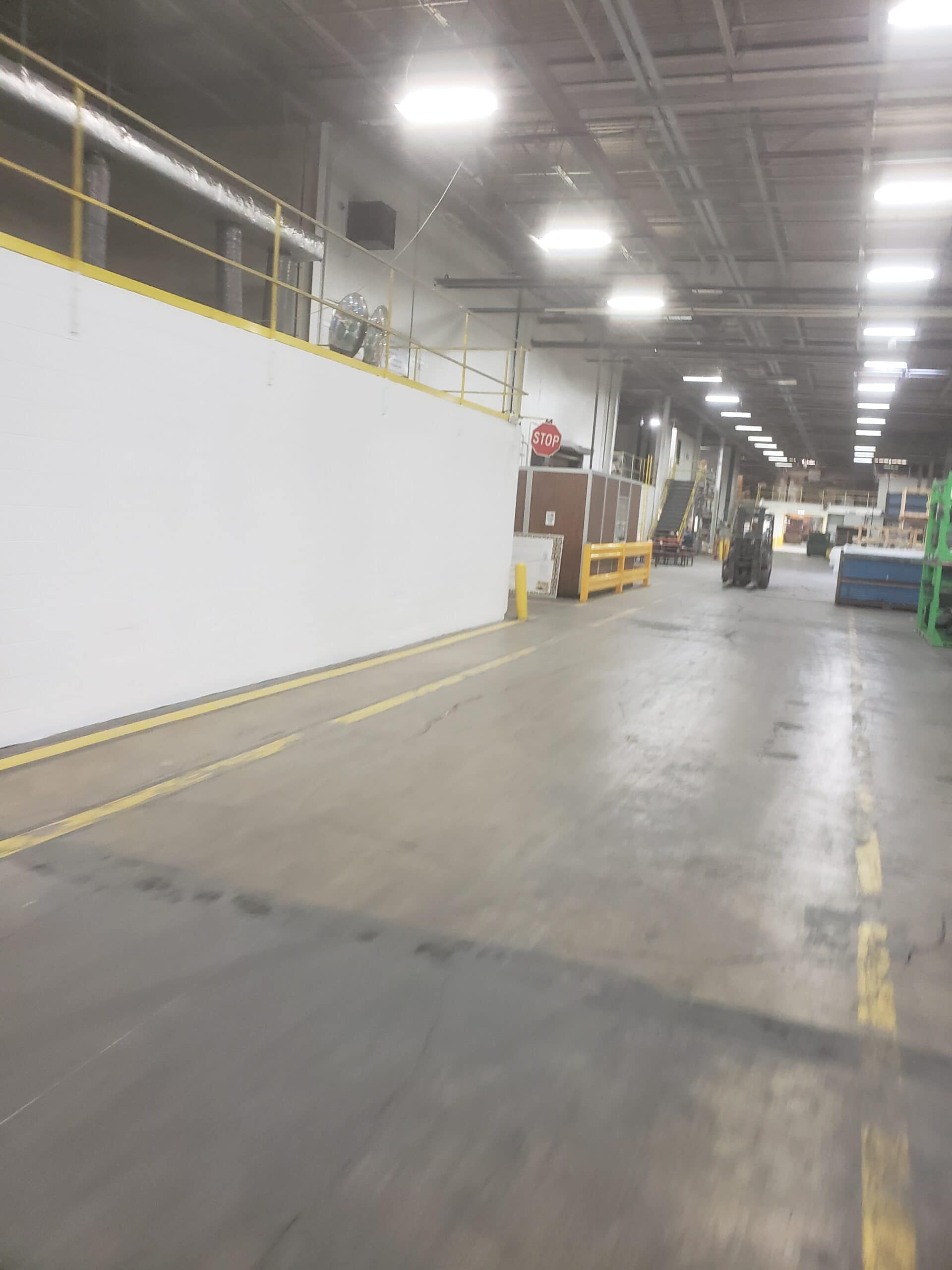
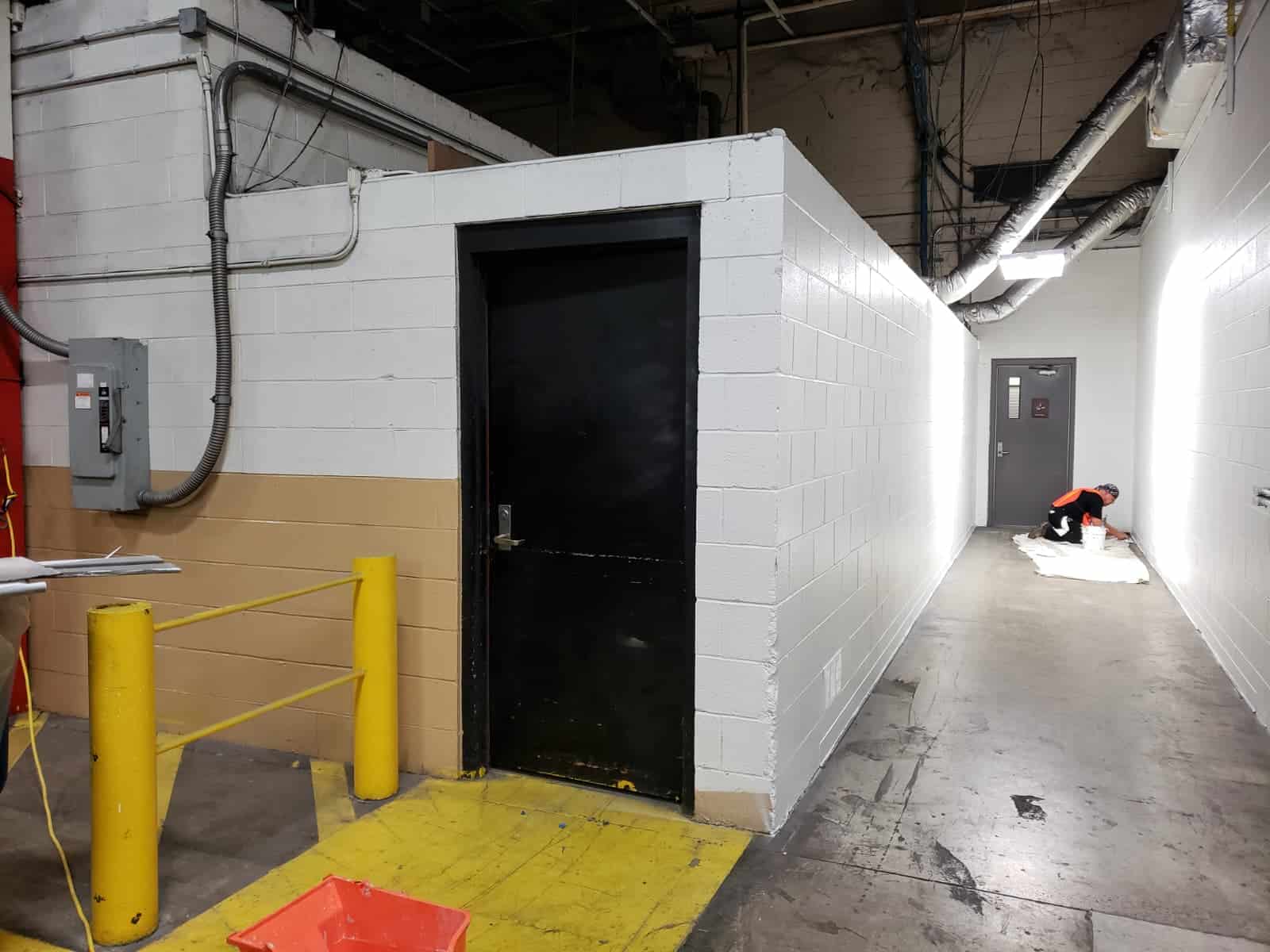
Hollow or solid concrete block. Standard wall substrate in warehouses, mechanical rooms, gymnasiums, multi-family corridors, school back-of-house, parking decks, and industrial spaces. Open pore structure is the defining characteristic — raw CMU has thousands of microscopic and macroscopic voids in the surface that swallow standard latex paint and leave the wall blotchy and poorly covered.
The system: heavy-bodied acrylic or epoxy block filler at $0.85 to $1.60 / sf (one coat), then two coats of standard acrylic latex or industrial enamel on top. Block filler fills the pores, seals the surface, and lets the topcoat lay out evenly. The net economics: block filler costs about the same as 2 extra coats of premium topcoat that would otherwise be needed to achieve coverage. Net cost goes down, not up, when block filler is used correctly.
2. Gypsum Drywall
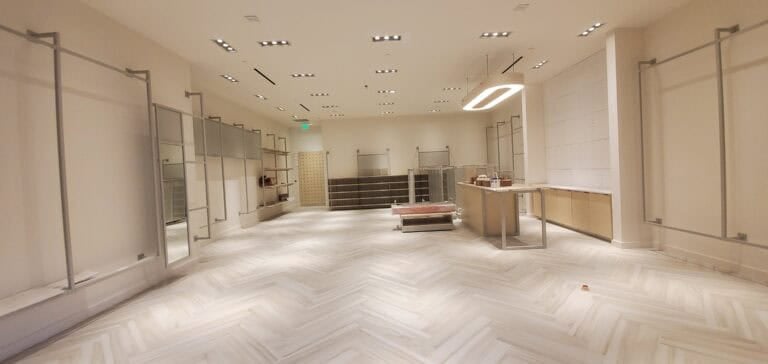
Paper-faced gypsum board, the default wall substrate in offices, retail, healthcare exam rooms, multi-family units, classrooms, hospitality guest rooms, and any space that needs a smooth painted finish. Comes in 1/2″ and 5/8″ thicknesses for standard and fire-rated walls.
The system: PVA (polyvinyl acetate) primer at $0.45 to $0.85 / sf seals the paper face and joint compound differential, then two coats of standard latex topcoat (eggshell for offices, semi-gloss in bathrooms, antimicrobial in healthcare). Drywall is the cheapest substrate to paint per square foot because the primer is the cheapest of the three and the topcoat coverage is excellent. Required finish level matters: L4 is the standard for flat/eggshell, L5 is required for semi-gloss/gloss or critical lighting. See our commercial drywall finish levels spec guide for the full breakdown.
3. Metal Roof Deck and Floor Deck
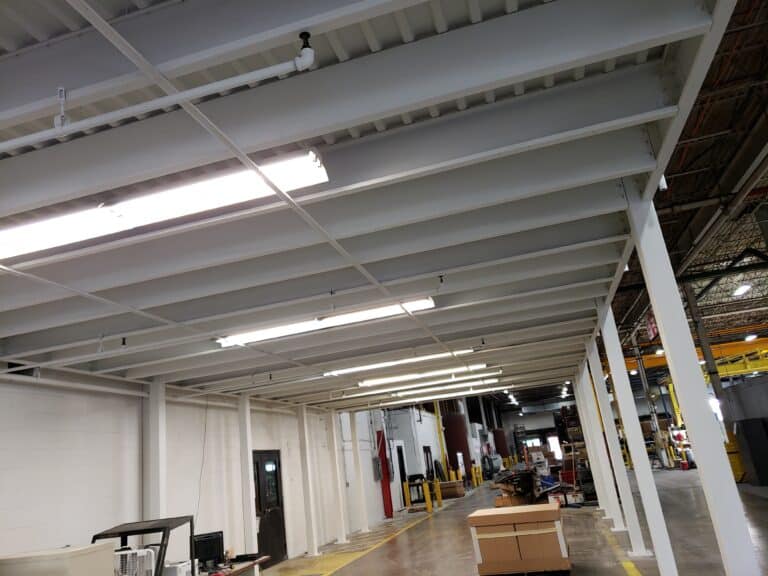
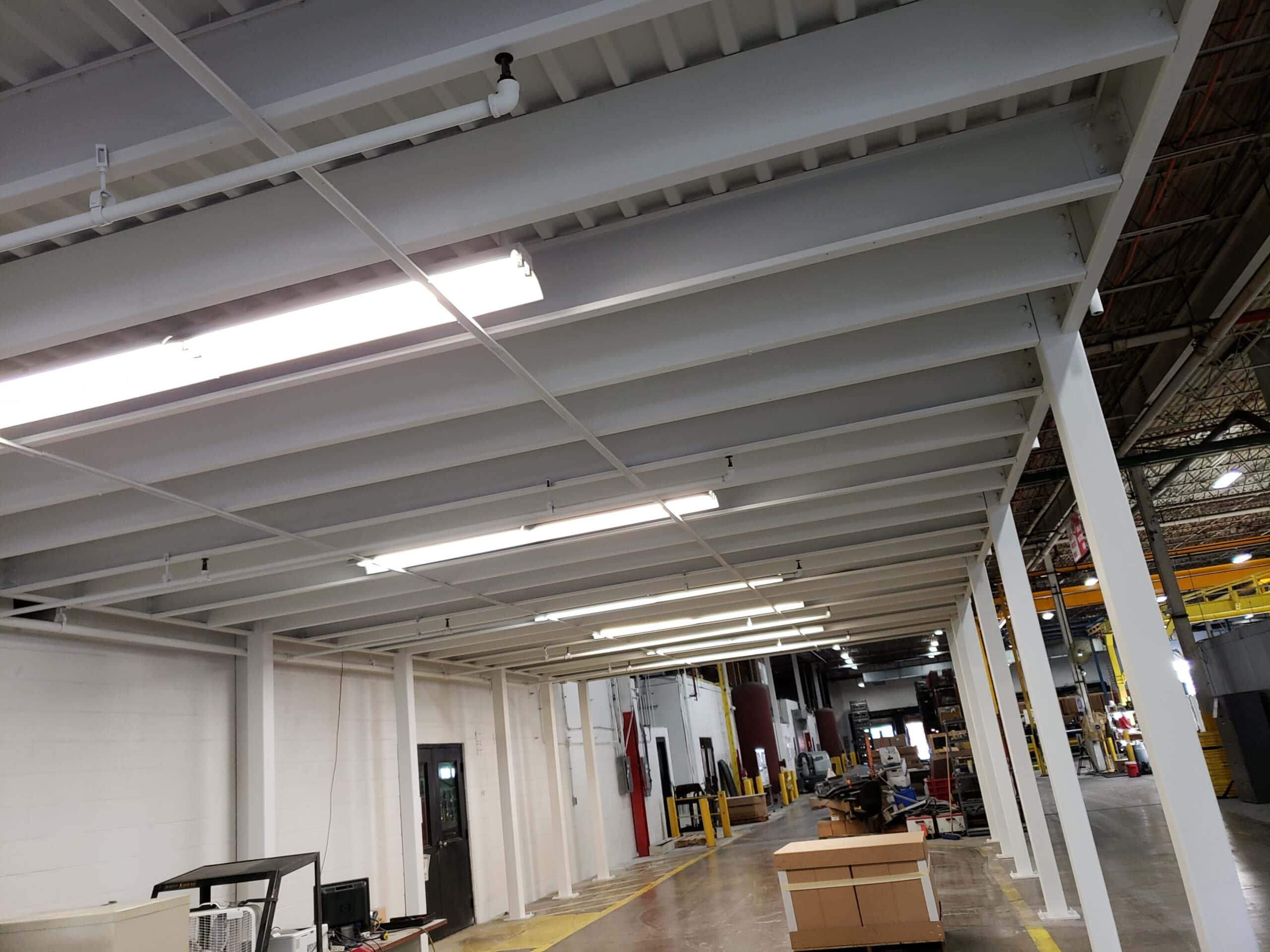
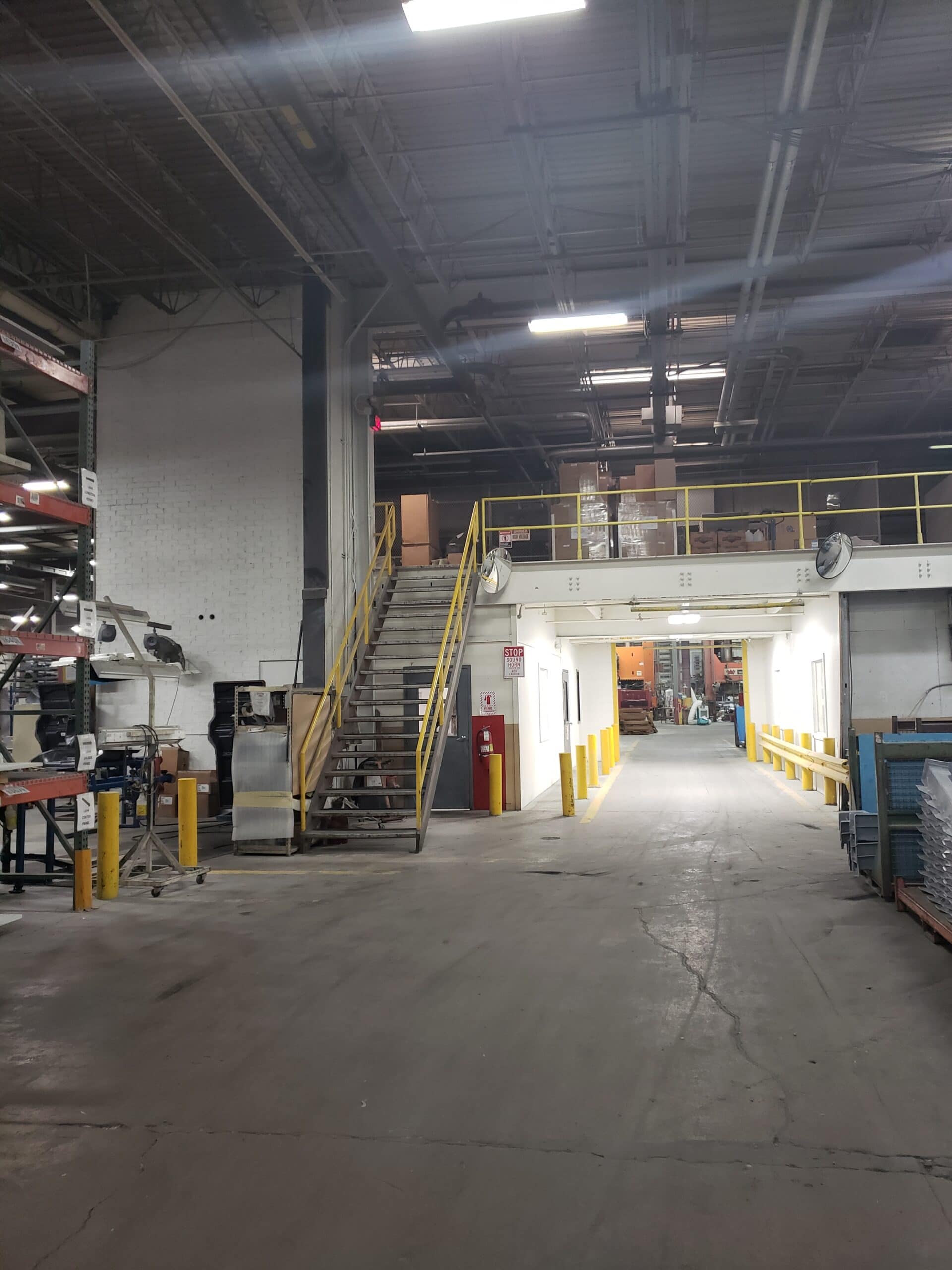
Corrugated steel decking exposed as a ceiling in warehouses, mezzanines above retail, modern industrial back-of-house, and architecturally-exposed structural framing. Often painted white to maximize reflected light from overhead fixtures. The deck is galvanized or pre-finished steel and the paint must bond to a slick, sometimes oily metal surface.
The system: DTM (direct-to-metal) primer/topcoat at $1.85 to $3.40 / sf. Sherwin-Williams Pro Industrial Pro-Cryl Universal is the workhorse. Skip the DTM primer (or apply standard latex straight to the metal) and the paint flakes from condensation cycling within one to two seasons. Surface prep is critical: solvent wipe, then mild sanding or shot-blasting if oxidation exists. We do this work from lifts because deck height is typically 18 to 28 feet.
"Standard latex paint on raw CMU, on metal deck, or on bare drywall is three different failure modes pretending to be the same product."
Side-by-Side: Three Substrates, Three Systems
| Factor | CMU Block | Drywall | Metal Deck |
|---|---|---|---|
| First coat | Heavy-bodied block filler | PVA primer | DTM rust-inhibiting primer |
| Topcoat | Acrylic latex or industrial enamel | Standard latex eggshell/semi-gloss | DTM acrylic or industrial urethane |
| 2026 cost / sf | $2.40 to $4.20 | $1.85 to $3.20 | $2.95 to $5.50 |
| Production rate | 450 to 750 sf / painter / day | 650 to 1,100 sf / painter / day | 300 to 550 sf / painter / day (lift work) |
| Top failure mode if wrong | Blotchy coverage, ghost-bleed | Joint banding under raking light | Flaking from condensation |
| Typical commercial use | Warehouse, gym, corridor | Office, retail, healthcare | Warehouse ceiling, mezzanine |
Mixed-Substrate Buildings: The Most Common Spec Mistake
Most Columbus commercial buildings contain all three substrates: drywall on office partitions, CMU on demising walls and back-of-house, and metal deck exposed at the ceiling. A bidder who specs the same primer-topcoat system for all three is going to miss on at least two of them. The right spec calls out each substrate separately and pairs each with its native system:
- Drywall partition walls: PVA primer + two coats Sherwin-Williams ProMar 200 eggshell.
- CMU demising walls and back-of-house: Block filler + two coats Pro Industrial Pre-Catalyzed Water-Based Epoxy.
- Metal roof deck above: DTM primer + DTM topcoat Pro-Cryl Universal in flat white.
- Hollow metal door frames: DTM rust-inhibiting primer + two coats DTM urethane enamel.
- Structural steel mezzanine columns: DTM primer + industrial epoxy or polyurethane (intumescent if fire-rated and exposed).
4 Substrate Failures We Have Been Called to Fix
- Standard latex over raw CMU without block filler. Three coats applied. Wall still looked blotchy because every pore drank paint. Owner paid for the recoat with block filler we should have done in the first place.
- Wall paint on hollow metal door frames. Chipped at strike plate within 18 months across an entire office tower. We re-stripped 40+ frames and recoated with DTM urethane. Three years in, zero callbacks.
- Drywall semi-gloss over Level 4 finish. Joint banding telegraphed through the gloss within 60 days because the substrate should have been L5. Required full skim coat over the existing finish before repainting.
- Standard acrylic on bare galvanized metal deck. Flaked off in winter the first time the building had a cold-night condensation event. Re-stripped, applied DTM primer, recoated. Owner paid for the job twice.
For the full coatings system reference see our commercial coatings systems guide. For commercial cost benchmarks by space type see our commercial painting cost guide.
Frequently Asked Questions
Block filler fills the open pore structure of CMU so the topcoat lays out evenly. Skip it and you need 2 to 4 extra topcoat passes to achieve coverage, and the wall still looks blotchy. Block filler at $0.85 to $1.60 / sf is cheaper than the extra topcoat it replaces. Skipping is the false economy that creates callbacks.
Almost never on a commercial project. Each substrate needs a different primer (PVA, block filler, DTM). The topcoat can sometimes be the same product family but the primers must be substrate-specific. A spec that calls for “one product” is almost certainly going to fail on at least two of the three.
Direct-to-metal: a single-component coating that bonds directly to clean steel, aluminum, or galvanized metal without a separate primer. Combines rust inhibition, primer, and topcoat function. The right product for hollow metal door frames, exposed metal deck, structural steel in light-industrial conditions, railings, and miscellaneous metals.
$2.40 to $4.20 per square foot of wall surface in 2026, including block filler and two coats of acrylic or industrial enamel. Add 20 to 40 percent for vaulted ceilings requiring lift access. Add 25 to 50 percent for impact-prone or chemical-exposure walls requiring epoxy.
Yes — scissor lifts and boom lifts are the standard for deck-height work. PaintWerks has certified lift operators and runs deck painting from lifts on every project. Scaffold is only needed when lift access is blocked by stored materials or production equipment that cannot be moved.
Properly finished drywall, by a wide margin. PVA primer is the cheapest primer of the three ($0.45 to $0.85 / sf). Standard latex topcoat has excellent coverage. Production rate is fastest. CMU costs more because of block filler. Metal deck costs more because of DTM primer and lift work.
Yes. Healthcare CMU calls for an epoxy block filler followed by an antimicrobial or washable epoxy topcoat, both EPA-registered where the spec requires it. Office CMU uses acrylic block filler and standard acrylic topcoat. The healthcare system runs about 40 to 60 percent more per square foot.
Tap the wall. CMU sounds solid and hollow with a deeper tone. Drywall sounds higher-pitched and gives a tiny flex under a knuckle. Metal deck above the ceiling is visible if the ceiling is exposed; in suspended-ceiling buildings, pop a ceiling tile and look. PaintWerks does substrate identification on every walkthrough.
Get a Substrate-Specific Spec Review
Reviewing a commercial paint spec that touches multiple substrates? We will walk the building, identify each surface, and tell you whether the spec pairs the right primer and topcoat with each substrate. Forty-five minutes onsite. Educational walkthrough.
See our full commercial painting services or commercial services hub.