Quick answer: Yes, you can paint pressure treated wood, but not right out of the yard. Fresh PT lumber is too wet and saturated with preservatives for paint to bond. Wait 4 to 12 weeks until water beads stop forming on the surface, prime with an oil-based or stain-blocking acrylic primer, then topcoat with 100 percent acrylic latex. Stain is usually a better long-term choice than paint on horizontal surfaces.
In this guide
Updated June 2026. Built from real PaintWerks deck, fence, and exterior trim projects across Columbus and Central Ohio. If you have a deck or PT structure ready to coat, request a free walkthrough or call 614-582-4227.
Why Fresh Pressure Treated Lumber Will Not Hold Paint
Pressure treated lumber comes out of the mill saturated with two things. Water from the kiln and dip process. And copper-based preservatives (modern CA-C, MCA, or older ACQ formulations) forced into the wood under pressure. Combined, that puts moisture content north of 35 percent on the day it gets delivered. Paint needs to bond to a dry surface, ideally below 19 percent moisture content. Put paint on a wet board and the film cannot grip. It peels in sheets within a season.
The treatment chemicals add a second problem. Wet preservative on the surface is alkaline and reacts with oil-based primers and some acrylics. The reaction shows as discoloration, lifting, or saponification (a soapy film). Even if the wood looks dry on the surface, chemical migration to the surface during cure can lift a freshly applied coat.
The Water Bead Test
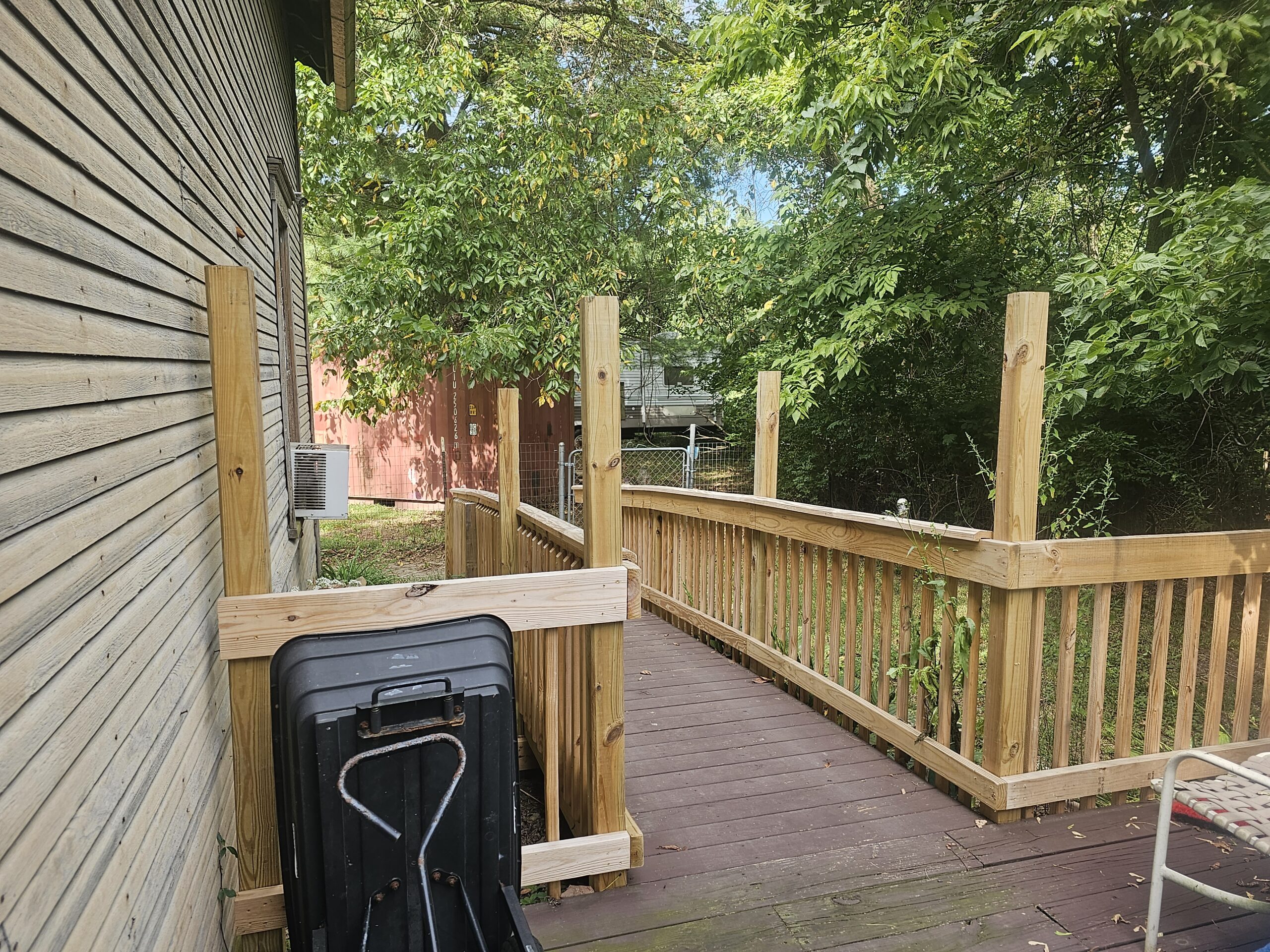
Skip the moisture meter math and use the test that works on every job. Sprinkle water on the wood. Watch.
| What Happens | What It Means | Next Step |
|---|---|---|
| Water beads up and stays on the surface for 5+ minutes | Wood is still too wet inside | Wait 2 to 4 more weeks, retest |
| Water beads then slowly soaks in over 1 to 5 minutes | Surface drying but core still wet | Wait 1 to 2 weeks, retest |
| Water absorbs within 30 seconds across the entire board | Wood is ready | Clean, prime, paint or stain |
For Columbus weather, expect 4 to 8 weeks of drying time on PT wood delivered in May through August. Spring and fall projects often need 6 to 12 weeks because cooler temperatures slow evaporation. Winter delivery should not be coated at all until the following spring warm-up.
What you avoid
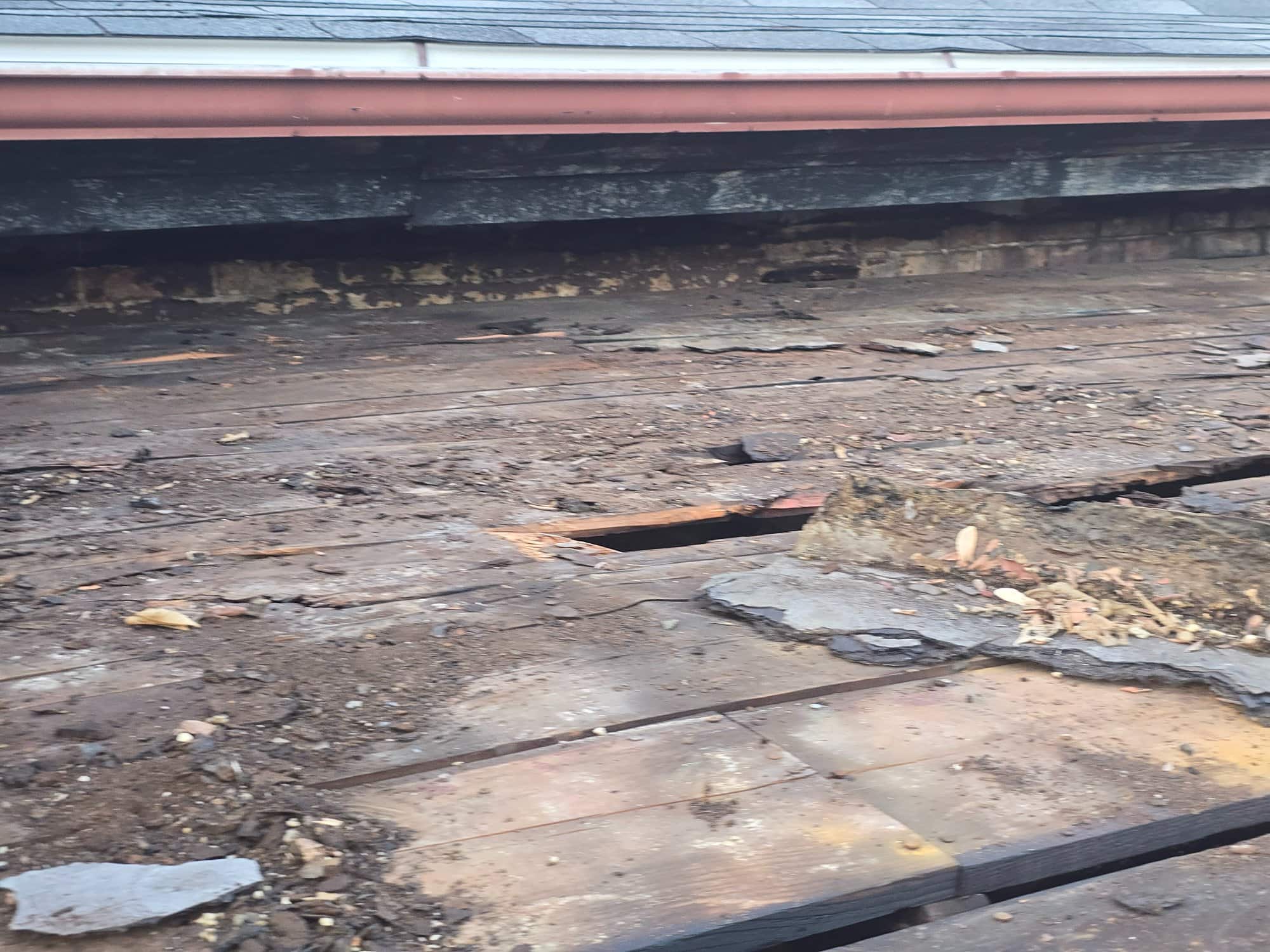
Failed coating on wet PT lumber. Peeling within one season.
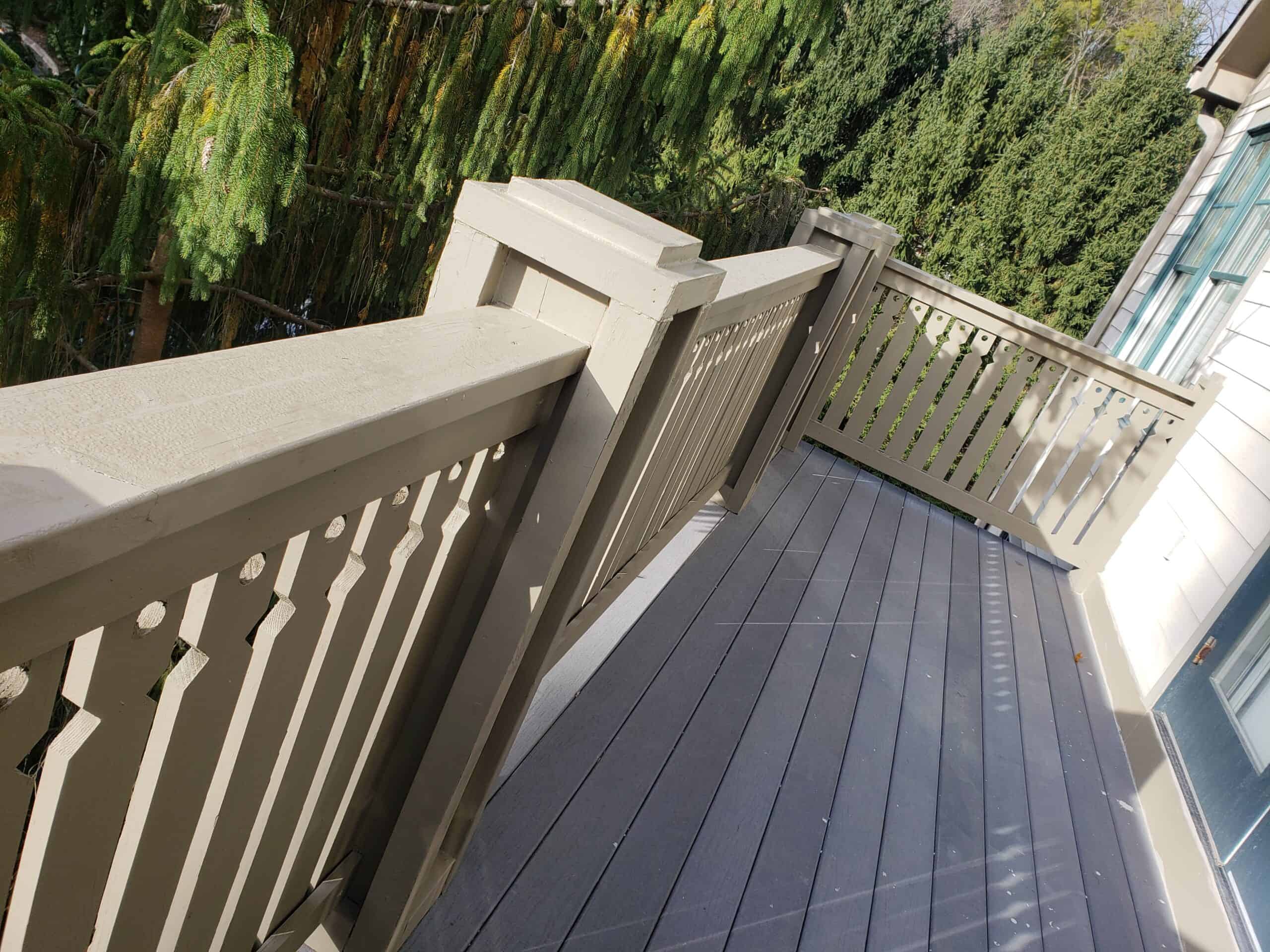
Properly coated
Dry wood, right primer, two coats acrylic. Holds 5+ years.
Paint vs Stain on Pressure Treated Wood
Stain is the right answer for horizontal exposed surfaces. Decks, stair treads, top rails, and anywhere boot soles or weather hit constantly. Stain penetrates into the wood instead of forming a film on top. When it wears, it wears evenly and recoats clean without sanding or stripping. Paint on a horizontal PT surface looks great year one, starts to crack year two, and is peeling by year three. Stripping and repainting a deck is one of the most labor-intensive jobs in residential exterior work.
Paint is the right answer for vertical surfaces. Fence boards, posts, picket trim, and PT siding hold paint fine because water runs off instead of pooling. The film also gives stronger color options than stain. White, sage, navy, and saturated colors land cleaner in paint than in semi-transparent stain.
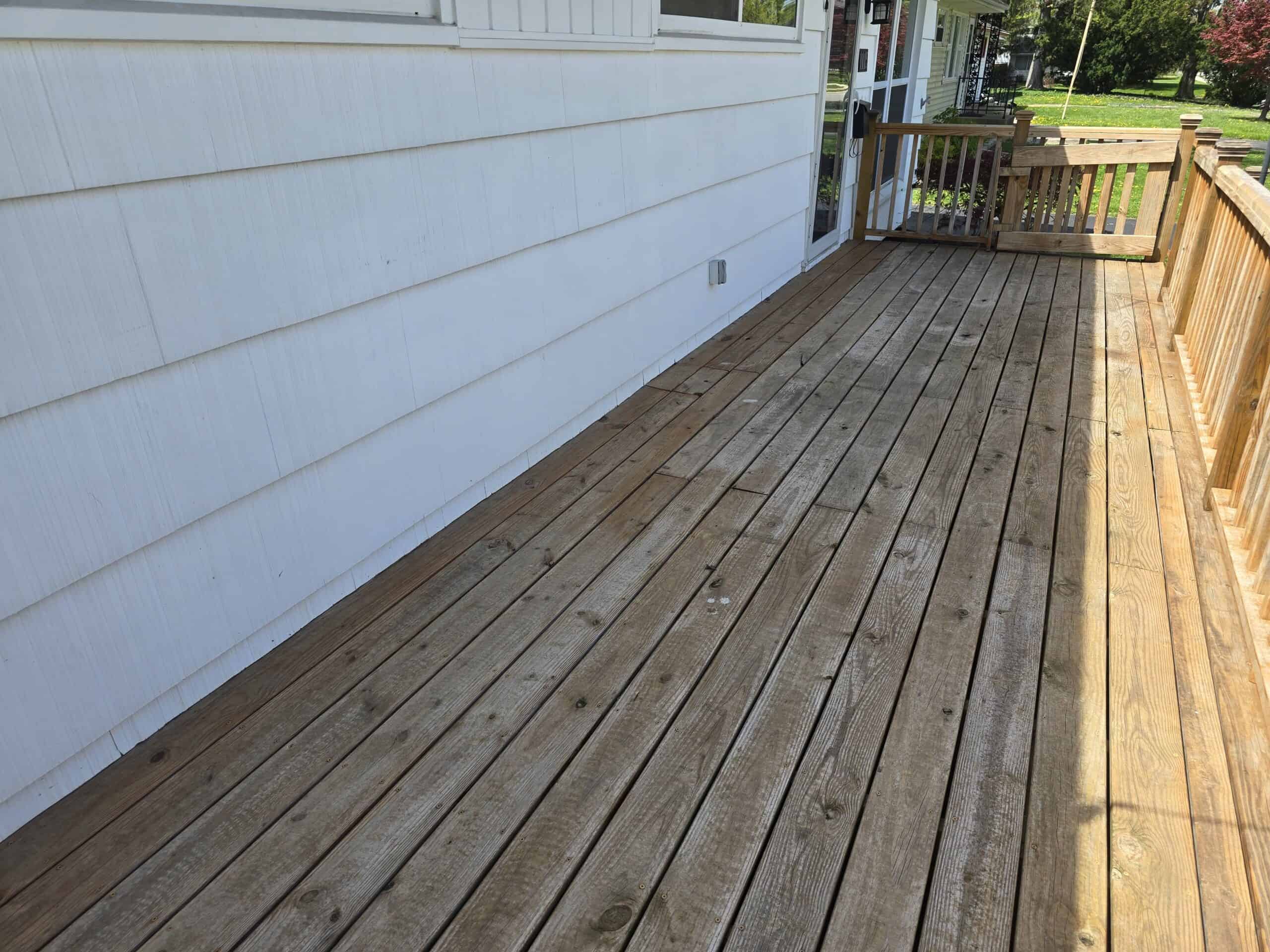
For decks specifically, deck staining is what we recommend almost every time over paint. The maintenance cycle is 3 to 4 years of recoat versus painting which requires full strip and refinish every 5 to 7 years.
The Correct Primer System
Once PT wood is dry, primer choice decides whether the topcoat lasts 3 years or 10. The wrong primer is the failure point on most painted PT projects.
Oil-Based Stain Blocker
The traditional answer. Long open time, deep penetration, and a hard sealed surface for topcoat. Sherwin-Williams Wood Classics oil primer or Zinsser Cover-Stain are standard choices. Drawbacks are slower dry time, higher VOC, and the need to clean tools with mineral spirits.
Bonding Acrylic Primer
The modern alternative. Zinsser Bulls Eye 1-2-3, INSL-X Stix, and Sherwin-Williams Extreme Bond stick to surfaces other acrylics fail on. Faster dry, easier cleanup, lower VOC. Slightly less penetration than oil but adequate for properly dried PT wood.
What Not to Use
Standard PVA drywall primer fails on PT wood. Latex wall primer fails on PT wood. Any primer rated only for interior use fails outdoors regardless of substrate.
Surface Prep Before Primer
Even dry PT wood needs cleaning before any coating goes on. Mill glaze (a slick surface left by sawing) blocks penetration. Dirt, mold, and tannin stains show through paint and stain alike.
- Pressure wash at low pressure (1,200 to 1,500 PSI max) with a deck cleaner like Cabot Problem Solver
- Let dry fully — usually 48 to 72 hours after the wash
- Light sand with 80 grit on horizontal, 120 grit on vertical to break mill glaze
- Brush off dust — no need to vacuum unless you are spraying
- Spot prime knots and sap streaks with shellac-based primer like BIN
- Confirm water absorption with one more bead test before primer goes on
Columbus Seasonal Window
The Ohio coating window for exterior wood realistically runs from late April through mid-October. Anything coated outside that window has to fight cold cure issues and wet substrate problems.
| Project Stage | Best Months | Notes |
|---|---|---|
| Install fresh PT lumber | March through July | Gives drying time before winter |
| Water bead test | 4 to 12 weeks post install | Test biweekly until ready |
| Pressure wash and prep | May through September | Need 48 to 72 hr dry window |
| Prime and topcoat | May through mid-October | Avoid rain within 4 hours of final coat |
| Stain (preferred for horizontal) | June through September | 50F+ overnight lows for proper cure |
"Pressure treated wood will paint fine. Just not on the schedule the homeowner usually wants. Patience now beats sanding peeling paint in 18 months."
Common Mistakes That Kill PT Paint Jobs
- Painting right after install — PT wood at 35 percent moisture peels within 8 months.
- Using interior primer outdoors — PVA fails fast on PT lumber regardless of brand.
- Single coat of topcoat — thins out by spring of year two on south-facing surfaces.
- Painting over mill glaze — slick surface skin repels coating until lightly sanded.
- Painting a deck instead of staining it — strip-and-redo cycle every 5 to 7 years costs more than stain recoats.
- Coating in October or later — cold cure issues cause early adhesion failure.
Frequently Asked Questions
Minimum 4 weeks in Columbus summer conditions for above-ground use lumber. 6 to 12 weeks is more realistic, especially for ground-contact rated PT which holds more treatment chemical. Use the water bead test rather than counting days. Water that absorbs in under 30 seconds means the wood is ready.
No. Fresh PT lumber is wet and chemically active. Paint applied that day will peel inside a year. The only exception is using a coating system specifically marketed as compatible with wet PT (some semi-transparent stains qualify), but even those perform better with some drying time.
Yes. PT wood needs an oil-based stain-blocking primer or an exterior bonding acrylic primer. Going straight to topcoat without primer leads to tannin bleed, poor adhesion, and uneven absorption.
100 percent acrylic exterior latex over a proper bonding or oil primer. Sherwin-Williams Duration, Benjamin Moore Aura Exterior, and Behr Marquee all work. For decks and horizontal surfaces, semi-transparent or solid stain usually outperforms paint over the long maintenance cycle.
Not by itself. The preservative treatment is what protects PT from rot. Paint and stain protect the surface from UV damage, weathering, and color fade. A painted PT post will still rot if it sits in standing water at grade. Drainage and proper installation matter more than the coating choice.
Stain for horizontal walking surfaces. Paint only for vertical surfaces like risers or skirting if you want a solid color look. Painted deck boards look great year one and turn into a maintenance project starting year two.
Get the Coating Schedule Right Before You Start
Coating new pressure treated wood is a sequence problem more than a product problem. The right primer over the wrong-moisture-content substrate still fails. For new deck staining on properly dried PT lumber or exterior painting on existing PT structures, we walk the project, test the wood, and plan the dry-and-coat schedule into the proposal.