Quick answer: Drywall finish levels (L0 to L5) define how smooth a wall is before paint. Per Gypsum Association GA-214: L4 is the standard for flat/eggshell, L5 is required for semi-gloss, gloss, and critical lighting. Commercial spec: warehouses L1/L2, back-of-house L2, offices L4, retail brand-standard L4 or L5, healthcare/hospitality L5. Mismatched levels are the #1 source of paint failures and callbacks on commercial projects.
In this guide
Updated June 2026. Built from real PaintWerks commercial drywall and paint projects across Central Ohio. Reviewing a drywall spec for a property or tenant buildout? Schedule a free walkthrough or call 614-582-4227.
What GA-214 Actually Says
Gypsum Association document GA-214 defines six levels of gypsum board finish (L0 through L5). The standard is the reference every reputable spec and architect calls out. L0 means no finishing. L1 means tape coat only. L5 means a full skim coat over the entire surface. The middle levels (L2 to L4) progressively add coats of compound and sanding. The Gypsum Association maintains the document at gypsum.org.
The level you spec determines what coat of paint can be applied without revealing every joint. Get the level wrong and you are buying paint that shows every imperfection within a year. Get it right and the finish holds for the life of the building.
The Six Finish Levels (L0–L5)
Each level adds coats of joint compound and sanding. The higher the level, the smoother the wall — and the more labor in the spec.
L0 — No Finishing
Drywall hung, fasteners visible, no tape, no compound. Used for temporary construction, demolition prep, or when a different cladding is going over the gypsum (tile backer, stone veneer). Never a finished surface. Never gets paint.
L1 — Tape Embedded in Joints
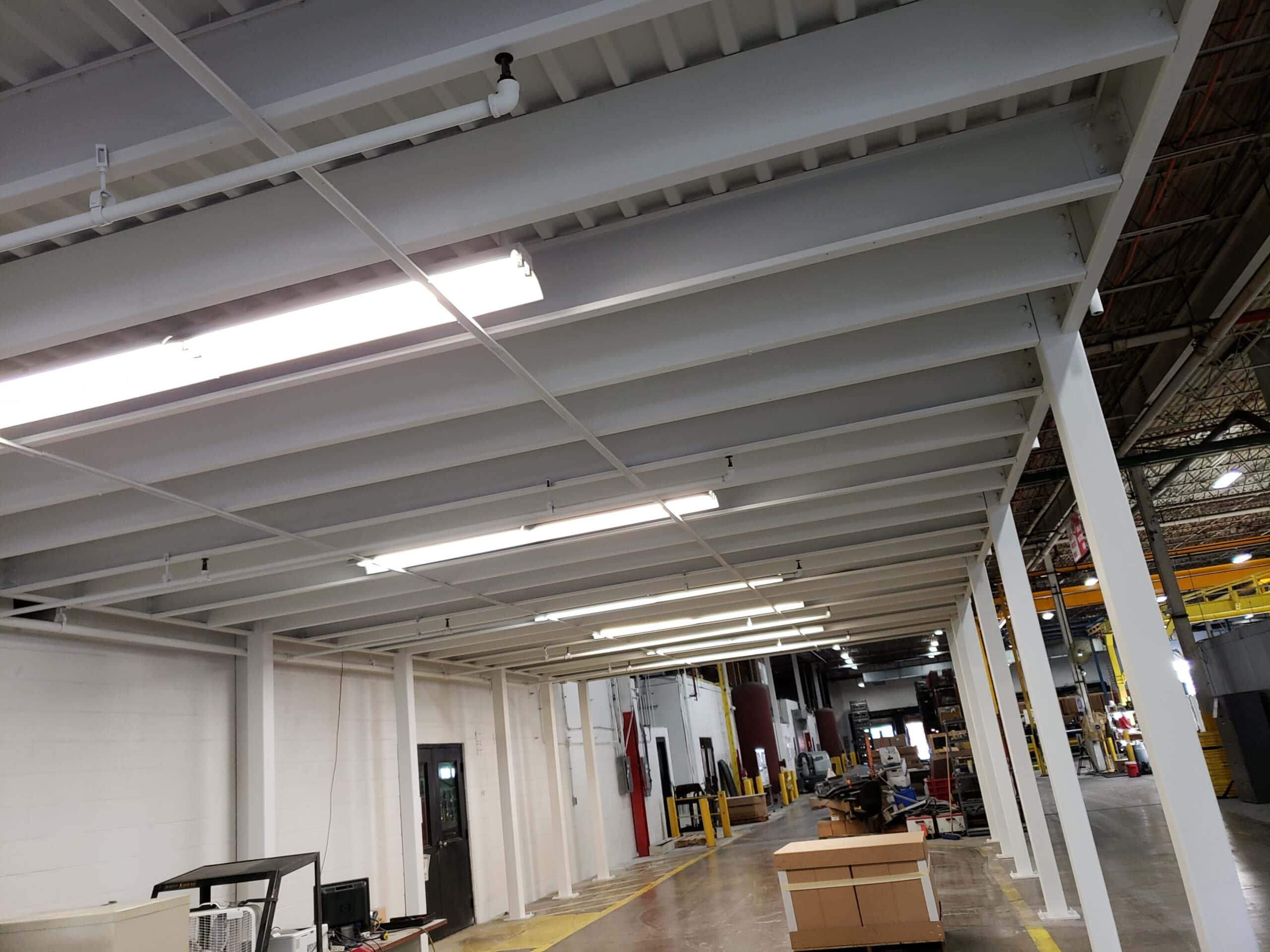
Joint tape set in compound at all flat and inside-angle joints. No additional coats. Used for plenum spaces above ACT ceilings, mechanical rooms, service corridors above ceilings, and warehouse rack areas that will not be painted or viewed at close range. Excess compound is acceptable on the surface. Where it belongs: behind-the-scenes commercial spaces, smoke-rated wall assemblies, sub-ceiling plenums.
L2 — One Coat Over Tape
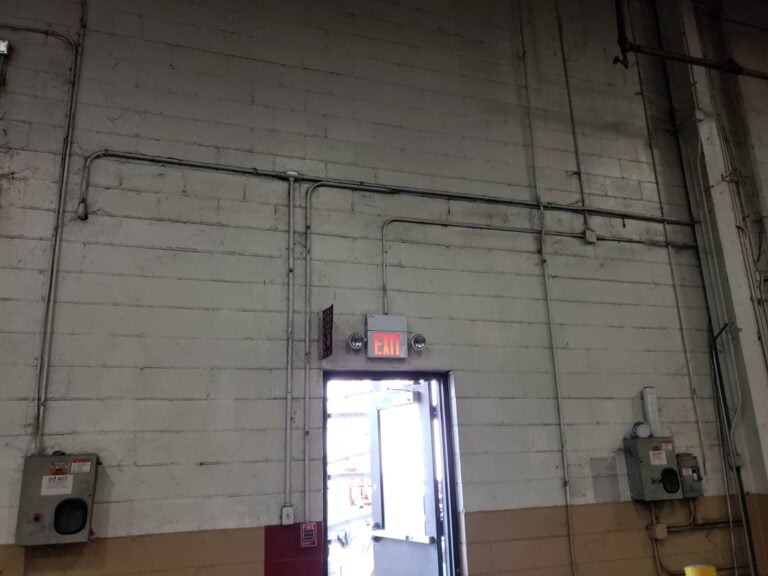
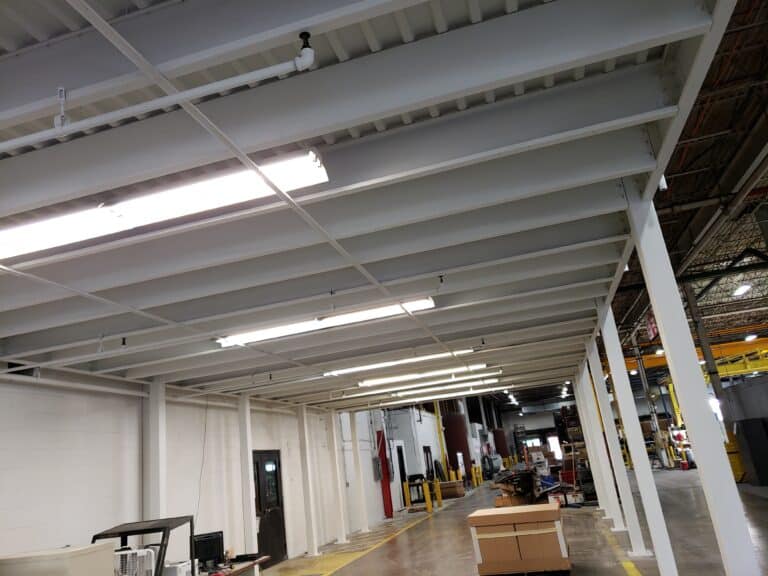
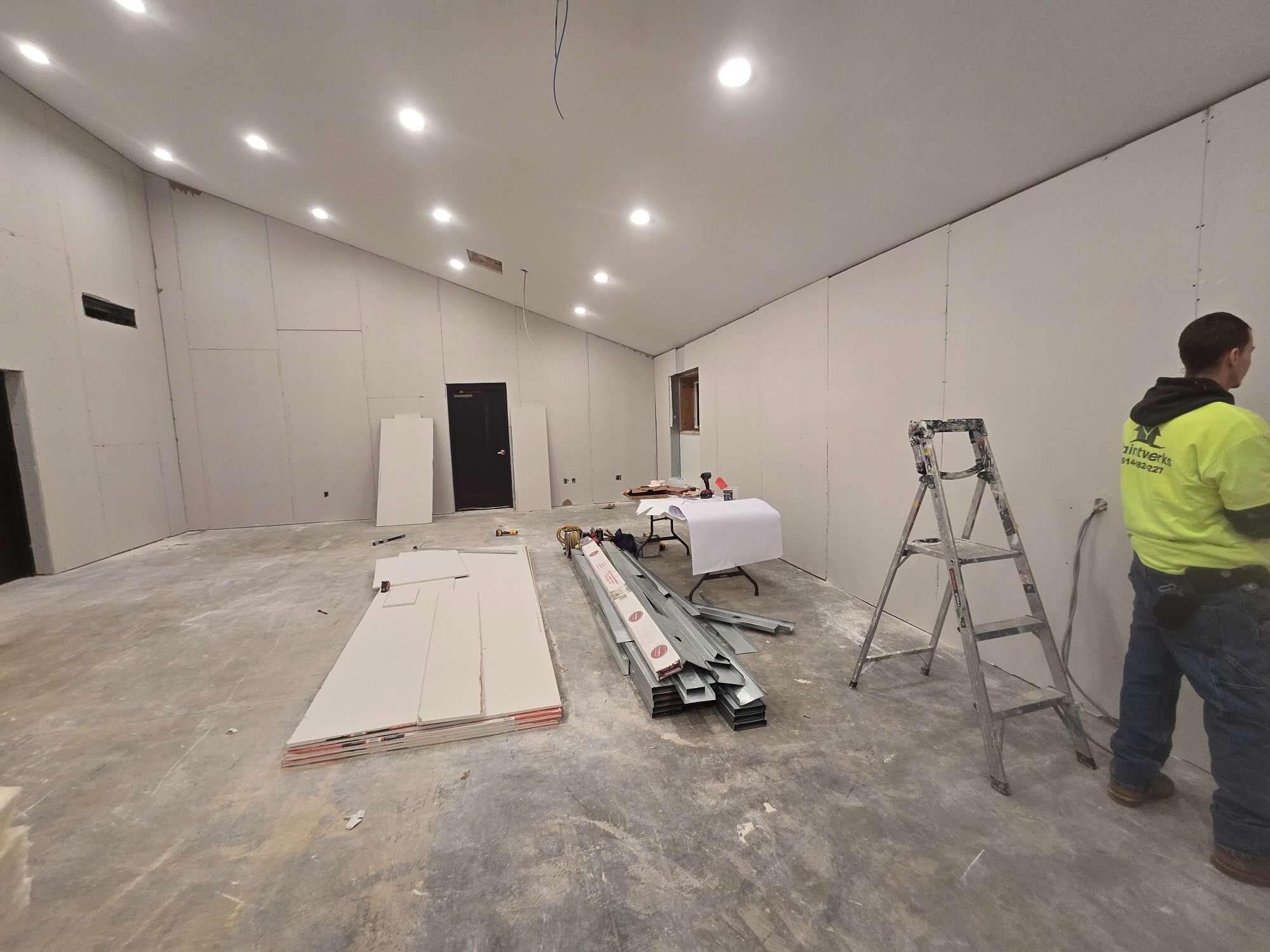
Tape embedded, then one additional thin coat of compound over the tape and over all fastener heads. Joint compound can show tool marks and ridges. Substrate for ceramic tile, where the tile is the finish surface. Also used in warehouses, garages, mechanical spaces, and back-of-house areas that will get a roller-grade flat paint and be viewed at distance. Where it belongs: tile substrate, warehouses, BOH service areas, mechanical and storage rooms.
L3 — Two Coats Over Tape
Tape plus two additional coats of compound. Joints sanded between coats. Tool marks should not be visible. The surface accepts heavy texture finishes (orange peel, knockdown, popcorn) but is not smooth enough for flat or eggshell paint at standard wall-mounted lighting. Where it belongs: textured commercial walls, painted concrete-block surrounds, multi-family hallways with heavy texture. Rare in modern Class A commercial work.
L4 — Three Coats, Sanded
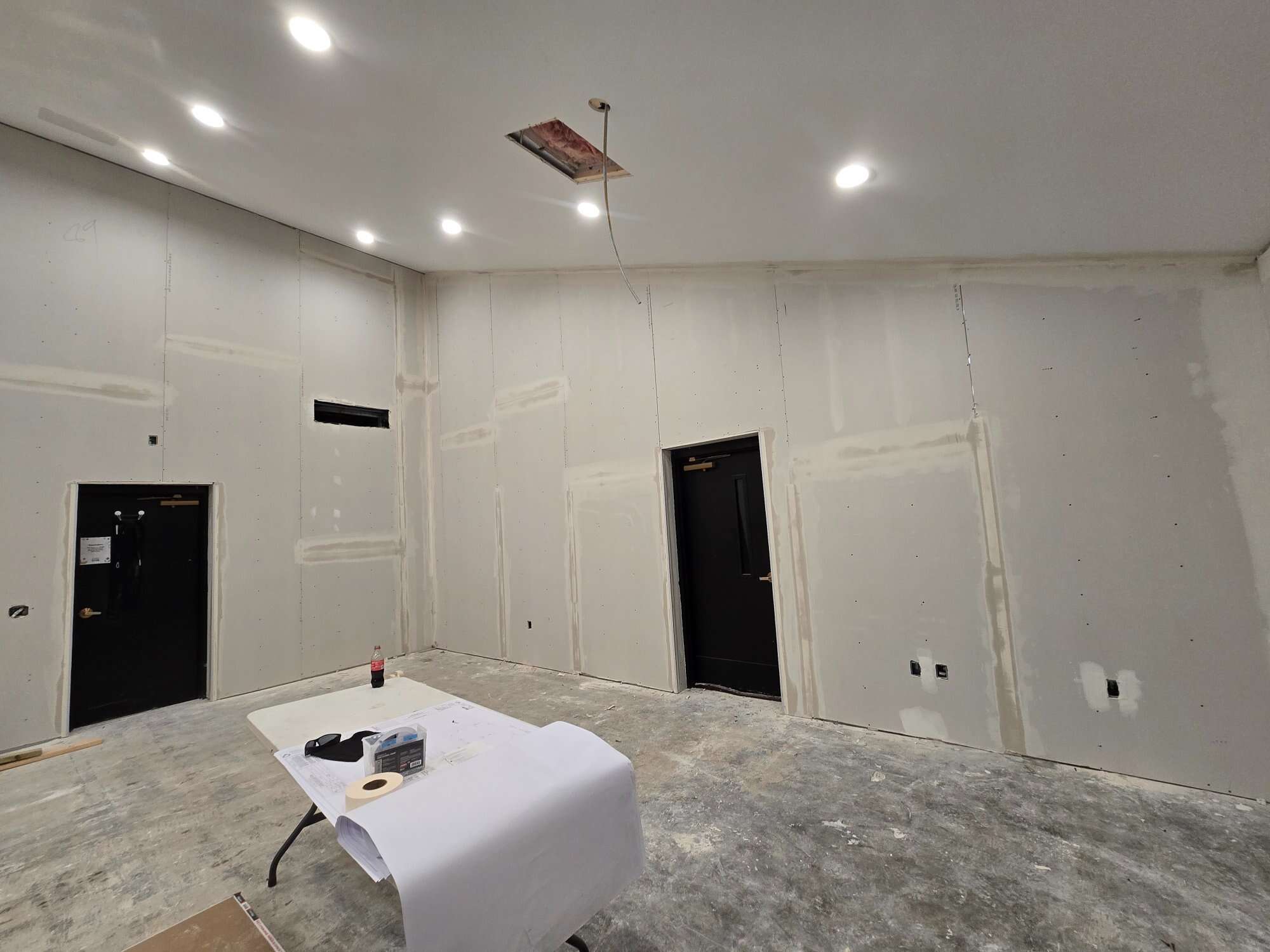
Tape plus three coats of compound, sanded smooth between coats. The baseline standard for most painted commercial work. Acceptable substrate for flat and eggshell finishes in offices, retail back-of-house, classrooms, and standard tenant improvement scopes. Not recommended for semi-gloss, gloss, or any critical-lighting condition. Where it belongs: Class B offices, K-12 classrooms, standard retail, multi-family common areas, hospitality back-of-house, medical exam rooms with flat or eggshell spec.
L5 — Full Skim Coat (Critical Lighting)
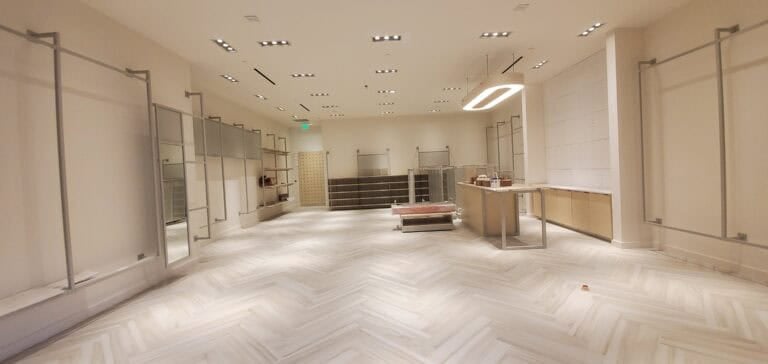
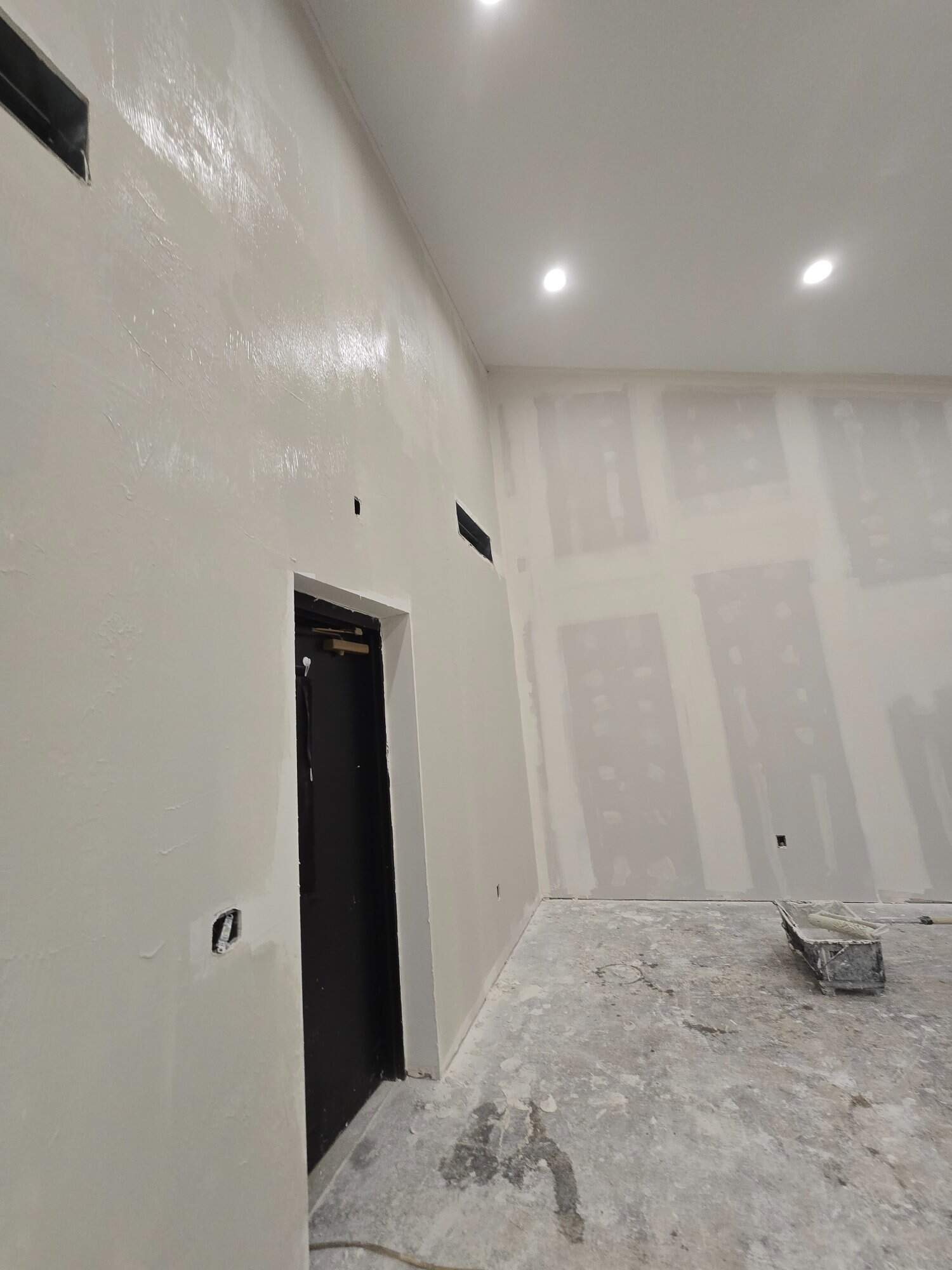
L4 plus a thin skim coat of compound applied to the entire surface, sanded smooth. Eliminates the difference in suction between the joint compound (porous) and the bare paper face of the gypsum (less porous), which is what causes joint banding to telegraph through under critical lighting and gloss finishes. Required spec for semi-gloss and gloss paints, walls under raking light from windows or wall-washing fixtures, brand-standard retail showrooms, executive offices, healthcare patient rooms with antimicrobial spec, hospitality lobbies, museums, and any wall where the owner expects perfection at 24 inches. Roughly 20 to 35% more labor than L4.
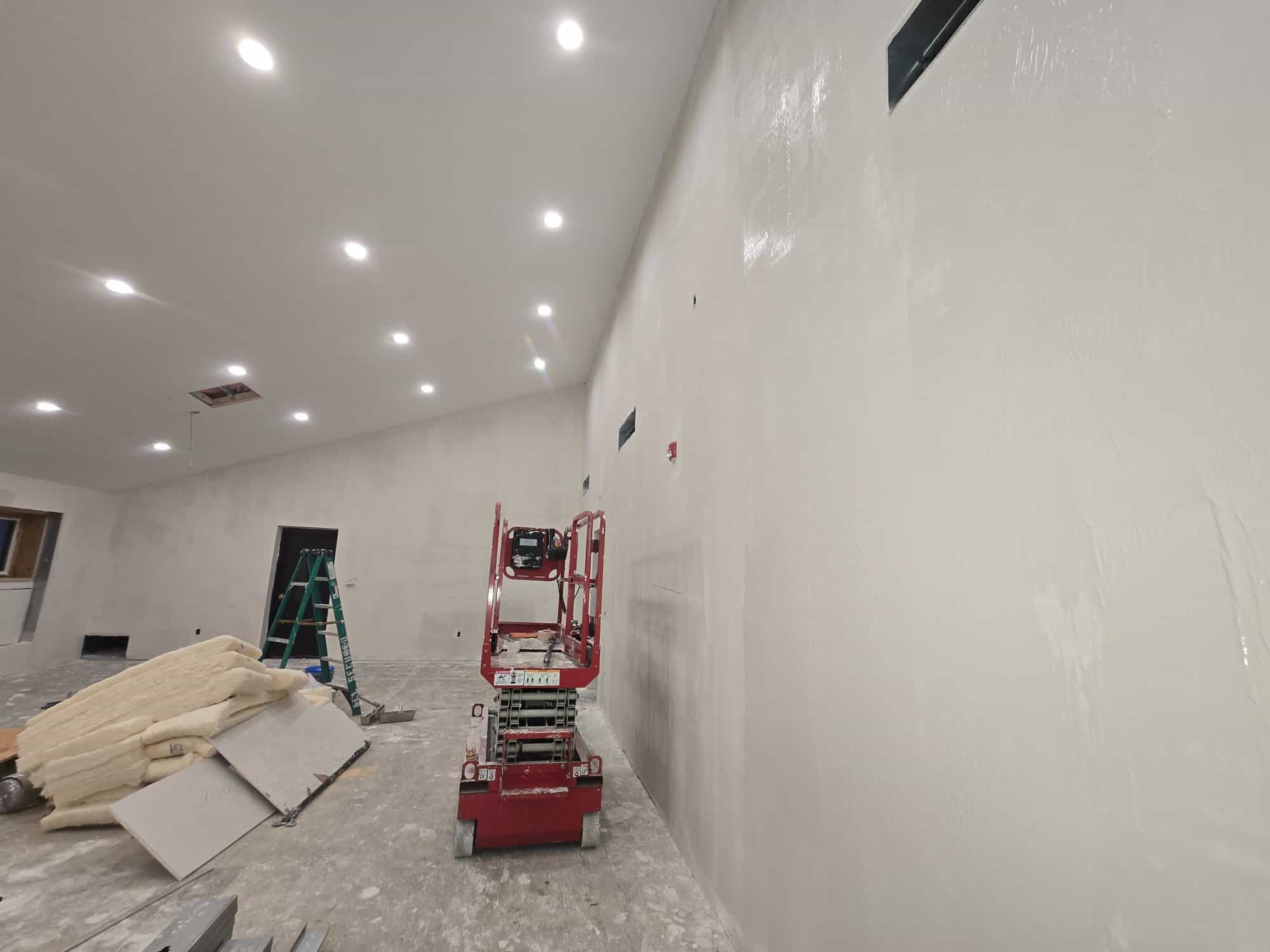
"Level 4 looks fine in the showroom and fails the first day a window pulls raking light across the wall. Critical lighting is the test, not the bid."
Where Each Level Belongs in Commercial Buildings
Sector-by-sector spec guidance. The level in bold is what we typically see specced in Columbus right now. Lower levels appear in back-of-house and service areas.
| Building Type | Primary Areas | BOH / Service |
|---|---|---|
| Class A office | L4 to L5 (lobbies and exec suites L5) | L2 (server rooms, IT closets) |
| Class B office / coworking | L4 | L2 (BOH service corridors) |
| Medical / dental / outpatient | L4 to L5 (patient rooms L5, exam L4) | L2 (mechanical, soiled utility) |
| Retail brand-standard (anchor) | L5 (per brand spec) | L2 (stockroom, BOH) |
| Retail tenant in-line | L4 (L5 for high-end) | L2 (BOH stockroom) |
| Restaurant / hospitality FOH | L5 (lobbies, dining, public) | L2 (kitchen, prep, mech) |
| Senior living / assisted living | L4 to L5 (common areas L5, units L4) | L2 (mech, soiled utility) |
| Education K-12 / daycare | L4 | L2 (custodial, mech) |
| Multi-family apartments | L4 (units), L5 common areas | L2 (mech, trash chute rooms) |
| Warehouse / industrial | L1 to L2 (drywall sections), CMU elsewhere | L0 (above ACT plenum) |
2026 Commercial Drywall Finish Cost in Columbus
Fully-loaded drywall finish ranges per square foot of drywall surface (not floor area). These are 2026 Central Ohio numbers and include hang, tape, mud coats, sanding, and final dust-off. Block filler on CMU and DTM on metal are separate (see our commercial painting cost guide).
| Finish Level | Typical 2026 Range | Top Cost Driver |
|---|---|---|
| L1 (tape only) | $0.65 to $1.10 / sf | Volume and access |
| L2 (one coat over tape) | $1.10 to $1.65 / sf | Joint count + corner work |
| L3 (two coats) | $1.45 to $2.10 / sf | Texture coordination |
| L4 (three coats sanded) | $1.85 to $2.85 / sf | Sanding labor + dust control |
| L5 (full skim coat) | $2.35 to $3.95 / sf | Full skim labor + Level 5 verify |
Add 15 to 30 percent for after-hours, weekends, or occupied-building phasing. Add 20 to 40 percent for vaulted or high-ceiling work requiring lifts.
How to Verify the Level You Are Getting
The biggest source of paint failures on commercial projects is Level 3 work billed as Level 4 or Level 4 work passed off as Level 5. Three field tests any property manager or GC can run before final coats go on:
- Raking light test. Hold a 500W work light or LED stick within 6 inches of the wall and shine the beam parallel to the surface. Every joint, every fastener, every imperfection lights up at L3 or rough L4. A true L4 shows minor joint banding only. A true L5 shows nothing. This is the test architects use at final walkthrough.
- Mud coat count. Ask the drywall foreman to walk you through the schedule. L4 should have three coats of compound plus tape (tape, fill, second fill, finish). L5 adds a fourth pass (skim coat over entire surface). Anything fewer is a lower level being billed as a higher one.
- Sample area before full-go. Spec a 4 ft by 8 ft mock-up panel in the actual lighting conditions of the room. Apply the primer and one finish coat. Walk it at the time of day the room gets the most raking light. Adjust the spec before committing to thousands of square feet.
The 4 Most Common Drywall Finish Scams
How a bidder shaves 15 to 30 percent off the drywall line item and what it actually costs you after move-in:
- L3 billed as L4. Only two coats of compound applied, third coat skipped. Joint banding shows up the first day eggshell paint goes on and lighting hits the wall. Catches the bidder $0.40 to $0.90 per sf. Repaint after callback costs you 2x to 4x the original paint bid.
- L4 billed as L5. Skim coat skipped entirely or applied only to "the visible parts." Semi-gloss paint reveals every joint within 60 days. Healthcare and hospitality clients reject the work at final walkthrough.
- Spec language without a level. "Smooth finish for paint" or "premium drywall finish" with no GA-214 level cited. There is no defensible standard to enforce when the work disappoints. Always require a numbered level in the spec.
- Sanding skipped between coats. Mud coats applied without proper sand-down in between. Surface looks acceptable to the eye but feels rough under a hand. Paint application reveals the texture. This is the laziest of the four and shows up as "orange peel under flat paint."
Cross-check any drywall contractor on the Ohio eLicense lookup and ask for project references on similar building types. As a licensed Ohio general contractor, PaintWerks handles drywall, framing, and paint under one contract so the hand-off between trades stops being a buck-passing exercise when something looks wrong.
Frequently Asked Questions
L4 for standard tenant areas with flat or eggshell paint. L5 for executive suites, lobbies, conference rooms, and any wall where the spec calls for semi-gloss or gloss paint or where raking light is a factor (south or west exterior walls with floor-to-ceiling windows, wall-washing fixtures, etc.).
No. L4 is the GA-214 standard for flat and eggshell paints. L5 is required for semi-gloss, gloss, and critical lighting conditions. If your spec is flat or eggshell in normal indirect lighting, L4 is the right answer and L5 is an unnecessary cost.
Roughly 20 to 35 percent more per square foot of drywall surface. In Columbus 2026 ranges: L4 runs $1.85 to $2.85 per sf, L5 runs $2.35 to $3.95 per sf. The premium pays back in saved repaints and avoided callbacks under critical lighting.
Yes, and most do. A typical Class A office spec calls L5 in the lobby and exec suite, L4 across the open office and conference rooms, L2 in the back-of-house service corridor, and L1 in the plenum above ACT ceilings. Mixing levels by area is normal and lowers total drywall cost without compromising the visible finish.
Under normal indirect lighting, almost none. Under raking light (window at 8am, wall-wash fixture, gloss-painted wall), L4 shows minor joint banding where the seams run. L5 shows nothing. The test is to walk the wall under the lighting the room will actually have in operation, not the construction lighting.
Yes. Most premium paint manufacturers (Sherwin-Williams, Benjamin Moore, PPG) explicitly require L5 substrate for semi-gloss or gloss paint warranty. Applying premium gloss paint over L4 voids the warranty even if the failure is visible joint banding.
The drywall contractor is responsible for delivering the specified level. The painter is responsible for confirming the substrate matches the paint spec before applying primer. On a one-contract job (general contractor or design-build) the GC owns the coordination. Multi-contract jobs are where finger-pointing starts — which is why we recommend a signed substrate sign-off between trades before paint starts.
The Gypsum Association maintains GA-214 at gypsum.org. USG (a major drywall manufacturer) also publishes a public reference on the levels. Most architects cite GA-214 in their wall sections — ask for the spec section that calls it out.
Get a Drywall Spec Walkthrough for Your Project
Reviewing a tenant improvement spec, healthcare buildout, or property-wide repaint? We will walk the spec with your architect or project manager, flag the right level for each area, and tell you where the spec is leaving money on the table or where it is under-spec for the paint system. Forty-five minutes onsite. Educational walkthrough, not a sales pitch.
See our full commercial drywall and framing services or schedule below.