Quick answer: After-hours and overnight commercial painting in Columbus runs 25 to 40 percent above day-rate pricing in 2026. The premium covers shift differentials, smaller crews, supervisor overlap, and 15 to 25 percent slower production rates. The math pays off when avoided revenue loss (closed-storefront sales, closed-clinic visits, vacant hotel-night dollars) exceeds the premium. For a 3-day retail repaint that would close a Class B mall storefront, the after-hours premium typically returns 2 to 5 times its cost in preserved sales.
In this guide
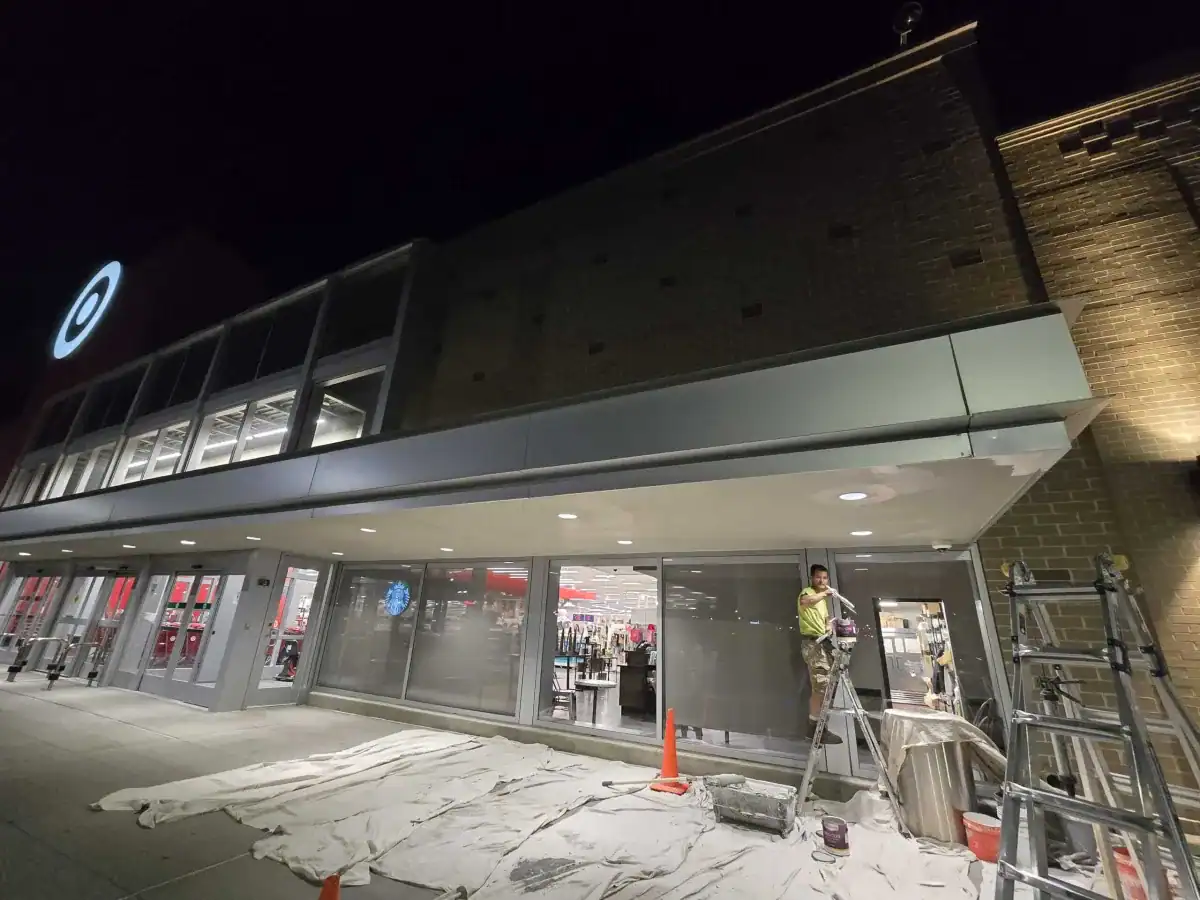
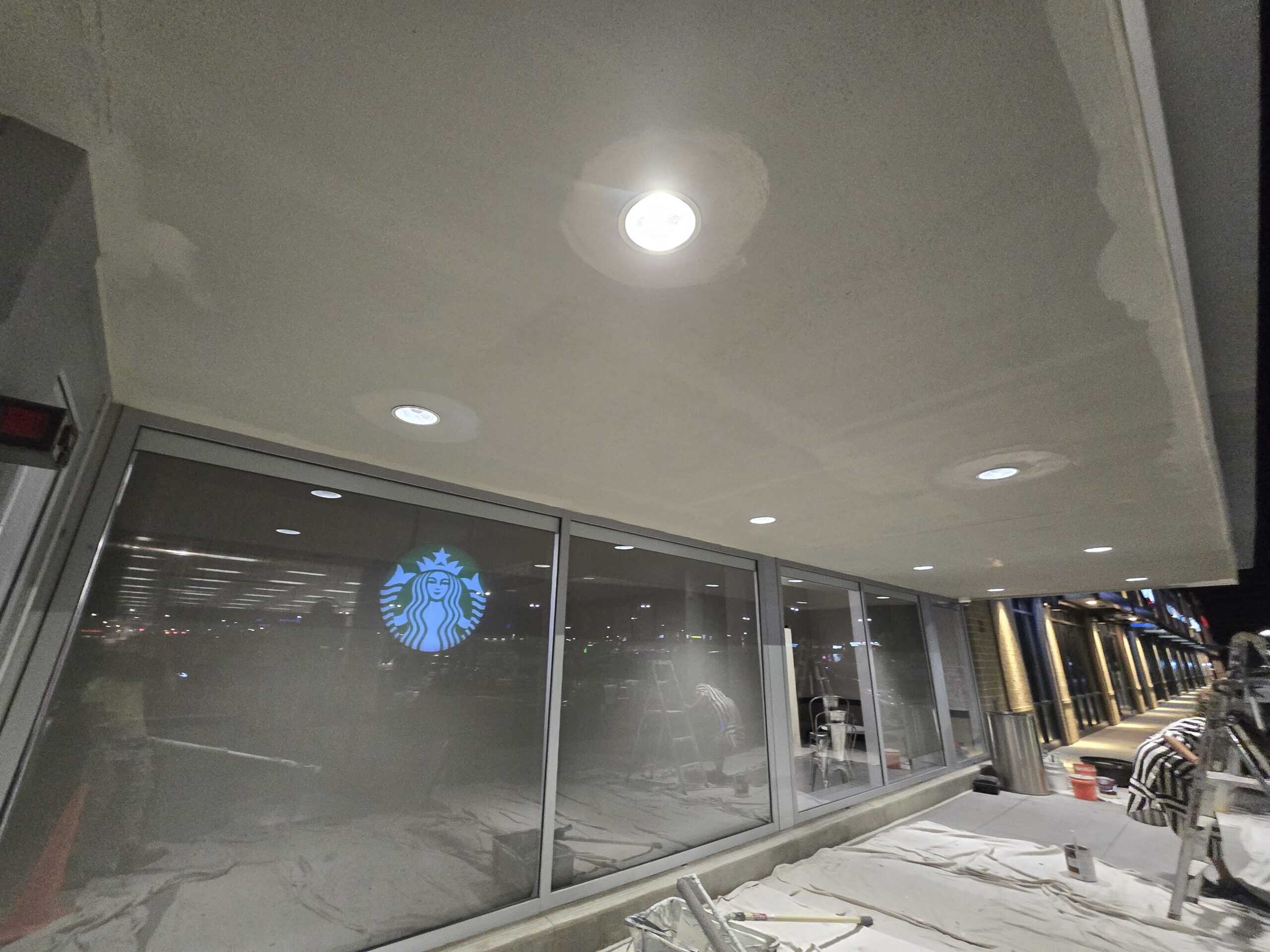
Updated June 2026. Built from real PaintWerks after-hours and overnight commercial projects across Columbus including Target ACM canopy repair (New Albany), retail tenant buildouts at Easton Town Center, and healthcare facility repaints. Considering an overnight schedule for your project? Schedule a free walkthrough or call 614-582-4227.
Why the After-Hours Premium Exists
Five cost factors drive the 25 to 40 percent uplift over day-rate commercial painting:
- Shift differential labor. Painter labor at 1.15x to 1.35x the standard hourly rate for nights and weekends. Union shops carry contractual differentials; non-union shops match the market.
- Smaller crew size. 3 to 5 painters typical for an overnight shift vs 8 to 12 for a day crew. Smaller crew = less efficient sequencing, fewer paint stations, more crew time spent on setup and tear-down per painter-hour.
- Supervisor coverage. A foreman or project manager has to be onsite for every shift. On a day-only project, one PM covers 8 to 10 hours. On a 24-hour rotation, you are paying for two PMs.
- Slower production rate per painter-hour. Night work is 15 to 25 percent slower than day work for the same scope. Lower visibility (work lights vs ambient), fatigue, and the slower cadence of small crews all factor in.
- Security and access overhead. Badge checks, escort requirements, alarm coordination, after-hours building access fees from property management. None of this exists on day work in vacant space.
"The after-hours premium is not a tax. It is the price of keeping the cash register open while the work gets done."
The Math: When Overnight Actually Pays Off
Compare two scenarios on the same 8,000 sq ft retail tenant repaint:
| Approach | Paint Cost | Revenue Lost | Net Cost |
|---|---|---|---|
| Day work, store closed 4 days ($28K daily sales) | $22,000 | $112,000 | $134,000 |
| Overnight (4 nights, store open during day) | $30,800 | $0 | $30,800 |
The $8,800 premium (40 percent over day-rate $22K) returned $112,000 in preserved sales. Real ROI: ~12.7x. This math works for any business where daily revenue exceeds the day-rate paint contract divided by the work duration.
5 Scenarios Where Overnight Pays Off
- Retail storefront with daily revenue above $5,000. The lost-sales math almost always justifies the after-hours premium. Bonus: customer experience is preserved.
- Healthcare and dental practice. Patient flow disruption is hard to monetize but very real. Plus low-VOC requirements pair naturally with empty-building overnight schedules.
- Restaurant front-of-house. Dark periods (Monday lunches at some chains, Christmas Day for others) compress overnight requirements but still benefit from after-hours work to avoid trash-day staging conflicts.
- Hotel guest rooms during high-occupancy seasons. Vacant-night dollars at $150 to $400 per room easily justify the premium. Overnight crews work cleared rooms while occupied rooms operate normally.
- Brand-standard repaints with corporate inspection deadlines. When the new brand guidelines must be in place by a date, overnight work is the only way to hit the deadline without closing. The Target ACM canopy repair in New Albany went overnight specifically to meet a corporate inspection.
When Daytime Beats Overnight
- Vacant tenant spaces between leases. No revenue to preserve. Day rate. Get the work done faster and turn the space.
- Warehouses and industrial back-of-house. Often operate single-shift or have flexibility to schedule a 3 to 5 day shutdown for paint. Day rate plus zone-by-zone phasing is the cheap path.
- K-12 schools and daycare. Summer break and weekends give you dark-period windows without the overnight premium. Day rate during summer is the obvious answer.
- Office tenant improvements with floor-by-floor vacancy. One floor empty? Day rate, finish it, move to the next floor. The empty floors do not generate any revenue worth preserving.
- Small repaints under $10K. The fixed overhead of overnight mobilization (supervisor coverage, security badges, building access) does not amortize over a small contract.
For broader scheduling decisions across phased and zoned commercial work see our commercial schedule planning guide. For overall commercial cost ranges by space type see our commercial painting cost guide.
Frequently Asked Questions
25 to 40 percent above day-rate pricing for the same scope in Columbus 2026. The premium covers shift differential labor (1.15x to 1.35x rate), smaller crews, supervisor overlap, slower per-painter production rate, and access/security overhead.
When the lost revenue from closing during day work exceeds the after-hours premium. Quick test: divide your daily revenue by your day-rate paint contract amount, then multiply by the work duration. If the result exceeds the 25-40 percent premium, overnight is the cheaper option. Most retail, healthcare, and hospitality projects clear this bar.
Three painters plus a foreman is typical for shifts under 5,000 sq ft. Five painters plus a foreman for 5,000 to 15,000 sq ft. Above 15,000 sq ft typically requires multiple crews and a dedicated PM rotating with each shift.
For healthcare, retail, hospitality, and any building that opens to customers the next day: yes, always. Sherwin-Williams ProMar 200 Zero-VOC and Benjamin Moore Ultra Spec 500 Zero-VOC are the standards. They flash off completely overnight so there is no lingering odor by opening hours.
6pm to 6am is the standard overnight window. Some projects (mall tenant work, healthcare overnight) use 10pm to 6am to avoid customer overlap. Weekend day work (Saturday/Sunday 8am to 8pm) is technically not overnight but uses the same labor premium.
Indoor commercial work is unaffected by night temperatures because HVAC holds the interior at 65 to 75F. Outdoor commercial painting (canopy work, exterior tenant repaints) requires the same dew-point and surface-temperature rules as any exterior project. See our exterior weather guide.
For retail and office: standard practice is to cover furniture in place with 6-mil poly. We move floor displays and high-touch desks back from the walls before the shift. For healthcare patient rooms and clean-room facilities: full clear-out is typical.
The PaintWerks PM coordinates with your facility security manager before the project starts. Crew members are pre-cleared for badge access. Alarm codes are issued for the project duration. End-of-shift walkthrough with security confirms zone status. No after-hours work begins until the security protocol is signed off in writing.
Price Out the Overnight ROI for Your Project
Weighing overnight vs daytime for a retail repaint, healthcare facility, hotel block, or brand-standard rollout? We will walk the building, sit down with your facility or store ops manager, and price out both options so you can see the lost-revenue math against the after-hours premium. Forty-five minutes onsite. Educational walkthrough.
See our full commercial painting services or commercial services hub.