Quick answer: Do not paint your Ohio exterior outside the product TDS window. That means 35 to 50F minimum surface temperature depending on the product, a 5F spread above the dew point holding through cure, and 36 hours of dry weather after the last coat. In Central Ohio the safe paint window is roughly late April through early October. May, June, August, September are prime. Everything else is a gamble on adhesion.
In this guide
Updated June 2026. Built from real PaintWerks exterior repaints and failure recoveries across Central Ohio. Got an exterior project coming up? Schedule a free walkthrough or call 614-582-4227.
Spring paint calls in Columbus spike every March. Most of the failures we get called to repair trace back to one thing: paint applied in the wrong weather. Here are the three rules that decide whether your $15k exterior holds for a decade or fails by April.
"Surface temperature matters more than air temperature. Period."
Rule 1: 35–50F Minimum, Per the Product TDS
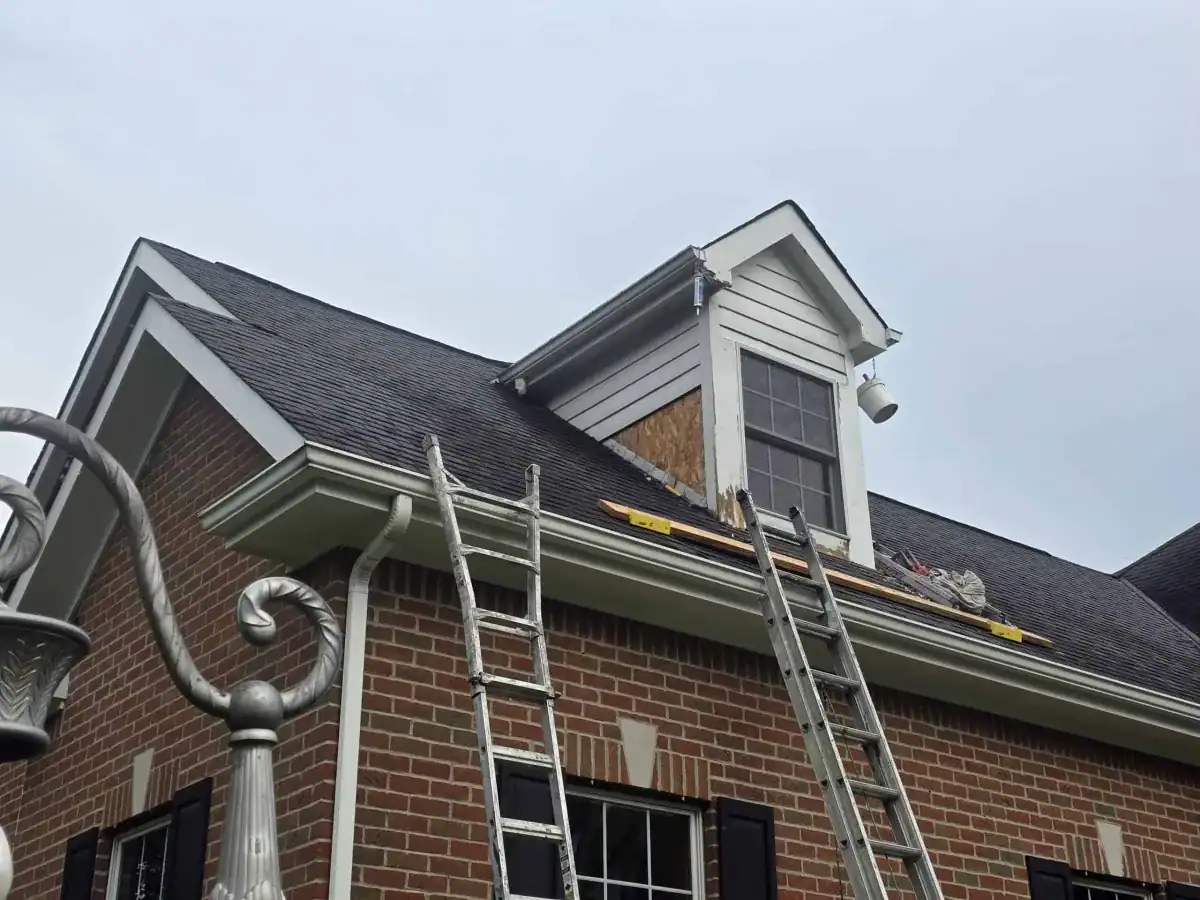
Most homeowners think “above freezing” is the rule. It is not. Sherwin-Williams Duration and Emerald both list 35F as the minimum air and surface temp on their technical data sheets. Benjamin Moore Aura and Regal Select sit at 40F. Older oil-based products are 50F. If a painter tells you “we can paint down to freezing” without naming the product, that is a red flag. The product dictates the rule, not the season.
Rule 2: 5F Above the Dew Point
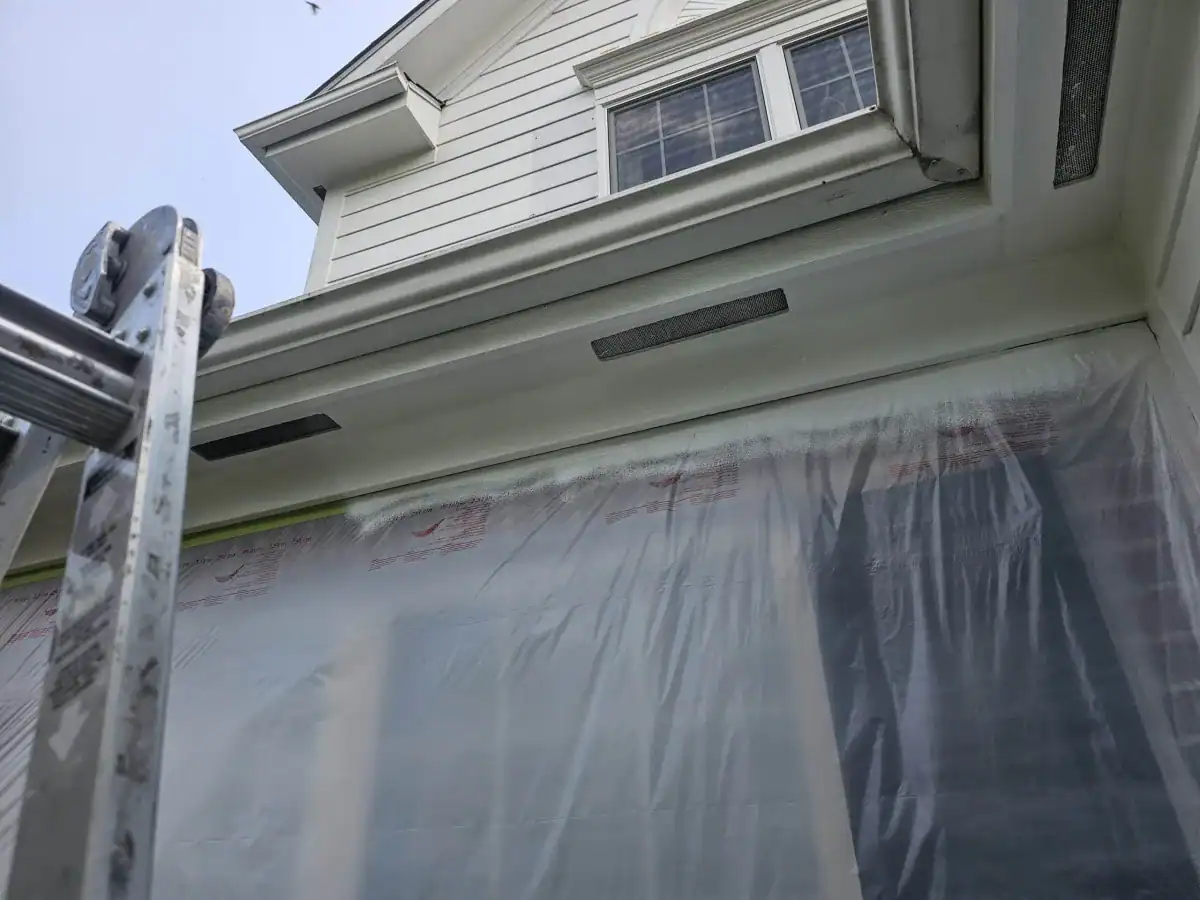
When the air temp drops to within a few degrees of the dew point, moisture starts condensing on cold surfaces. Your siding is one of those surfaces. Even if you cannot see it, there is a microscopic film of water between the substrate and the fresh paint. That wrecks adhesion. We want a 5F spread minimum during the paint window and for several hours after.
Common Ohio scenario: 75F air at 4pm with a 70F dew point. By 7pm the air drops to 70F, the spread closes, and every cool surface is fogging up. The paint dries with moisture trapped underneath.
Rule 3: The 36-Hour Rain Rule
Most water-based acrylics are rain-resistant in 4 hours under ideal conditions. That is the floor, not the comfort zone. We want 36 hours of dry weather after the last wall is finished, especially in spring and fall. Paint dries by evaporation but cures by chemical crosslinking, and crosslinking slows down sharply below 60F. A 55F overnight followed by an early morning rain at 24 hours is the failure scenario. The film feels dry to the touch but has not built the integrity to shed water without surfactant streaking or blushing.
Ideal vs Bad — The Side-by-Side
| Condition | Ideal | Bad / Skip |
|---|---|---|
| Air temp | 55 to 85F | Below 50F or above 90F |
| Surface temp | Inside product TDS range | North wall under 35F at 10am |
| Dew point spread | 5F plus and rising | Closing as the day cools |
| Humidity | 40 to 70 percent | Above 85 percent or condensing |
| Rain forecast | Dry 36 hours after last coat | Rain inside 24 hours |
| Sun on wall | Indirect, surface 60 to 85F | Direct sun, surface over 92F (paint flashes) |
| Wind | Under 10 mph | Gusts over 15 mph (overspray, fast flash) |
A Westerville 2-Story We Had to Redo
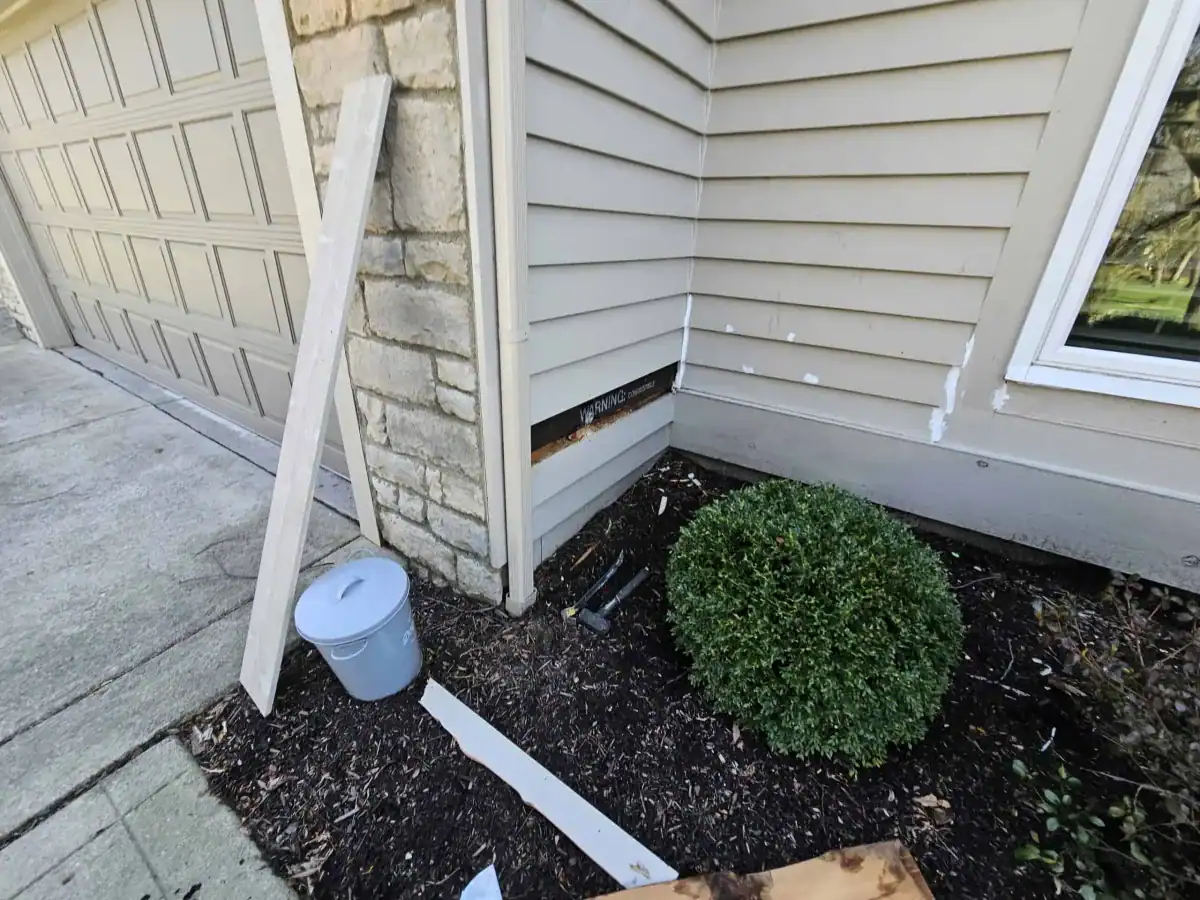
Two years back we got a call from a homeowner in Westerville. Two-story, fiber cement siding, painted late October by a different contractor. Final walkthrough was a sunny 58F afternoon and everything looked crisp. By April the paint was lifting in sheets on the north and east walls, and the south wall had blistering near the foundation.
The first crew had been applying Sherwin-Williams SuperPaint with a 35F floor, hitting mid-50s air temp by afternoon, but never checking the substrate. North-wall surface temp at 10am was in the high 30s. The film flashed but never coalesced. We scraped, spot primed, and recoated in a proper May window. About $11,000 of work the owner paid for twice.
"Late October cold-snap painting destroyed an $11k job. The owner thought he was getting in before winter."
The Columbus Painting Weather Window — Month by Month
General ranges, not promises — the actual window each year shifts with the weather. Sequence walls within each day to follow surface temp.
| Month | Status | Notes |
|---|---|---|
| Jan / Feb | Too cold | Almost no acrylic product TDS works. Plan walkthrough only. |
| Mar | Risky | Surface temps borderline. South walls only on warmest days. |
| Apr | OK late | Late month windows open up. Sequence walls carefully. |
| May | PRIME | Best month for most exteriors. Books up fast. |
| Jun | PRIME | Long days, stable surface temps. Premier window. |
| Jul | Hot / humid | Direct sun pushes surface temp over 92F. Start at 6am. |
| Aug | PRIME | Heat broken, humidity falling. Excellent cure conditions. |
| Sep | PRIME | Best fall window. Stable temps, low humidity. |
| Oct | OK early | First two weeks safe. After that, watch dew point closely. |
| Nov / Dec | Too cold | Surface temps below TDS floors. Pull paint operations. |
Five Questions to Ask Any Exterior Contractor
Before signing a contract for any exterior paint job in Ohio, ask these five questions. The right answers tell you who actually knows the product. The wrong answers tell you who will call you back in April with bad news.
- What product line and sheen are you speccing, and what is its minimum surface temp? If they cannot name the TDS floor for the exact paint they are quoting, they are not reading the can.
- Do you check surface temperature with an infrared thermometer? Air temp on a phone is not the number that matters. Substrate is. A $30 IR thermometer is the minimum tool.
- How do you handle the dew point if it is within 5F of the air temp? The right answer is "we stop earlier than planned and do not lay paint we cannot cure."
- What is your minimum dry-to-rain window before you will start? Anything under 24 hours of forecast clearance is a gamble. We want 36.
- How do you sequence walls when temps are borderline? South and west walls in the morning while they warm, north walls early afternoon at peak surface temp, stop before the surface cools.
Brick and masonry have tighter humidity rules than siding because the substrate holds moisture longer. Trim is its own conversation — see our guide on why your trim is failing and how to fix it for the prep workflow. For interior cost benchmarks across five real Columbus jobs see our interior painting cost guide.
Frequently Asked Questions
May, June, August, and September are the prime months. Late April and early October are workable with careful wall sequencing. November through March are too cold for most acrylic exterior products to cure properly.
Depends on the product. Sherwin-Williams Duration and Emerald run down to 35F. Benjamin Moore Aura and Regal Select to 40F. Older oils need 50F. Surface temp matters more than air temp. Check the product TDS before painting.
Whatever the product technical data sheet says. Most modern acrylic exterior paints list 35F to 50F minimum on the can. Surface temperature must hold above the floor during application AND for at least 4 hours after.
Most water-based acrylics are rain-resistant in 4 hours under ideal conditions. We want 36 hours of dry weather minimum to allow full cure. Cure slows down below 60F so cool overnight temps extend the no-rain window.
Almost always paint applied when the substrate was too cold or the dew point closed in. The film dried but never coalesced. Adhesion failed at the first temperature/humidity swing in spring.
The dew point is the temperature at which water vapor in the air condenses on cool surfaces. Painting when the air temp is within 5F of the dew point means moisture is forming on your siding — even invisibly — and wrecking adhesion.
Direct hot sun pushes surface temp above 90F and causes paint to flash dry before it can level out. Brush and roller marks lock in. Sequence walls to follow the shade through the day.
Yes. High humidity (above 85 percent) slows drying, can cause surfactant blushing or staining, and increases risk of dew-point condensation. 40 to 70 percent relative humidity is the comfort zone.
Get an Exterior Walkthrough Booked
Vetting quotes for a spring or fall exterior project? Or staring at a job that is already showing trouble? We will walk it with you, check the substrate, read the weather forecast, and tell you whether the window is safe to paint or worth waiting on. Forty-five minutes onsite. No pressure.
See our full exterior painting services or residential painting hub.