
Tile Installation Columbus Ohio
Family-Owned & Operated | Premium Results | Fully Insured
Home » Home > Residential Services » Tile Services Columbus
Solid Tile Substrates
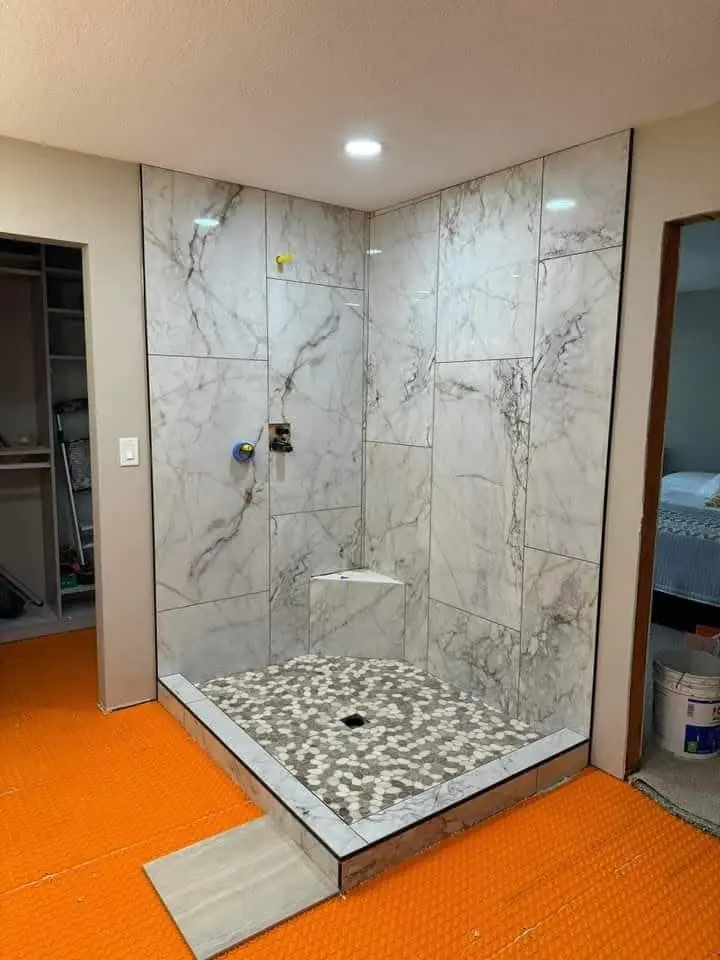
Most tile failures can be traced back to a “foundational” issue. Cracked grout, loose tiles, and leaking showers almost always come back to substrates without proper slope, waterproofing that failed or installation issues. As a licensed general contractor, we handle every layer. If we open a shower and find rot, failed framing, or water damage, we have the ability to fix it and keep moving. No second contractor, no passing blame, and no delay.
We install ceramic, porcelain, and natural stone tile for showers, floors, backsplashes, and full bathroom builds across Columbus and Central Ohio. From small backsplash jobs to complete shower tear-outs and rebuilds, we handle substrate prep, waterproofing, membrane systems, and finish tile work under one roof. Every project includes a 2-year workmanship warranty and our no-deposit policy.
No Deposit, No Risk
We never require money upfront. You pay as the project progresses, and final payment happens after the walkthrough when you confirm everything meets your expectations. That removes the risk of paying a contractor who disappears or delivers less than promised. Your investment is protected by a 2-year workmanship warranty on every tile project we complete.
Fewer Hands, Better Results
Your tile project stays with the same crew from demo to final walkthrough. No handoff between trades, no miscommunication about what got prepped and what got skipped. One team sees it from bare substrate to sealed grout lines.
Tile Services
We handle our own waterproofing, substrate leveling, and membrane work in-house. One crew from demo to grout, no handoffs, no gaps in accountability. Just tile that stays exactly where we put it.
Floor Tile
Showers
Backsplashes
Waterproofing ( For Showers & Wet Areas)
Decoupling Membranes (Uncoupling)
Trades Around the Tile
Bathroom Remodels and Full Builds
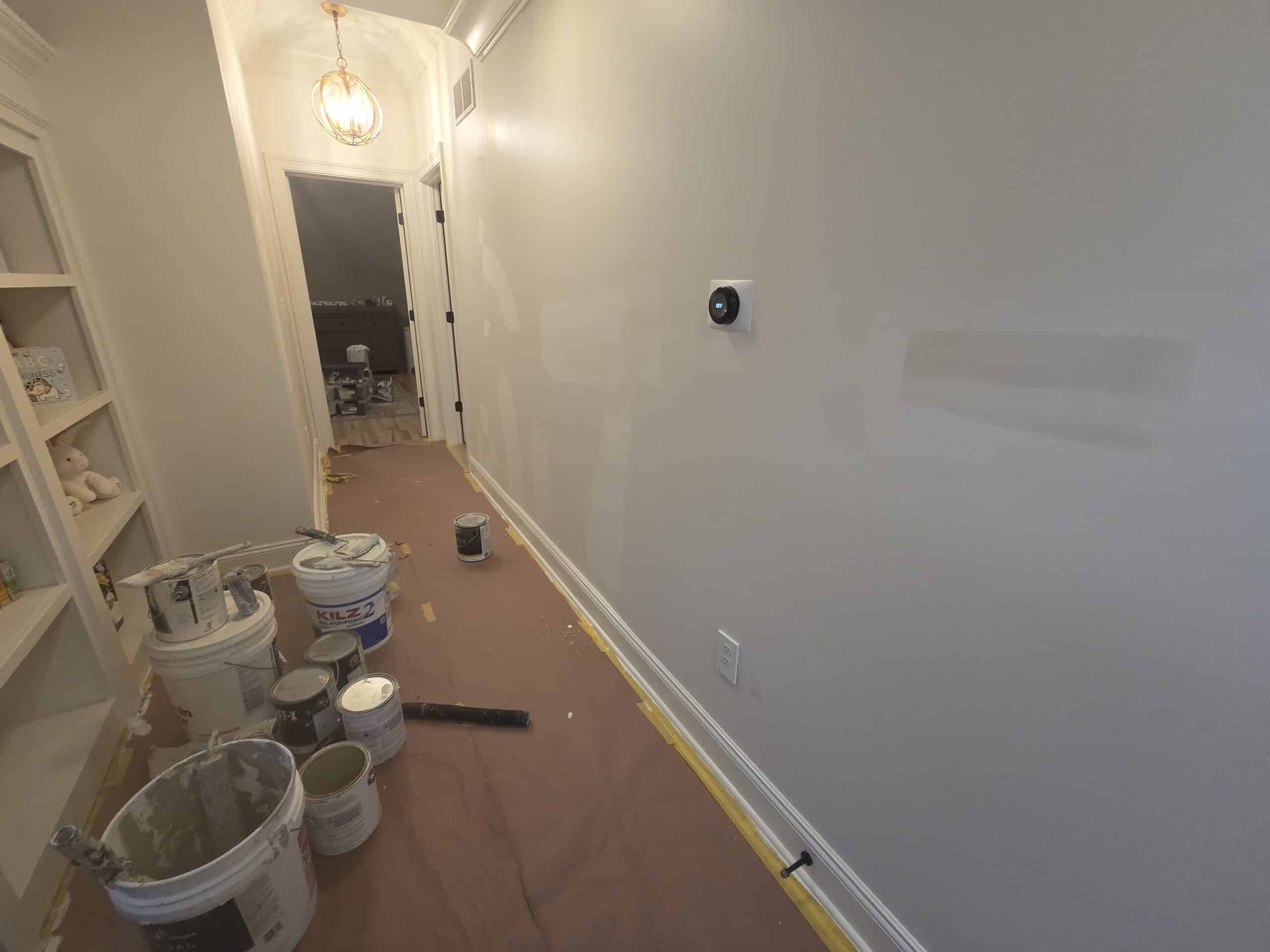
Tile work is usually part of a bigger project. A shower rebuild means demo, framing, plumbing coordination, waterproofing, tile, and paint. Most tile installers handle the tile and leave the rest to you. As a licensed general contractor, we run the full scope. Bathroom remodels, kitchen renovations, and basement finishes that include tile all stay under one schedule with one crew.
Drywall and Framing Behind the Tile
When we open a shower and find water damage, mold, or rotted studs, we don't stop and tell you to call someone else. Our framing crew replaces damaged studs and blocking. Our drywall team patches what needs patching. Then tile goes on a solid substrate instead of over a problem.
Flooring Transitions
Tile meets LVP, carpet, or hardwood at doorways and hallways. We install proper transition strips and thresholds so the change between materials looks intentional and sits flat. When we're handling both the tile and the adjacent flooring, transitions get built into the layout from the start instead of forced in at the end.
Trim and Paint After Tile
Baseboards, door casings, and trim go in after tile is set and grouted. Then interior paint finishes the room. Because we handle tile, carpentry, and painting under one roof, the sequencing stays tight. No waiting weeks for the next trade to show up.
Tile That Performs
Substrate Prep and Leveling
Most tile failures start underneath. Substrates that aren't flat, backer board installed wrong, or shower floors without proper slope. We use leveling compound, cement backer board, and decoupling membranes where the subfloor needs it. If we find rot or structural damage, our carpentry and drywall crews fix it before tile goes on.
Waterproofing That Holds
Schluter Kerdi, RedGard, and Laticrete Hydro Ban installed to manufacturer specs. Every shower gets a full membrane system and flood test before tile. We see failed waterproofing on nearly every shower tear-out we do across Powell, Dublin, Westerville, and New Albany. It's the most common reason showers fail early.
Setting and Grouting
We back-butter every tile for full thinset coverage. No hollow spots, no cracked tiles down the road. Leveling clips on large format porcelain and natural stone eliminate lippage. Grout gets cleaned before sealing, and change-of-plane joints get color-matched caulk instead of grout so they flex with the house instead of cracking.
Built for Central Ohio Homes
Temperature swings, humidity, and clay soil cause settling that puts stress on tile installations. We use decoupling membranes on floors where substrate movement is a concern and flexible sealant at every transition. Homes in Lewis Center and across Columbus deal with these conditions year-round. The result is tile work that handles seasonal movement without cracking, shifting, or letting water through. Take a look at our completed projects to see the finished product.
Our Tile Installation Process
Every tile project follows the same sequence. We evaluate the space, prep the substrate, waterproof wet areas, and install tile with full thinset coverage. No skipped steps, no shortcuts to save time. Here is what the process looks like from first walkthrough to final sign-off.
Initial Walkthrough
We visit the space, evaluate existing conditions, and talk through what you want. Subfloor condition, wall plumb, drain location, tile selection, layout preferences. If the project involves a full bathroom or kitchen remodel, we scope the entire job during this visit. You get a detailed written estimate with no hidden fees before any work starts.
Demo and Substrate Prep
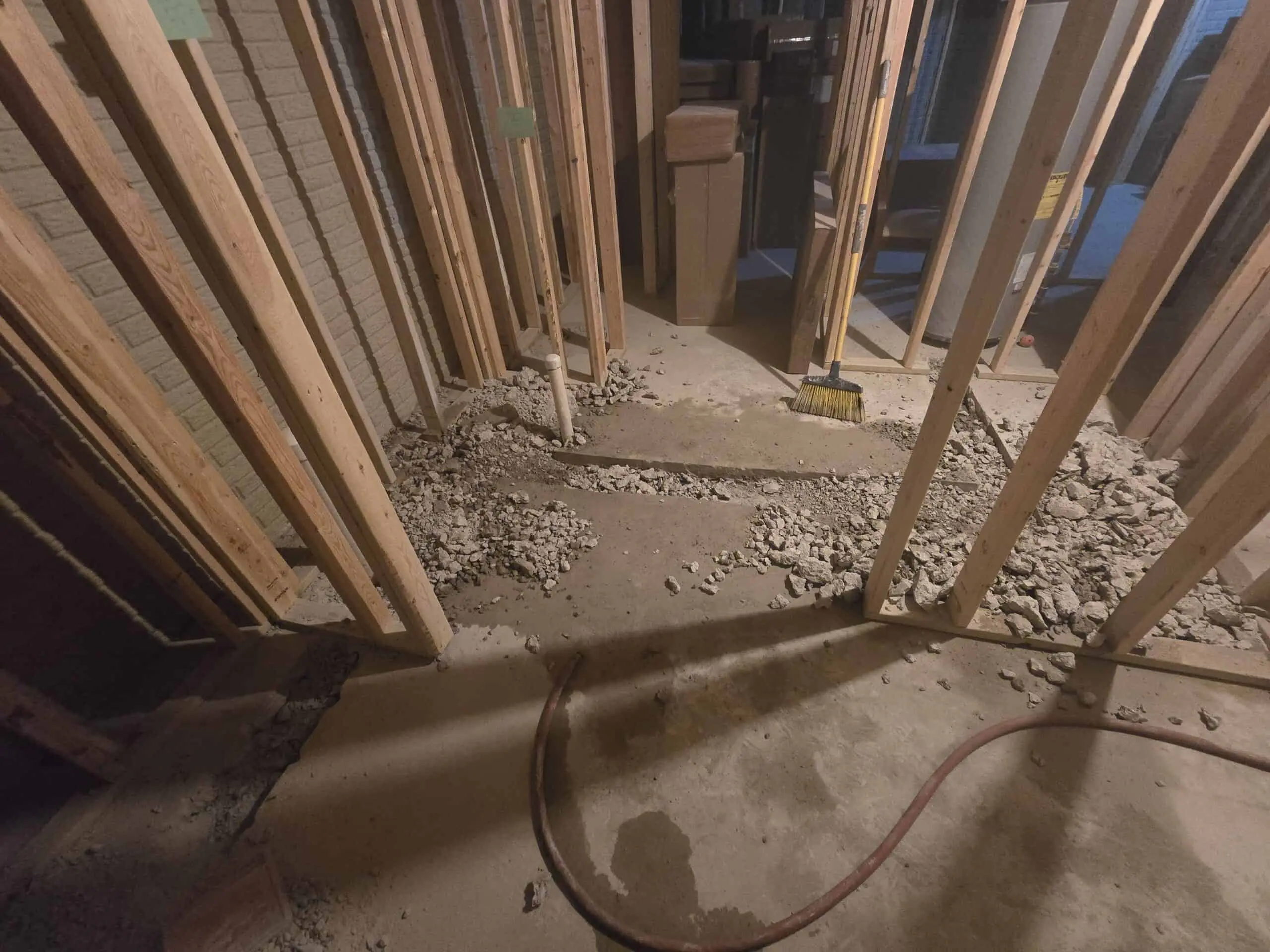
Existing tile, backer board, and damaged materials get torn out and hauled off. We inspect the framing and subfloor underneath. Anything that needs replacing gets replaced. Then we install cement backer board, level the substrate, and build shower pans to proper slope. Nothing gets tiled over until the surface underneath is solid and flat.
Waterproofing and Membrane
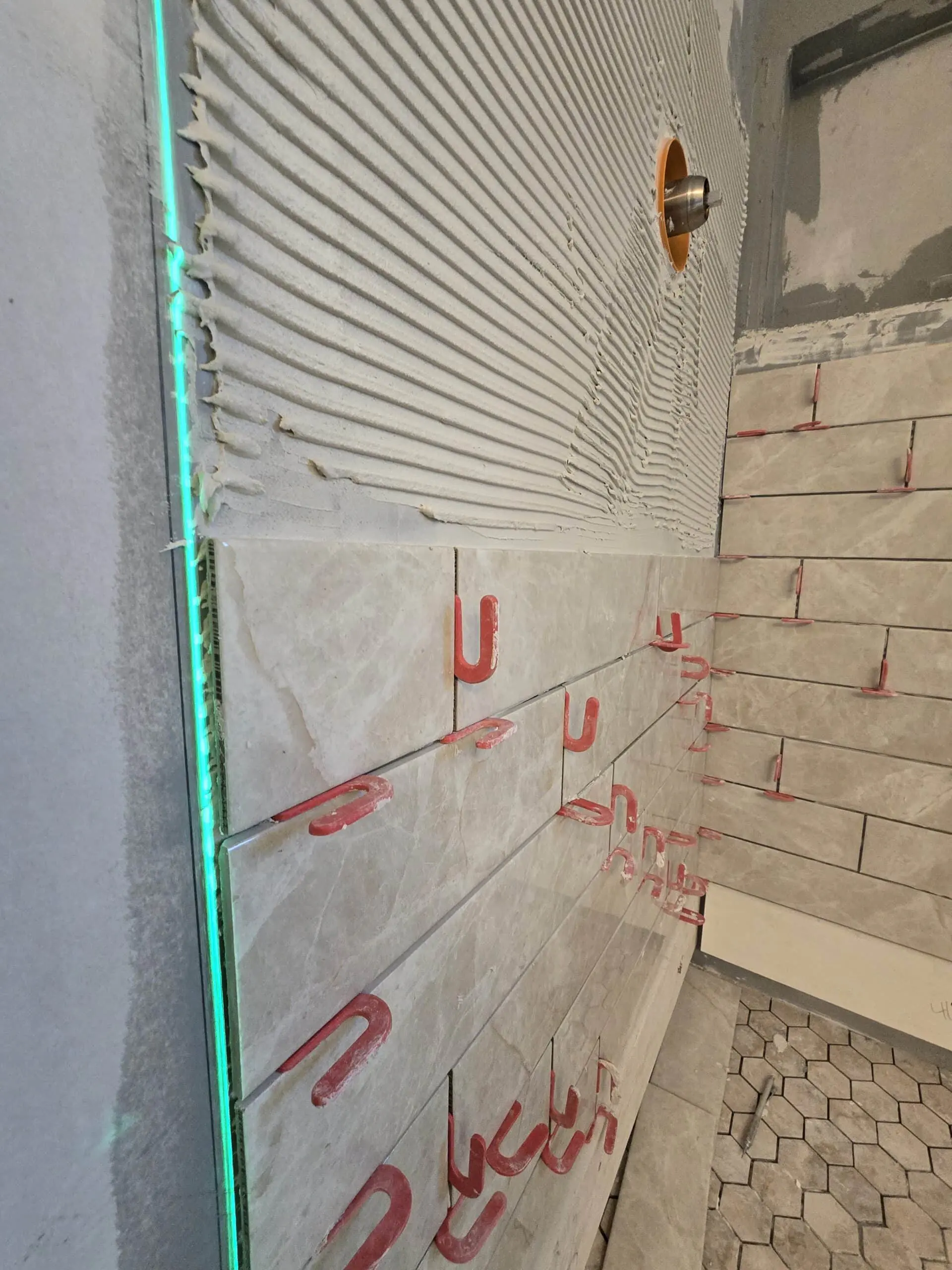
Every wet area gets a full waterproofing system before tile. Shower walls, pans, curbs, niches, and benches all get sealed with Schluter, RedGard, or liquid-applied membrane depending on the application. Seams get taped, corners get reinforced, and the system gets inspected before we move on. This step is where most other installers cut corners. We don't.
Tile Setting, Grouting, and Final Walkthrough
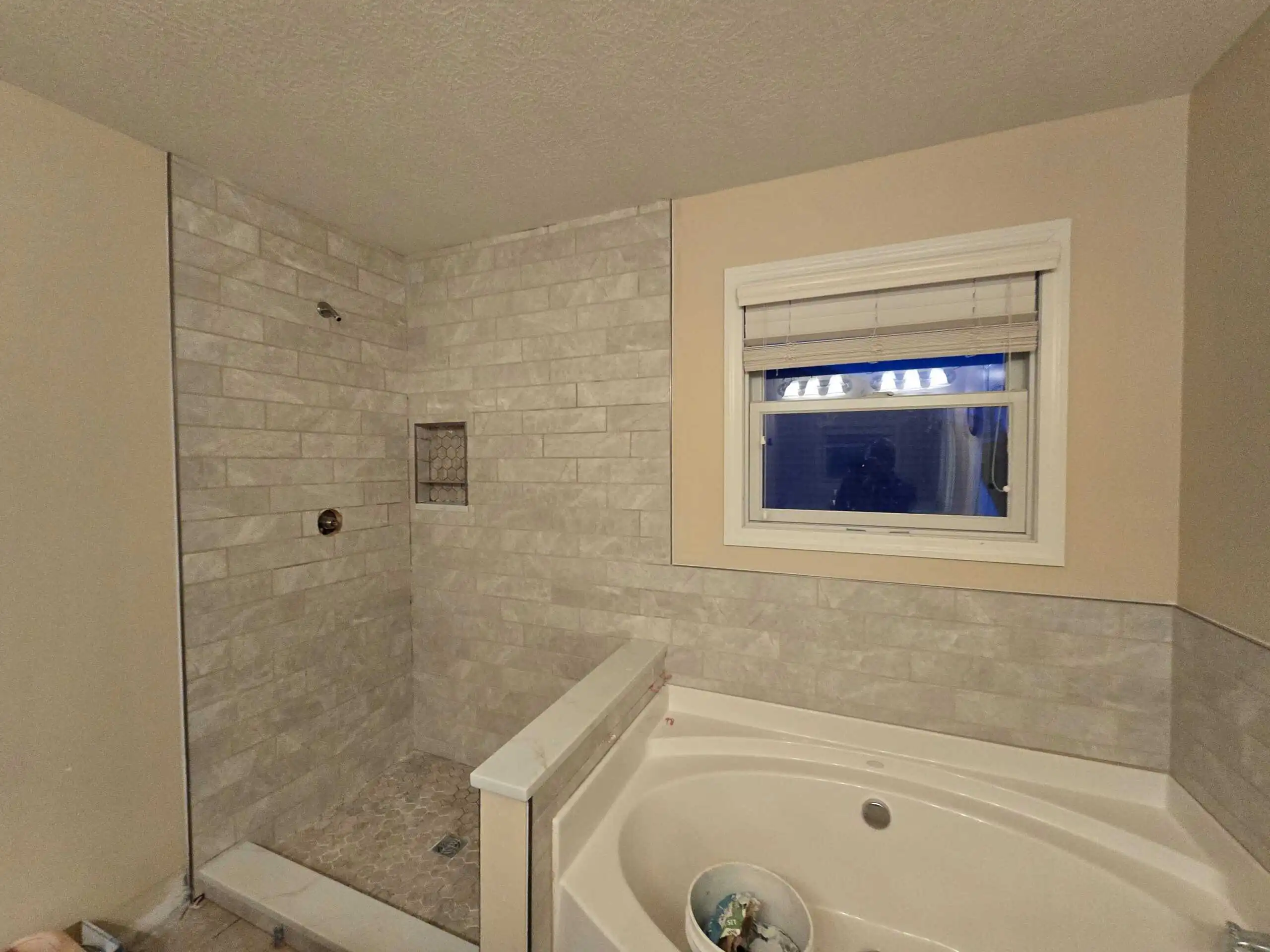
Tile gets dry fit to confirm the layout, then set with proper thinset and back-buttered for full coverage. Leveling clips go on large format tile. Once everything is set and cured, we grout, seal, and install transitions and trim. We walk the finished project with you before final payment. If anything needs adjusting, we handle it before we leave.
What Our Clients Say
We love the work we do, but we might be a little biased. Don't take our word for it. Take a look at what our clients have to say. Over 1,000 projects since 2016, and our reviews reflect how we treat people and the work we do.
Tile Installation FAQs
How much does tile installation cost in Columbus, Ohio?
Tile installation in Columbus typically costs between $8 and $25 per square foot for materials and labor combined. The final price depends on tile type, layout complexity, substrate condition, and the scope of prep work involved. Ceramic runs on the lower end while porcelain, natural stone, and large format tile cost more due to material price and the precision required to install them. We provide a detailed written estimate after walking the space so there are no surprise costs. Request your free estimate to get an exact number for your project.
Do you need waterproofing behind shower tile?
Yes. Every tiled shower requires a waterproofing membrane behind the tile to prevent moisture from reaching the framing and subfloor. Tile and grout alone are not waterproof. Without a proper membrane system, water migrates through grout joints and into the substrate, causing mold, rot, and eventual failure. We install Schluter Kerdi, RedGard, or Laticrete Hydro Ban on every shower tile project and flood-test the system before setting a single tile. Our shower waterproofing page covers the full process.
How long does it take to install tile?
A backsplash typically takes one day. A floor tile installation for a standard bathroom takes two to four days. Showers take three to seven days because waterproofing, dry time, and grouting each require curing periods that cannot be rushed. If the project includes demo, substrate repair, or structural work, the timeline covers the full build. We give you a realistic schedule during the estimate based on your specific scope.
What is the difference between ceramic and porcelain tile?
Porcelain tile is denser, harder, and absorbs less water than ceramic tile. It is fired at higher temperatures and made from finer clay, which makes it more durable and better suited for high-traffic floors, wet areas, and outdoor applications. Ceramic tile is lighter and easier to cut, making it a good option for backsplashes and low-moisture walls. Both materials work well when installed correctly. The difference comes down to where the tile is going and how much wear it will take. We help you choose the right material during your free walkthrough.
Can you tile over existing tile?
In some cases, yes, but it is not always the best approach. Tiling over existing tile adds height to the floor, which can create problems at doorways, transitions, and drains. The existing tile also needs to be well-bonded, clean, and free of cracks. If the old tile is loose, hollow, or installed over a bad substrate, it needs to come out. We evaluate the existing surface during our walkthrough and recommend tear-out when keeping the old tile would compromise the new installation.
What causes tile to crack after installation?
The most common cause of cracked tile is substrate movement, not the tile itself. Subfloors that flex, concrete slabs that shift, and improperly supported backer board all transfer stress to the tile above. Other causes include hollow spots under the tile from poor thinset coverage, no expansion joints at walls or transitions, and using the wrong adhesive for the application. We prevent these failures by leveling substrates, back-buttering every tile for full coverage, and installing decoupling membranes where the subfloor needs it.
Can large format tile be installed without cracking?
Yes, but large format tile requires more precision than standard sizes. Tiles 15 inches or larger need a flat substrate within 1/8 inch over 10 feet, full thinset coverage on both the surface and the back of the tile, and a leveling system to prevent lippage. Without these steps, large format tiles are far more likely to crack or develop uneven edges. We use leveling clips, back-butter every piece, and prep the substrate with leveling compound before setting. That is the difference between a large tile floor that holds up and one that fails within a year.
Should I hire a general contractor or a tile installer?
A tile installer handles tile and grout. A licensed general contractor handles tile plus everything around it. If your project is strictly a backsplash on a solid wall, a tile installer may be enough. But if the job involves demo, drywall, framing, waterproofing, plumbing coordination, or is part of a bathroom remodel, you need a GC who can manage the full scope. Tile-only contractors stop when they find structural issues. We fix what is behind the wall and then set the tile.